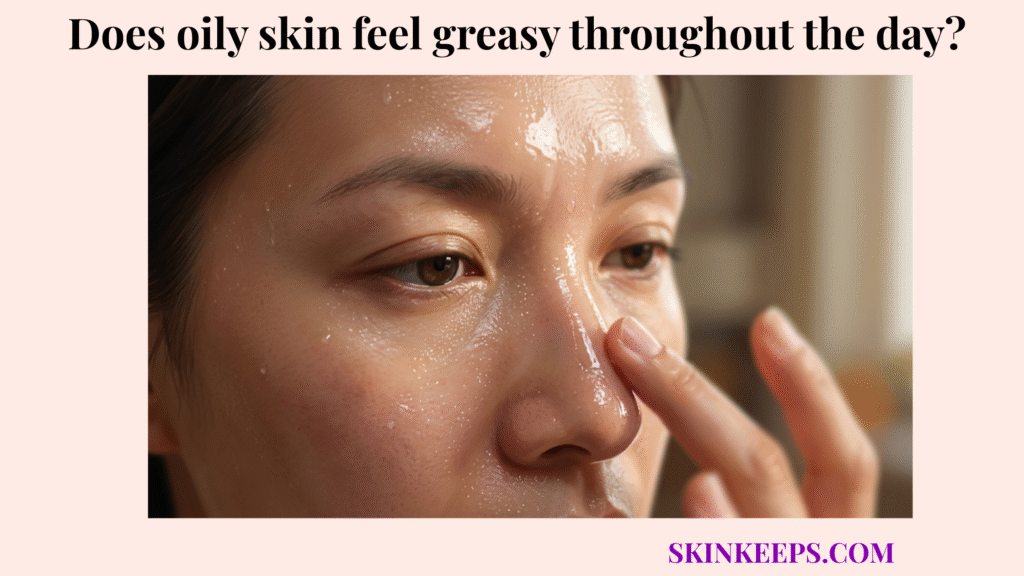
Yes, oily skin can feel greasy throughout the day when sebum repeatedly returns to the skin surface and forms a slick, heavy, film-like layer. This greasy feel is a tactile sign, so it should be judged by surface sensation as much as by visible shine. A greasy skin feel becomes much easier to understand when the people first sees oily skin as a sebum-driven skin type rather than a sign of poor hygiene.
This guideline explains why oily skin develops a greasy feel, how surface sebum creates slickness, how oily skin differs from sweat or product residue, and why harsh washing can make the skin feel worse. It also explains which tools and ingredient categories can reduce tactile oiliness without damaging barrier comfort.
Why does oily skin often feel greasy throughout the day?
Oily skin often feels greasy throughout the day because sebaceous glands keep releasing surface lipids after cleansing has removed the previous oil layer. This surface lipid return creates a coated sensation on the stratum corneum. The coated sensation is usually strongest in areas where oil collects more easily, such as the forehead, nose, and chin. Because greasiness belongs to a repeated pattern rather than one isolated sensation, observing it alongside the broader signs of oily skin helps the reader compare this greasy skin feel with shine, pores, and congestion.
Oily or seborrheic skin is associated with sebum production above 1.5 mg/10 cm² every 3 hours. This higher output explains why the skin can feel slick again after the surface has been cleansed. The exact timing varies by person, but repeated greasiness supports an oily-skin pattern. [PMC]
How ongoing sebum output creates a greasy skin feel
Ongoing sebum output creates a greasy skin feel by depositing lipid-rich material onto the stratum corneum. This lipid-rich material spreads across the surface and produces a slick coating. The slick coating is what makes oily skin feel heavier than balanced skin.
Why oily skin feels greasy again even after cleansing
Oily skin feels greasy again even after cleansing because surface oil removal does not stop fresh sebum from moving through the follicular canal. This fresh sebum production continues independently of topical cleansing. The continuous production means that the skin will naturally replace its lipid layer over the following hours.
How does surface sebum create the greasy tactile sensation of oily skin?
Surface sebum creates the greasy tactile sensation of oily skin by forming a surface lipid film that coats small surface textures and feels slick under the fingers. This lipid film reduces the dry friction normally felt on cleaner or lower-oil skin. The reduced friction makes the face feel slick, slippery, or coated.
A greasy tactile state becomes easier to confirm when surface oil transfers to the fingers. This transfer shows that the sensation comes from a removable surface film. The same transfer can help separate true sebum from hydrated skin, which feels soft without leaving the same oily residue.
How a surface oil film makes oily skin feel slick and heavy
A surface oil film makes oily skin feel slick and heavy because sebum acts like a lipid-based lubricant on top of the stratum corneum. This lipid-based lubricant physically coats the epidermal cells. The coating creates a tangible weight that leaves the face feeling burdened or dense.
Why oily skin feels different from hydrated or freshly moisturized skin
Oily skin feels different from hydrated skin or freshly moisturized skin because sebum leaves a heavier surface residue than water-based hydration. This surface residue lingers long after water has absorbed or evaporated. The lingering presence separates true sebaceous oiliness from the comfortable softness of properly hydrated skin.
How surface oil transfer confirms a greasy tactile skin state
Surface oil transfer confirms a greasy tactile sensation when a light touch leaves a slick residue on the fingertip. This slick residue acts as a simple physical test for lipid presence. Recognizing this transfer helps individuals monitor their personal oil production levels throughout the day.
| Mechanism | What Happens Biologically | Tactile Result |
|---|---|---|
| Higher sebum output | More oil reaches the surface | Skin feels slicker |
| Surface oil buildup | Sebum spreads across the stratum corneum | Skin feels heavier or film-like |
| Repeated oil return | Oil reappears after cleansing | Greasy feel comes back during the day |
| T-zone concentration | More oil collects in central facial areas | Greasiness feels strongest on forehead, nose, and chin |
How does oily skin feel different from sweat, product residue, or hydrated skin?
Oily skin feels different from sweat, product residue, or hydrated skin because sebum creates a recurring lipid film rather than a watery, temporary, or product-based coating. This lipid-based feel is slick, heavier, and more persistent. The water-based feel of sweat is usually damp, lighter, and tied to heat, stress, or activity.
Oily skin also feels different from product residue because the timing is different. Product residue usually follows recent moisturizer, sunscreen, primer, or makeup application. Sebum-based greasiness returns from the skin itself and can build again even after product residue has worn down. When comparing tactile greasiness with visible shine, oily skin facial shine often appears alongside a slick film, explaining why the skin can feel slippery and look highly reflective at the same time.
How sweat differs from the greasy feel of oily skin
Sweat differs from the greasy feel of oily skin because sweat feels wet, light, and watery instead of slick, oily, and film-like. This watery moisture responds primarily to temperature and physical exertion. The immediate, wet sensation of sweat rarely leaves behind a dense lipid residue.
How product residue differs from the greasy feel of oily skin
Product residue differs from the greasy feel of oily skin because it usually follows recent skincare or sunscreen application rather than ongoing sebum output. This application residue typically sits on the surface from the moment it is applied. In contrast, natural oiliness gradually emerges from the follicles over several hours.
How hydrated skin differs from the greasy feel of oily skin
Hydrated skin differs from the greasy feel of oily skin because hydration improves comfort without leaving a persistent oily film on the surface. This hydration relies on water balance within the epidermis. The healthy water balance leaves the skin feeling soft and flexible, distinct from a heavy lipid coat.
| Skin State | Main Feel | Key Difference From Oily Skin |
|---|---|---|
| Oily skin | Slick, greasy, film-like | Reappears from sebum output |
| Sweat | Wet, damp, lighter | Triggered by heat, stress, or activity |
| Product residue | Coated or slippery after application | Linked to recent skincare or sunscreen |
| Hydrated skin | Comfortable, soft, not greasy | Lacks the recurring oily surface film |
When does oily skin usually feel greasier during the day?
Oily skin usually feels greasier later in the day because surface sebum accumulates gradually and creates a thicker tactile film over time. This gradual accumulation thickens the surface lipid film. The thicker film makes the skin feel heavier, slicker, and more coated than it felt after cleansing.
Older controlled physiology data reported sebum excretion changes on the order of 10% per 1°C with local temperature variation. This finding should be treated as measurement-context evidence, not a strict daily-life rule. The practical meaning is that heat and activity can make oily skin feel heavier by increasing oil spread and surface sensation. [PubMed]
Why oily skin often feels greasier as surface sebum accumulates
Oily skin often feels greasier as surface sebum accumulates because more lipid volume sits on the stratum corneum. This lipid volume builds continuously as the sebaceous glands remain active. The constant addition of oil inevitably intensifies the slick, heavy sensation over several hours.
How heat and daily activity can make oily skin feel heavier later in the day
Heat and daily activity can make oily skin feel heavier later in the day by helping surface oil spread across a wider area. This surface spread occurs because warmer temperatures can reduce the surface viscosity of sebum. The thinner, wider-spreading oil coats more of the face, making the overall tactile experience feel greasier.
| Time Pattern | What Happens | Common Skin Feel |
|---|---|---|
| Soon after cleansing | Surface oil is reduced | Cleaner and lighter |
| A few hours later | Sebum begins to rebuild on the surface | Slightly slick |
| Later in the day | More oil accumulates and spreads | Greasier, heavier, more noticeable |
Why can washing oily skin too often make the greasy feeling worse?
Washing oily skin too often can make the greasy feeling worse when harsh cleansing irritates the barrier and leaves the skin tight, dehydrated, or still oil-prone. This harsh cleansing removes surface oil but can also irritate the barrier. The irritated barrier may feel tight while sebum still returns to the surface. Understanding why tight skin can still become greasy again connects the mistake to over-washing oily skin, illustrating that repeated washing creates discomfort rather than stable oil control.
The American Academy of Dermatology notes that harsh face wash can irritate oily skin and trigger increased oil production in some users. This guidance supports using gentle cleansing instead of repeated stripping. The goal is to reduce surface oil while keeping the barrier comfortable. [American Academy of Dermatology]
How over-washing disrupts barrier comfort in oily skin
Over-washing disrupts barrier comfort in oily skin by removing surface oil too aggressively and increasing irritation risk. This aggressive removal strips essential lipids alongside the excess sebum. The resulting barrier disruption can leave the skin feeling dry, stinging, or uncomfortably tight.
Why stripped skin can become greasy again quickly
Stripped skin can become greasy again quickly because surface oil removal does not stop sebaceous glands from producing fresh sebum. This fresh sebum production continues regardless of the surface dryness. The returning oil sits over a compromised barrier, leading to a confusing dry-but-greasy sensation.
Why squeaky-clean skin is not the goal in oily-skin management
Squeaky-clean skin is not the goal in oily-skin management because squeaky friction usually signals surface dryness rather than balanced comfort. This surface dryness indicates that the skin has been stripped of necessary protective elements. Maintaining a soft, flexible surface is a much safer indicator of successful, gentle cleansing.
| Mistake | Biological Effect | Tactile Result |
|---|---|---|
| Washing too often | Surface stripping and barrier stress | Greasy feel may return faster |
| Using harsh cleansers | More irritation and imbalance | Tightness followed by oiliness |
| Repeated scrubbing | Surface disruption | Roughness plus persistent grease |
| Skipping moisturizer after stripping | Poor comfort balance | Skin feels dry and greasy at once |
Which tools and ingredients help reduce the greasy feel of oily skin safely?
Tools and ingredients such as blotting papers, salicylic acid, and niacinamide can reduce the greasy feel of oily skin safely when they remove surface oil or support visible oil control without harsh stripping. Niacinamide and salicylic acid reduce shine through different pathways. Niacinamide supports visible oil control over time, while salicylic acid helps reduce congestion that can make oiliness look heavier. Selecting between niacinamide and salicylic acid as different tactile-control options guides the reader toward oily skin active ingredients to choose actives tailored for oiliness, congestion, and skin feel.
Topical 2% niacinamide has been studied for facial sebum measurements in clinical research. This evidence supports niacinamide as a useful oil-control category, but it does not mean every formula or every higher concentration works the same. The safer claim is that niacinamide can support visible and tactile oil-control routines over time. [PubMed]
How blotting papers and absorbent powders reduce greasy skin feel quickly
Blotting papers and mattifying powders reduce greasy skin feel quickly by lifting or diffusing the surface oil film that creates slickness. This surface-oil reduction changes the tactile film without requiring another cleanse. The lighter surface feel can help midday comfort without disrupting the barrier. Utilizing blotting papers for oily skin provides excellent midday touch-ups, reducing greasiness without the need for repeated washing or harsh rubbing.
How salicylic acid helps reduce oil-related buildup that worsens greasy feel
Salicylic acid helps reduce oil-related buildup that worsens greasy feel because its oil-soluble structure can work inside sebum-rich follicles. This oil-soluble structure helps clear the trapped debris that contributes to a heavy, congested texture. By minimizing this buildup, the skin surface gradually feels smoother and less burdened.
How niacinamide helps reduce visible and tactile oiliness over time
Niacinamide helps reduce visible and tactile oiliness over time by supporting better oil-control balance in the routine. This long-term support helps moderate the intensity of the surface lipid film. A more balanced lipid film translates to a less intensely greasy feel throughout the day.
| Tool or Ingredient | Main Action | Best Use |
|---|---|---|
| Blotting papers | Lift surface oil | Midday tactile relief |
| Mattifying powders | Reduce oily surface feel | Daytime grease control |
| Salicylic acid / BHA | Helps reduce oil-related buildup | Ongoing oily-skin maintenance |
| Niacinamide | Supports visible oiliness control over time | Daily long-term control |
| Lightweight moisturizer | Supports comfort without heavy residue | Barrier-friendly oil management |
How should a daily routine reduce the greasy feel of oily skin throughout the day?
A daily routine should reduce the greasy feel of oily skin throughout the day by using gentle cleanser formulations, lightweight moisturizer options, midday blotting, and targeted actives only when appropriate. A daily routine reduces greasy feel best when it removes oil without creating tightness. This balance depends on gentle cleansing, lightweight hydration, and targeted oil-control steps. The result should be a lighter skin feel, not a dry or squeaky surface.
Routine consistency matters because greasy feel returns when surface oil builds again. This oil buildup is easier to manage when the routine uses blotting or targeted actives instead of repeated washing. A fuller routine can follow the same logic in oily skin care tips when the reader needs cleanser, moisturizer, sunscreen, and active-ingredient guidance in one place.
What a morning routine should include to reduce greasy skin feel
A morning routine should reduce greasy skin feel by removing overnight sebum and adding lightweight hydration without heavy residue.
Morning Checklist
What a midday routine should include for tactile oil control
A midday routine should control greasy skin feel by using blotting papers or absorbent powder instead of repeatedly washing the face.
Midday Checklist
What an evening routine should include to manage oily skin gently
An evening routine should manage oily skin gently by removing the day’s sebum, sunscreen, and product residue without over-cleansing.
Evening Checklist
| Daily Greasy-Feel Checklist |
|---|
| Check whether the greasy feel returns after cleansing. |
| Compare greasy feel with sweat, product residue, or hydration. |
| Focus oil control on the areas that feel heaviest. |
| Use blotting papers instead of repeated washing during the day. |
| Use lightweight hydration rather than skipping moisturizer. |
| Add salicylic acid or niacinamide only when appropriate. |
| Judge progress by a lighter, cleaner skin feel, not total dryness. |
FAQs
Does oily skin feel greasy throughout the day?
Yes, oily skin can feel greasy throughout the day because sebum continues returning to the surface after cleansing. The feeling often builds in the T-zone and may become more noticeable later as surface oil accumulates.
Why does my face feel greasy even after washing?
Your face can feel greasy after washing because cleansing removes existing surface oil but does not stop sebaceous glands from producing fresh sebum. If the cleanser is harsh, the skin may feel tight and greasy at the same time.
How can I tell if my face is greasy or sweaty?
Greasy skin usually feels slick, oily, or film-like, while sweat feels wet and watery. Sweat often appears after heat, stress, or activity, while sebum-based greasiness returns from oil-prone facial zones.
Is greasy skin the same as hydrated skin?
Greasy skin is not the same as hydrated skin. Hydrated skin feels soft and comfortable because of water balance, while greasy skin feels slick or coated because surface lipids are present.
Can over-washing make oily skin feel greasier?
Over-washing can make oily skin feel greasier when harsh cleansing irritates the barrier. The skin may feel tight after washing, but sebum can still return and create a greasy surface later.
Do blotting papers help greasy oily skin?
Blotting papers can help greasy oily skin by lifting surface oil without requiring another cleanse. They are useful for midday tactile relief because they reduce the slick film that makes the skin feel heavy.
Does niacinamide reduce greasy skin feel?
Niacinamide can support visible and tactile oil control over time, and 2% niacinamide has been studied for facial sebum measurements. Its effect depends on formula quality, routine consistency, and skin tolerance.
Should oily skin still use moisturizer if it feels greasy?
Yes, oily skin can still need lightweight moisturizer because oil and hydration are different. A light, non-comedogenic moisturizer can support comfort without adding a heavy greasy film.
Conclusion
Oily skin feels greasy when recurring sebum forms a slick surface film that builds again during the day. Greasy oily skin is a tactile sign of surface sebum, not poor hygiene. The goal is to reduce the heavy film with gentle cleansing, blotting, lightweight hydration, and targeted actives without stripping the barrier.
A lighter skin feel is the target, not a dry or squeaky-clean surface. At SkinKeeps, we explain skin types through evidence-based dermatology to help readers manage tactical discomfort safely and effectively.