Herpes simplex virus, or HSV, is a lifelong HSV-1 or HSV-2 infection that can cause painful grouped blisters or ulcers on skin and mucous membranes. HSV-1 most commonly causes oral herpes but can also infect genital skin, while HSV-2 most commonly causes genital herpes.
Many infections are mild, unrecognized or symptom-free. After the first infection, HSV remains latent in sensory nerves and may reactivate as sores or asymptomatic shedding; antivirals shorten or prevent episodes but do not remove latent virus.
How Can You Recognize Herpes Simplex Skin Blisters?
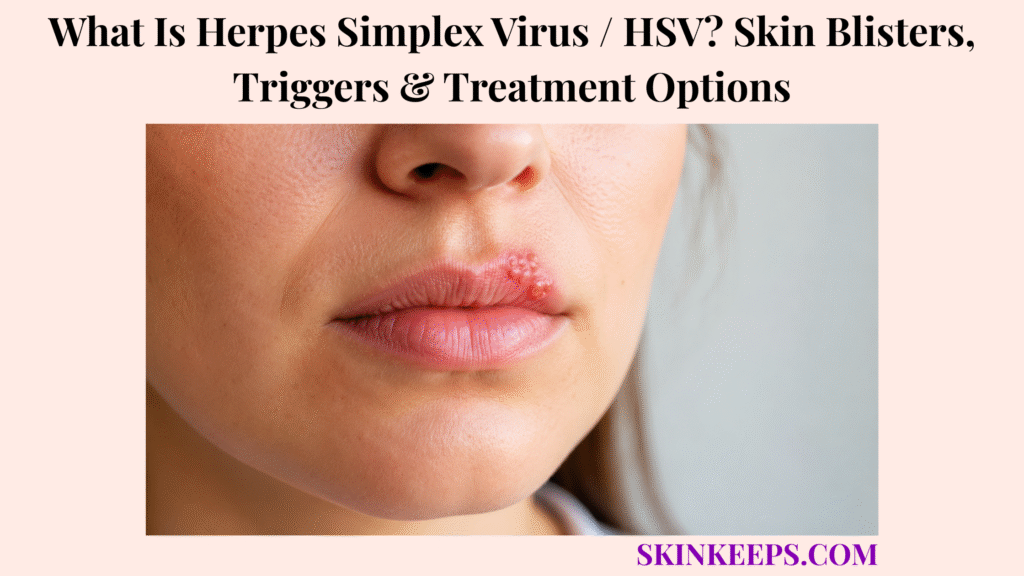
Herpes simplex often appears as grouped painful fluid-filled blisters on a red, swollen or sensitive base.
Tingling, itching, burning or tenderness may begin before visible lesions. Small vesicles cluster closely, may become cloudy, then break into shallow painful erosions or ulcers.
External skin lesions can ooze and crust, while moist oral or genital ulcers may heal without an obvious scab. Recurrent sores often appear near a previous site.
HSV often creates grouped painful vesicles, but other blisters can result from burns, friction, bacterial infection, autoimmune disease or other viral eruptions.
- Tingling, burning, itching or tenderness before lesions.
- Localized red or swollen skin.
- Closely grouped small vesicles.
- Shallow painful erosions after rupture.
- Crusting on external skin.
- Ulcers on moist mucosal surfaces.
- Recurrence near a previous site.
- Possible cracks, abrasions, redness or unexplained tenderness.
Figure 1. HSV commonly progresses from a tingling or burning prodrome to grouped vesicles, shallow erosions, crusting and healing; lesions can affect oral, ocular, genital, finger, contact-sport or damaged-skin sites.
Where Can HSV Blisters and Sores Develop?
HSV blisters and sores can develop on oral, genital, ocular, finger, contact-sport or damaged-skin sites.
| Region | Possible Sites | Important Complication |
|---|---|---|
| Oral/facial | Lips, mouth, nose, gums, tongue, chin, cheeks | Dehydration with severe gingivostomatitis |
| Ocular | Eyelid and cornea | Keratitis and vision loss |
| Genital/anogenital | Penis, vulva, vagina, cervix, scrotum, anus, rectum | Pain, urinary difficulty, neonatal risk |
| Sacral distribution | Buttocks and upper thighs | Recurrent genital-type outbreaks |
| Finger | Fingertip or nail fold | Herpetic whitlow |
| Contact sport | Face, neck, ear, upper trunk | Team transmission |
| Damaged skin | Eczema, burns or widespread barrier injury | Eczema herpeticum or dissemination |
| Nervous system/internal organs | Brain, meninges or organs | Encephalitis or disseminated disease |
Location alone cannot reliably identify HSV type.
How Do HSV-1 and HSV-2 Differ?
What Does HSV-1 Commonly Cause?
HSV-1 most commonly causes oral herpes, but it can also cause genital and other skin infections.
Possible HSV-1 presentations include cold sores, primary gingivostomatitis, herpetic whitlow, herpes gladiatorum, ocular herpes, genital herpes and rare encephalitis or dissemination.
What Does HSV-2 Commonly Cause?
HSV-2 most commonly causes genital herpes and recurrent genital, perianal or buttock outbreaks.
It can also cause asymptomatic genital shedding, neonatal infection and rare meningitis or disseminated disease.
Why Does Viral Typing Matter?
Viral typing matters because genital HSV-2 usually recurs and sheds without symptoms more often than genital HSV-1.
Genital HSV-1 often has fewer later recurrences, so type-specific counseling and suppressive-treatment decisions can differ.
| Type | Usual Transmission | Common Sites | Recurrence Pattern | Counseling Value |
|---|---|---|---|---|
| HSV-1 | Oral and oral-genital contact | Mouth, face, eye, finger, genitals | Genital recurrence often less frequent | Sets site and recurrence expectations |
| HSV-2 | Sexual contact | Genital, perianal, buttock | Genital recurrence and shedding generally more frequent | Supports suppression and transmission counseling |
How Does HSV Remain in the Body After the Skin Heals?
HSV remains in the body by entering sensory nerves and becoming latent in nerve ganglia.
After surface replication, viral genetic material travels through nearby sensory nerve endings to a ganglion. During latency no sore is required.
Biological signals can reactivate HSV, allowing virus to travel back toward skin or mucosa and cause recurrent lesions or asymptomatic shedding.
A recurrence does not mean the person was newly infected again.
Figure 2. HSV enters sensory nerves and remains latent in ganglia; reactivation can cause recurrent lesions or asymptomatic shedding, and typing helps set oral and genital recurrence expectations.
How Is Herpes Simplex Virus Transmitted?
HSV spreads mainly through direct contact with infected skin, mucous membranes or secretions.
| Contact | Viral Source | Higher-Risk Time | Risk Reduction |
|---|---|---|---|
| Kissing | Oral skin or secretions | Cold sore or prodrome | Avoid contact during symptoms |
| Oral sex | Oral or genital shedding | Prodrome, sores or shedding | Avoid symptoms and use barriers |
| Genital/anal sex | Genital or perianal shedding | Lesions, prodrome or asymptomatic shedding | Condoms and selected suppression |
| Contact sport | Exposed skin lesion | Active vesicle, erosion or crust | Pause close-contact sport |
| Finger transfer | Lesion or secretion contact | Active outbreak | Hand hygiene and eye avoidance |
| Childbirth | Genital shedding | New late-pregnancy infection or active lesions | Obstetric plan |
Transmission can occur without visible sores, and a person may not know they carry HSV. Casual room-sharing and toilet seats are not typical transmission routes.
What Is Asymptomatic HSV Shedding?
Asymptomatic HSV shedding means virus is present on skin or mucous membranes even when no sore is visible.
Shedding is intermittent. Genital HSV-2 sheds more often than genital HSV-1, and suppressive therapy reduces but does not eliminate shedding.
Absence of lesions cannot guarantee that transmission is impossible.
Risk spectrum: active ulcers → prodrome → asymptomatic shedding → periods with no detectable shedding.
How Does a First HSV Outbreak Differ From a Recurrent Outbreak?
What Can Happen During a First Recognized HSV Episode?
A first recognized HSV episode may cause more numerous lesions and more whole-body symptoms than later recurrences.
Fever, headache, fatigue, muscle aches, swollen lymph nodes, painful urination, oral dehydration risk or prolonged healing can occur.
The first noticed outbreak is not always the moment infection was acquired.
What Are Recurrent HSV Outbreaks Usually Like?
Recurrent HSV outbreaks are often more localized, shorter and preceded by tingling or burning.
They usually cause fewer lesions and less systemic illness, but frequency and severity vary widely.
| Feature | First Recognized Episode | Recurrent Episode |
|---|---|---|
| Lesion burden | Often more numerous | Usually fewer |
| Systemic symptoms | More likely | Less common |
| Duration | Often longer | Often shorter |
| Prodrome | May occur | Often recognizable |
| Meaning | Does not prove acquisition timing | Reactivation from latency |
Which Factors Can Trigger HSV Reactivation?
HSV reactivation can follow fever, stress, sunlight, friction, procedures, injury or immune changes, but many outbreaks have no clear trigger.
- Fever or another infection.
- Emotional stress.
- Physical exhaustion or sleep loss.
- Strong sunlight or ultraviolet exposure.
- Menstruation or hormonal change.
- Friction or sexual activity.
- Dental work, facial procedures or laser treatment.
- Skin injury or surgery.
- Immunosuppression.
- No identifiable trigger.
HSV can trigger erythema multiforme in some people, so target-like lesions after a cold sore follow a different diagnostic pathway from ordinary HSV vesicles.
| Exposure | Prodrome | Lesion Site | Severity | Treatment Timing | Recovery |
|---|---|---|---|---|---|
What Does Oral Herpes Look and Feel Like?
What Does a Recurrent Cold Sore Look Like?
A recurrent cold sore often begins with tingling or burning near the lip before a small cluster of blisters appears.
The blisters rupture, ooze and crust, then usually heal without a scar in uncomplicated disease.
What Is Primary Herpetic Gingivostomatitis?
Primary herpetic gingivostomatitis can cause fever, swollen painful gums and numerous mouth ulcers.
Bad breath, drooling, painful swallowing and inability to drink can occur, especially in children. Dehydration needs prompt assessment.
| Pattern | Typical Site | Main Clue | Risk |
|---|---|---|---|
| Recurrent cold sore | Lip border or nearby face | Localized cluster with prodrome | Spread and eye contact |
| Primary gingivostomatitis | Gums and widespread oral mucosa | Fever and numerous painful ulcers | Dehydration |
What Does Genital Herpes Look and Feel Like?
Genital herpes can cause grouped blisters or painful shallow ulcers, but it can also look like cuts, fissures, irritation or pimple-like bumps.
Possible signs include genital tingling or burning, painful urination, vulval, penile, scrotal, perianal or rectal lesions, internal vaginal or cervical disease, buttock recurrences and tender groin nodes.
Genital HSV may resemble a small cut or crack, so a painful recurrent fissure near the same site should not be dismissed without considering viral testing.
Pimple-like genital bumps may be confused with folliculitis, but grouped painful ulcers, burning prodrome or recurrence near the same site should raise suspicion for HSV.
| Presentation | Possible Symptom | Why Testing Matters |
|---|---|---|
| External vesicles or ulcers | Pain and burning | Classic but not unique |
| Small crack or abrasion | Tender recurrence | Can be missed visually |
| Internal genital disease | Pain, discharge or dysuria | No external sore required |
| Rectal disease | Pain, discharge or painful bowel movement | Needs broader STI assessment |
| Buttock/thigh recurrence | Localized pain and vesicles | Sacral nerve distribution |
What Is Herpetic Whitlow?
Herpetic whitlow is HSV infection of a finger, usually causing painful swelling and grouped vesicles near the fingertip or nail.
Burning or tingling may precede blisters. It can follow oral or genital secretion exposure and may recur in the same finger.
Herpetic whitlow can resemble a bacterial abscess but should not routinely be cut or drained.
| Feature | Herpetic Whitlow | Bacterial Abscess |
|---|---|---|
| Surface | Grouped vesicles | Localized pus collection |
| Sensation | Burning and severe tenderness | Throbbing and fluctuation |
| Procedure | Avoid routine incision/drainage | Drainage may be needed after evaluation |
| Test | HSV lesion PCR/NAAT | Bacterial culture if drained |
What Is Herpes Gladiatorum?
Herpes gladiatorum is HSV infection spread through direct skin contact during close-contact sports.
It often affects the face, neck, ears or upper trunk and may cause grouped vesicles, crusted erosions, fever, sore throat or swollen glands.
Athletes with active compatible lesions should pause close-contact participation, and clusters within a team need coordinated evaluation.
| Pattern | HSV Gladiatorum | Impetigo | Tinea |
|---|---|---|---|
| Lesion | Grouped painful vesicles | Honey-coloured crust | Scaly expanding ring |
| Cause | HSV, usually HSV-1 | Bacterial | Fungal |
| Main Test | Lesion PCR/NAAT | Bacterial assessment | Fungal assessment |
What Is Eczema Herpeticum?
Eczema herpeticum is a potentially serious HSV infection that spreads across eczema-damaged skin.
People with active or recently inflamed eczema need urgent assessment when painful uniform blisters or punched-out erosions spread quickly.
- Rapidly spreading painful vesicles or erosions.
- Numerous similar punched-out lesions.
- Crusting, bleeding or fever.
- General illness or fatigue.
- Face, neck or upper-body involvement.
- Possible eye involvement.
- Possible secondary bacterial infection.
Same-day route: eczema plus rapidly spreading painful uniform erosions → systemic antiviral assessment → urgent eye review when periocular.
How Can HSV Affect the Eye?
HSV can infect the eye and cause keratitis that may scar the cornea and threaten vision.
- Eye pain.
- Redness or excessive tearing.
- Light sensitivity.
- Blurred vision.
- Gritty sensation.
- Swollen eyelid.
- Blisters near the eye.
Suspected ocular HSV needs urgent same-day eye assessment. Steroid eye drops should not be self-started; their use depends on the corneal layer and concurrent antiviral management.
Eye emergency: cold sore or periocular blister plus pain, photophobia, redness or blurred vision → urgent ophthalmology.
How Can HSV Affect the Brain or Nervous System?
HSV can rarely cause encephalitis or meningitis that requires emergency treatment.
- Severe headache and fever.
- Confusion or personality change.
- Reduced consciousness.
- Seizures.
- Speech or memory disturbance.
- Focal weakness.
- Neck stiffness.
When HSV encephalitis is strongly suspected, intravenous acyclovir should begin while cerebrospinal-fluid PCR, imaging and other investigations are underway.
Neurologic route: fever plus confusion or seizure → emergency brain assessment → immediate IV acyclovir while testing proceeds.
Who Is at Greater Risk of Severe or Widespread HSV?
Newborns, pregnant people with newly acquired genital herpes and immunocompromised patients need a lower threshold for HSV assessment and systemic treatment.
| Risk Group | Possible Severity | Care Threshold |
|---|---|---|
| Newborn | Skin-eye-mouth, CNS or disseminated disease | Emergency |
| New genital HSV near delivery | High neonatal concern | Prompt obstetric care |
| Significant eczema | Eczema herpeticum | Same-day care |
| Advanced immunosuppression | Chronic, necrotic or disseminated lesions | Systemic specialist care |
| Transplant or chemotherapy | Severe or organ disease | Urgent treatment |
| Burns or broad barrier damage | Widespread infection | Urgent assessment |
How Is HSV Different From Shingles?
HSV and shingles are different infections caused by different herpes-family viruses.
| Feature | HSV | Shingles |
|---|---|---|
| Virus | HSV-1 or HSV-2 | Varicella-zoster virus |
| Distribution | Localized clusters near oral, genital or other sites | Usually one-sided dermatomal band |
| Recurrence | Can recur repeatedly | Usually less frequent |
| Pain | Burning or tender lesions | Prominent nerve pain |
| Vaccine | No licensed HSV vaccine | Shingles vaccine for eligible people |
Lesion PCR may be needed when appearance is uncertain.
How Is HSV Different From Impetigo?
HSV often begins with tingling and grouped painful vesicles, while impetigo often produces spreading honey-coloured crust.
Large fragile bacterial blisters may suggest bullous impetigo, while HSV more often begins with grouped painful vesicles and burning or tingling.
| Feature | HSV | Impetigo |
|---|---|---|
| Prodrome | Tingling or burning | Usually absent |
| Lesions | Grouped painful vesicles or erosions | Honey-coloured crust or fragile bullae |
| Recurrence | May return near same site | Not a latency pattern |
| Test | HSV PCR/NAAT | Bacterial culture when needed |
| Treatment | Antiviral pathway | Antibiotic pathway |
How Is Oral HSV Different From Canker Sores?
Oral HSV and canker sores differ in location, lesion sequence and contagiousness.
| Feature | Oral HSV | Canker Sore |
|---|---|---|
| Contagious | Yes | No |
| Typical site | Lip border, hard palate or attached gum | Movable inner lip, cheek or soft mucosa |
| Begins as vesicles | Often | No |
| Pattern | Clustered and recurrent | Single or few ulcers |
| Systemic first episode | Possible | Usually absent |
How Is Genital HSV Different From Other Genital Ulcers?
Genital HSV cannot be diagnosed reliably from appearance alone because several infectious and inflammatory disorders cause ulcers.
A fixed drug rash can recur in the same location after medication exposure and may be mistaken for recurrent genital HSV.
| Condition | Typical Clue | Testing Direction |
|---|---|---|
| HSV | Painful grouped vesicles or recurrent ulcers | Fresh lesion PCR/NAAT |
| Syphilis | Often painless ulcer | Serology and lesion testing |
| Chancroid | Painful ulcer and nodes | Local STI testing |
| Behçet disease | Recurrent oral and genital ulcers | Systemic assessment |
| Fixed drug eruption | Same-site recurrence after medicine | Medication timeline |
| Trauma or dermatitis | Exposure-shaped irritation | Clinical assessment |
| Mpox | Firm lesions, systemic or exposure context | Viral testing when indicated |
How Do Clinicians Diagnose Herpes Simplex Virus?
Clinicians diagnose HSV by combining history and lesion examination with laboratory confirmation when possible.
- Prodrome and lesion sequence.
- First versus recurrent pattern.
- Oral, genital, ocular, finger or widespread site.
- Exposure and transmission history.
- Pregnancy and neonatal context.
- Immune status.
- Fresh-lesion swab for HSV PCR or NAAT.
- HSV-1 and HSV-2 typing.
- Broader STI testing for genital ulcers.
- Urgent organ-specific testing when eye, brain or newborn disease is suspected.
Which Lesion Test Is Best for Confirming HSV?
PCR or another nucleic-acid amplification test from a fresh vesicle or ulcer is generally the most sensitive way to confirm active HSV.
The lesion should be sampled early and typed as HSV-1 or HSV-2. Viral culture becomes less sensitive as lesions heal.
A negative swab from an old, dry or partially healed lesion does not always exclude HSV.
| Test | Best Use | Strength | Limitation |
|---|---|---|---|
| PCR/NAAT | Fresh vesicle or ulcer | High sensitivity and typing | Depends on sampling |
| Viral culture | Active wet lesion | Can type virus | Less sensitive as healing occurs |
| CSF PCR | Suspected CNS HSV | Confirms neurologic infection | Early false negatives can occur |
| Blood HSV PCR | Neonatal or disseminated disease | Supports systemic assessment | Not routine localized diagnosis |
When Are HSV Blood Tests Useful?
Type-specific HSV IgG blood testing is useful only in selected situations and cannot locate infection or establish its timing.
It may support evaluation when genital symptoms recur but lesion testing is unavailable or negative, when a partner has genital herpes, or when clinical counseling would change.
Low-positive results may require confirmation. HSV IgM is not recommended for routine diagnosis.
| Result | What It Supports | What It Cannot Prove | Follow-Up |
|---|---|---|---|
| HSV-1 IgG positive | Prior HSV-1 exposure | Oral versus genital location | Use clinical context |
| HSV-2 IgG positive | Prior HSV-2 exposure likely | Acquisition date | Confirm low positives |
| IgM positive | Not reliable | Type, timing or recurrence | Avoid routine use |
| Early negative IgG | No antibodies detected yet | Very recent infection exclusion | Repeat when appropriate |
Does Every HSV Infection Require Antiviral Treatment?
Not every HSV infection requires daily antiviral treatment, but first genital episodes and serious HSV complications need medical treatment.
| Situation | Direction | Reason |
|---|---|---|
| Asymptomatic antibody positive | Counseling and context | No active lesion to treat |
| First genital episode | Systemic antiviral | Can be severe or prolonged |
| Localized recurrence | Episodic option | Early treatment helps |
| Frequent or distressing recurrences | Suppression discussion | Reduces burden |
| Eye, newborn, brain or widespread disease | Urgent systemic care | Prevents organ injury |
Which Antiviral Medicines Treat HSV?
HSV is treated with antiviral medicines such as acyclovir, valacyclovir and famciclovir.
These medicines inhibit viral DNA replication but do not remove latent virus from sensory nerves.
| Medicine | Route | Common Role | Safety Consideration |
|---|---|---|---|
| Acyclovir | Oral, IV or topical | Broad HSV treatment | Kidney adjustment and hydration |
| Valacyclovir | Oral | Episodic or suppressive therapy | Kidney adjustment |
| Famciclovir | Oral | Episodic or suppressive therapy | Kidney adjustment |
| IV acyclovir | Intravenous | Neonatal, neurologic or disseminated HSV | Hospital renal monitoring |
How Is a First Genital HSV Episode Treated?
A first clinical genital HSV episode should receive systemic antiviral medicine because symptoms can become severe or prolonged.
Treatment commonly uses oral acyclovir, valacyclovir or famciclovir for approximately seven to ten days, with extension when healing is incomplete.
Pain care, hydration, urinary-pain support, viral typing, STI testing and counseling about recurrence and transmission are also important.
First-episode route: confirm or strongly suspect HSV → begin oral antiviral → test lesion → assess complications → counsel and follow up.
How Is a Recurrent HSV Outbreak Treated Episodically?
Episodic HSV treatment works best when started during tingling, burning or the earliest lesion stage.
Patients using this strategy should keep prescribed medicine available and follow the clinician’s short-course plan. Treatment started after extensive crusting offers less benefit.
Timing: prodrome → strongest treatment window → vesicle stage → declining benefit after late crusting.
When Is Daily Suppressive Antiviral Treatment Considered?
Daily suppressive antiviral treatment may be considered when recurrences are frequent, severe, prolonged, distressing or relevant to transmission planning.
Suppression substantially reduces genital HSV-2 recurrence burden for many patients and reduces shedding, but it does not eliminate transmission risk.
| Recurrence Burden | Transmission Goal | Likely Strategy | Trade-Off |
|---|---|---|---|
| Frequent | High | Suppression often useful | Daily adherence |
| Infrequent but severe | Variable | Individualized | Side effects and cost |
| Low burden | Low | Episodic treatment may fit | Avoid overtreatment |
| Psychosocial distress | Variable | Shared decision-making | Periodic reassessment |
Can Topical Creams Treat HSV Effectively?
Topical antiviral creams may modestly help selected recurrent cold sores, but they are not the main treatment for genital or severe HSV.
They need very early application and usually provide less benefit than appropriately timed systemic therapy.
Antibiotic creams do not treat HSV, and potent corticosteroid creams should not be used on undiagnosed blistering lesions without guidance.
Route hierarchy: topical → limited cold-sore role; oral → episodic or suppressive role; IV → severe or complicated disease.
How Can Painful HSV Blisters Be Cared for Safely?
Painful HSV blisters should be kept clean, protected from friction and left unpopped.
- Clean gently with lukewarm water.
- Pat dry instead of rubbing.
- Use loose clothing over genital or body lesions.
- Use short cool compresses for comfort.
- Maintain hydration.
- Use suitable non-prescription pain relief when safe.
- Wash hands after touching or treating lesions.
- Avoid picking crusts or popping blisters.
- Avoid shaving over lesions.
- Do not share lip products during an oral outbreak.
How Can HSV Transmission Be Reduced During an Outbreak?
HSV transmission risk is highest during prodrome, blisters or ulcers, so direct contact with the affected area should be avoided until fully healed.
- Avoid kissing during oral prodrome or sores.
- Avoid oral sex during oral outbreaks.
- Avoid vaginal, anal and oral sex during genital prodrome or lesions.
- Pause close-contact sports during active skin disease.
- Wash hands after applying medicine.
- Avoid touching the eyes.
- Clean sex toys and use appropriate barriers.
- Use condoms or internal condoms consistently.
- Discuss suppressive therapy when transmission reduction is a goal.
- Communicate residual risk honestly.
Can Condoms Completely Prevent Genital HSV Transmission?
Condoms reduce genital HSV transmission risk, but they cannot completely prevent it because HSV can shed from uncovered skin.
Protection is strongest when condoms are combined with avoiding contact during symptoms, selected suppressive therapy and partner communication.
Layered prevention: symptom avoidance + condoms + antiviral suppression + communication.
How Does HSV Affect Pregnancy?
HSV in pregnancy matters most when genital infection is newly acquired near delivery, because neonatal transmission risk is highest in that setting.
New genital blisters, ulcers or prodrome during pregnancy need prompt obstetric assessment. Acyclovir can be used when indicated, and intravenous therapy is used for severe maternal disease.
Suppressive acyclovir or valacyclovir commonly begins at 36 weeks for recurrent genital herpes, but it cannot prevent every neonatal infection.
| Pregnancy Context | Relative Concern | Direction |
|---|---|---|
| Established recurrent genital HSV | Lower neonatal risk than new infection | Obstetric plan and term suppression when indicated |
| New genital HSV near delivery | Highest concern | Urgent specialist management |
| Severe maternal HSV | Maternal organ risk | Hospital and IV therapy |
| Antibodies without genital history | No automatic delivery change | Clinical context |
When Is Caesarean Delivery Considered for Genital HSV?
Caesarean delivery is considered when active genital HSV lesions or prodromal symptoms are present at labour.
Vaginal delivery is generally possible when no genital lesions or prodrome are present. Antibodies alone are not an indication for caesarean delivery.
Caesarean delivery reduces but does not eliminate neonatal transmission risk.
Delivery route: labour → assess lesions and prodrome → absent: usual obstetric pathway → present: caesarean risk-reduction pathway.
What Is Neonatal Herpes?
Neonatal herpes is HSV infection in a newborn and can affect the skin, eyes, mouth, brain or multiple organs.
| Form | Main Site | Possible Signs |
|---|---|---|
| Skin-eye-mouth | Skin, eyes or oral tissue | Vesicles, eye redness or mouth lesions |
| Central nervous system | Brain and meninges | Lethargy, irritability, seizures or bulging fontanelle |
| Disseminated | Multiple organs | Sepsis-like illness, breathing difficulty, jaundice or bleeding |
Serious neonatal HSV may initially occur without blisters. Poor feeding, temperature instability, lethargy, breathing difficulty or seizures in a young infant with possible exposure require urgent evaluation.
How Is Neonatal HSV Diagnosed and Treated?
Neonatal HSV is diagnosed with broad viral and organ assessment while intravenous acyclovir starts when disease is strongly suspected.
- Skin or mucosal surface PCR testing.
- PCR from any vesicle.
- Blood HSV PCR.
- Cerebrospinal-fluid HSV PCR.
- Liver-enzyme testing.
- Eye examination.
- Neurologic assessment and imaging when indicated.
Treatment generally lasts about 14 days for skin-eye-mouth disease and at least 21 days for CNS or disseminated disease, followed by specialist-directed oral suppression and developmental, eye and hearing follow-up.
Neonatal route: suspect HSV → obtain PCR samples → start IV acyclovir → classify extent → complete treatment and suppression.
How Is Severe or Disseminated HSV Treated?
Severe or disseminated HSV is treated in hospital with intravenous acyclovir and organ-specific supportive care.
- HSV encephalitis.
- Significant HSV meningitis.
- Disseminated infection.
- Hepatitis or pneumonitis.
- Severe dehydration or inability to take oral medicine.
- Extensive immunocompromised disease.
- Systemically unwell eczema herpeticum.
- Neonatal HSV.
Kidney function and hydration are monitored, and treatment duration depends on the organ involved.
Can HSV Become Resistant to Antiviral Medicine?
Acyclovir resistance is uncommon in immunocompetent people but more likely in substantially immunocompromised patients.
Persistent or recurring lesions during appropriate treatment require review of the diagnosis, adherence, absorption, dose and immune status before resistance is assumed.
Viral culture and susceptibility testing may be needed. Acyclovir-resistant HSV is also resistant to valacyclovir, and specialist alternatives such as foscarnet require toxicity monitoring.
Resistance route: non-healing lesion → verify diagnosis and treatment → culture or susceptibility testing → specialist alternative therapy.
Which HSV Treatment Mistakes Should Be Avoided?
Unsafe HSV care can spread virus, damage tissue or delay emergency treatment.
| Mistake | Why It Fails | Potential Harm | Safer Action |
|---|---|---|---|
| Pop or pierce blisters | Injures lesions | Spread, bleeding or bacterial infection | Leave intact and clean gently |
| Touch sore then eye | Transfers virus | Ocular HSV | Wash hands and avoid eye contact |
| Continue contact during prodrome | High shedding risk | Transmission | Pause direct contact |
| Use antibiotic cream as HSV therapy | Does not treat virus | Delayed antiviral care | Confirm diagnosis |
| Apply potent steroid to undiagnosed vesicles | May worsen viral disease | Spread or masking | Clinical review |
| Drain herpetic whitlow | Not a bacterial abscess | Tissue injury and viral spread | HSV testing and antiviral plan |
| Use leftover steroid eye drops | Wrong eye treatment | Corneal damage | Urgent ophthalmology |
| Delay newborn assessment | Blisters may be absent | Delayed lifesaving treatment | Urgent neonatal review |
| Stop antivirals early | Incomplete treatment | Persistent disease | Follow prescribed course |
| Use blood test to blame a partner | Cannot date acquisition | Stigma and false conclusions | Use accurate counseling |
How Long Does an HSV Outbreak Last?
HSV outbreak duration varies with the first or recurrent episode, body site, immune status and treatment timing.
A first genital episode may require approximately seven to ten days of antiviral treatment and can heal more slowly than a recurrence.
Recurrent cold sores often heal within roughly one to two weeks, while severe, neonatal, neurologic or immunocompromised disease follows a different course.
One fixed duration should not be applied to every HSV presentation.
Can HSV Outbreaks Be Prevented Completely?
HSV outbreaks cannot always be prevented completely because latent virus can reactivate unpredictably.
- Identify consistent personal triggers without excessive restriction.
- Use lip sun protection when ultraviolet light is a trigger.
- Start episodic medicine during prodrome when prescribed.
- Consider daily suppression for appropriate recurrence burden.
- Protect sleep, hydration and general health.
- Plan around known procedure-related triggers.
- Recognize that prevention reduces risk but does not guarantee zero outbreaks.
Is There a Cure or Vaccine for Herpes Simplex Virus?
There is no established clinical cure that removes latent HSV from sensory nerves and no licensed preventive HSV vaccine currently available.
Antivirals control replication, shorten episodes, reduce recurrence burden and lower transmission risk, but they do not eradicate latency.
Vaccine and cure research continues, but experimental approaches should not be presented as available treatment.
| Goal | Currently Possible? | Meaning |
|---|---|---|
| Shorten outbreak | Yes | Antivirals reduce active replication |
| Reduce recurrences | Yes | Suppressive therapy can help |
| Lower transmission risk | Yes, not to zero | Barriers, symptom avoidance and suppression |
| Remove latent HSV | No established cure | Virus remains in sensory nerves |
| Prevent infection with licensed vaccine | Not currently | Research continues |
When Should Possible HSV Be Checked by a Clinician?
Possible HSV should be checked when symptoms are new, genital, recurrent, severe, widespread, atypical or medically high risk.
- First recognized outbreak.
- New genital ulcers or fissures.
- Uncertain diagnosis.
- Fresh vesicles available for testing.
- Severe oral disease or dehydration.
- Pregnancy.
- Immunocompromised status.
- Persistent or worsening lesions.
- Contact-sport cluster.
- Painful finger vesicles.
- Symptoms near the eye.
When Is Herpes Simplex Virus a Medical Emergency?
HSV is a medical emergency when it may affect the eye, brain, newborn, widespread damaged skin or internal organs.
- Eye pain, photophobia, worsening redness or blurred vision.
- Confusion, seizure, severe headache with fever or behaviour change.
- Neck stiffness or focal neurologic weakness.
- Any possible HSV illness in a newborn.
- Rapidly spreading painful erosions across eczema.
- Extensive blistering with fever.
- Disseminated lesions in an immunocompromised person.
- Severe HSV symptoms during pregnancy.
- Difficulty breathing or swallowing.
- Severe dehydration or urinary retention.
- Lesions worsening despite appropriate antiviral therapy.
Figure 3. HSV evaluation combines site and risk assessment with PCR or NAAT from a fresh lesion; localized disease may use episodic or suppressive oral antivirals, while eye, brain, newborn, eczema herpeticum and disseminated disease require urgent specialist care.
What Should You Remember About Herpes Simplex Virus?
Herpes simplex virus infection is a lifelong HSV-1 or HSV-2 infection that can cause grouped painful vesicles, ulcers, latency, recurrence and asymptomatic shedding.
- HSV is not the same virus as shingles.
- Either HSV-1 or HSV-2 can infect oral or genital skin.
- Genital HSV-2 generally recurs and sheds more often than genital HSV-1.
- Many infections are mild, unrecognized or asymptomatic.
- HSV remains latent in sensory nerves.
- Visible sores are not required for transmission.
- PCR or NAAT from a fresh active lesion is the best confirmation opportunity.
- Blood testing cannot locate infection or establish timing.
- Antivirals control replication but do not cure latent HSV.
- Condoms reduce but do not eliminate genital transmission.
- Eye, newborn, brain and eczema-herpeticum presentations are urgent.
- Genital ulcers need testing and broader STI assessment.
Frequently Asked Questions About Herpes Simplex Virus?
Is HSV the same as herpes?
HSV is the abbreviation for herpes simplex virus. The broader herpesvirus family also includes varicella-zoster virus, which causes chickenpox and shingles.
What is the difference between HSV-1 and HSV-2?
HSV-1 most commonly causes oral herpes and HSV-2 most commonly causes genital herpes, but either type can infect oral or genital skin. Genital HSV-2 usually recurs and sheds without symptoms more often than genital HSV-1.
Can HSV-1 cause genital herpes?
Yes. Genital HSV-1 can be acquired through oral-genital contact and is an important cause of first-episode genital herpes.
Can HSV-2 cause sores outside the genital area?
Yes. HSV-2 can affect buttock, thigh, perianal or other skin sites and can rarely cause neurologic or disseminated disease.
What do herpes simplex blisters look like?
They often appear as closely grouped painful fluid-filled vesicles on red or tender skin, then break into shallow erosions or ulcers and may crust on external skin.
Does HSV always cause visible blisters?
No. Many infections are mild, unrecognized or asymptomatic, and genital HSV may appear as cracks, fissures, abrasions, tenderness or small ulcers.
Can herpes spread when no sores are present?
Yes. Intermittent asymptomatic shedding can release HSV from skin or mucosa when no visible lesion is present.
How long after exposure can HSV symptoms appear?
Timing varies, and a first recognized outbreak cannot reliably prove when infection was acquired. Testing and exposure history should be interpreted together.
Can someone have HSV for years before the first outbreak?
Yes. HSV can remain latent in sensory nerves, and the first noticed outbreak may occur long after infection.
Which factors trigger recurrent HSV outbreaks?
Possible triggers include fever, illness, stress, exhaustion, sleep loss, sunlight, menstruation, friction, sex, dental or facial procedures, injury, surgery and immunosuppression, although many outbreaks have no clear trigger.
How is HSV different from shingles?
HSV is caused by HSV-1 or HSV-2 and often produces localized recurring clusters. Shingles is caused by varicella-zoster virus and usually produces a painful one-sided dermatomal band.
How is a cold sore different from a canker sore?
Cold sores are contagious HSV lesions that often begin as vesicles on the lip border or attached oral tissue. Canker sores are noncontagious ulcers inside the mouth on movable mucosa and do not begin as external blister clusters.
Which test confirms an active HSV lesion?
PCR or another nucleic-acid amplification test from a fresh vesicle or ulcer is generally the most sensitive confirmation method and should identify HSV-1 or HSV-2.
Can a blood test identify where HSV infection is located?
No. Type-specific blood testing can support prior exposure but cannot determine whether HSV-1 is oral or genital.
Does a positive HSV blood test reveal when infection occurred?
No. A positive antibody result cannot establish the exact acquisition date or identify which partner transmitted HSV.
Which antiviral medicines treat HSV?
Acyclovir, valacyclovir and famciclovir are established systemic options. Intravenous acyclovir is used for neonatal, neurologic, disseminated or other severe disease.
When should daily suppressive treatment be considered?
Suppression may be considered for frequent, severe, prolonged or distressing recurrences, selected transmission goals, pregnancy planning or specialist-managed ocular and immunocompromised disease.
Can condoms completely prevent genital HSV transmission?
No. Condoms reduce risk but cannot cover every area that may shed virus. Avoiding contact during symptoms and selected suppressive therapy add protection.
Can HSV affect the eye or brain?
Yes. Ocular HSV can threaten vision, while HSV encephalitis is a neurologic emergency. Eye pain, light sensitivity, blurred vision, confusion, seizure or severe headache with fever needs urgent care.
Why is neonatal herpes dangerous?
Neonatal HSV can affect skin, eyes, mouth, brain or multiple organs and may initially occur without blisters. Possible illness in a newborn requires urgent evaluation and intravenous acyclovir.
Can herpes simplex virus be cured permanently?
No established clinical cure currently removes latent HSV from sensory nerves. Antivirals control outbreaks and reduce recurrence or transmission risk.
Is there a vaccine for HSV?
No licensed preventive HSV vaccine is currently available, although vaccine research continues.
Which HSV symptoms require emergency medical care?
Urgent care is required for eye pain or vision change, confusion, seizures, severe headache with fever, neck stiffness, widespread painful erosions on eczema, any possible HSV illness in a newborn, severe pregnancy or immunocompromised disease, dehydration, urinary retention or lesions worsening despite treatment.
Which Sources Support This Herpes Simplex Virus Guidance?
CDC — STI Treatment Guidelines: Genital Herpes — Genital HSV diagnosis, lesion testing, type-specific serology, first episodes, episodic and suppressive therapy, pregnancy, neonatal exposure, severe disease and antiviral resistance.
WHO — Herpes Simplex Virus Fact Sheet — HSV-1 and HSV-2 overview, oral and genital disease, transmission, asymptomatic infection, triggers, lifelong latency and treatment limits.
American Academy of Dermatology — Herpes Simplex Signs and Symptoms — Tingling, grouped fluid-filled blisters, erosions, crusting, oral, genital, hand and eye symptoms.
American Academy of Dermatology — Cold Sore Causes and Triggers — Sensory-nerve persistence and individualized triggers including stress, fatigue, illness, dental work and sunlight.
NHS — Herpes Simplex Eye Infections — Eye pain, redness, photophobia, blurred vision, urgent assessment and specialist antiviral treatment.
NIH — Pediatric Opportunistic Infection Guidance: HSV — Neonatal, CNS, disseminated and severe paediatric HSV treatment principles and follow-up.
NIH — Adult and Adolescent Opportunistic Infection Guidance: HSV — Severe and immunocompromised HSV, pregnancy and neonatal transmission considerations.
This SkinKeeps article is educational and does not diagnose or replace medical care. Seek urgent help for eye pain or vision change, confusion, seizure, severe headache with fever, an ill newborn, rapidly spreading painful erosions on eczema, severe pregnancy or immunocompromised disease, dehydration, urinary retention, or worsening lesions. Do not diagnose by appearance alone, pop blisters, drain suspected whitlow, use leftover steroid eye drops, continue intimate contact during symptoms, or use blood tests to claim where or when infection occurred.