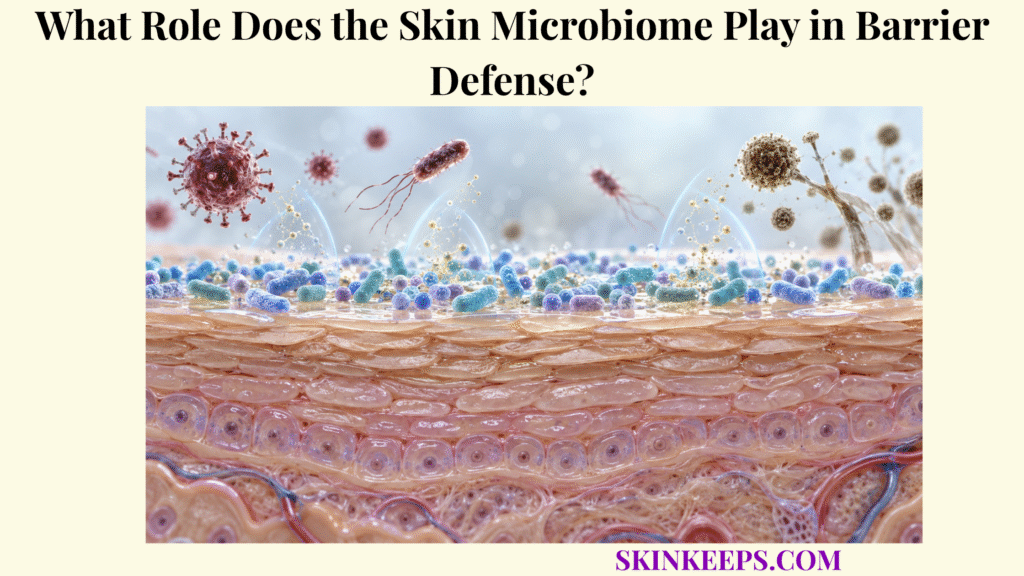
The skin microbiome contributes to barrier defense by occupying ecological niches, competing with potential pathogens, producing biologically active metabolites, and communicating with keratinocytes and immune cells that maintain physical and immunological skin homeostasis. Healthy skin normally contains microorganisms and is not meant to be sterile.
This page explains colonization resistance, physical-barrier and immune interactions, site-specific microbial ecology, factors that disturb these relationships, and why a change called dysbiosis is a descriptive ecological finding rather than automatic evidence of disease.
What Makes the Skin Microbiome Part of Barrier Defense?
The skin microbiome forms part of barrier defense because resident bacteria, fungi, viruses, archaea, and other microbial communities live directly within the skin’s physical and chemical environment and continuously interact with surface lipids, gland secretions, keratinocytes, and immune cells.
Skin microbiota refers to the microorganisms occupying the skin ecosystem. Skin microbiome is the broader reader-facing term used here for those communities together with their genes, metabolites, ecological relationships, and interactions with the host.
A commensal is an organism living in association with the host without normally producing disease. A pathobiont is a resident or usually tolerated organism that can contribute to disease when host or ecological conditions change.
Which Microorganisms Make Up the Skin Microbiome?
The skin microbiome includes bacterial, fungal, viral, archaeal, and other microbial communities whose relative abundance differs substantially among anatomical sites. Commonly discussed groups include Staphylococcus, Cutibacterium, Corynebacterium, and the fungal genus Malassezia, but the barrier role of every microbial member has not been established. Evidence for specific host–microbe mechanisms is strongest for selected bacterial interactions. [S1, S2]
Where Do Skin Microbiome Communities Live?
Skin microorganisms occupy multiple microhabitats, including the stratum-corneum surface, hair follicles, sebaceous units, and gland-associated niches whose moisture, lipid, oxygen, salt, and pH conditions select different communities. They are therefore not simply organisms floating on top of the skin; appendage-associated niches create deeper, chemically distinct habitats.
How Does the Skin Microbiome Interact With Physical and Chemical Barriers?
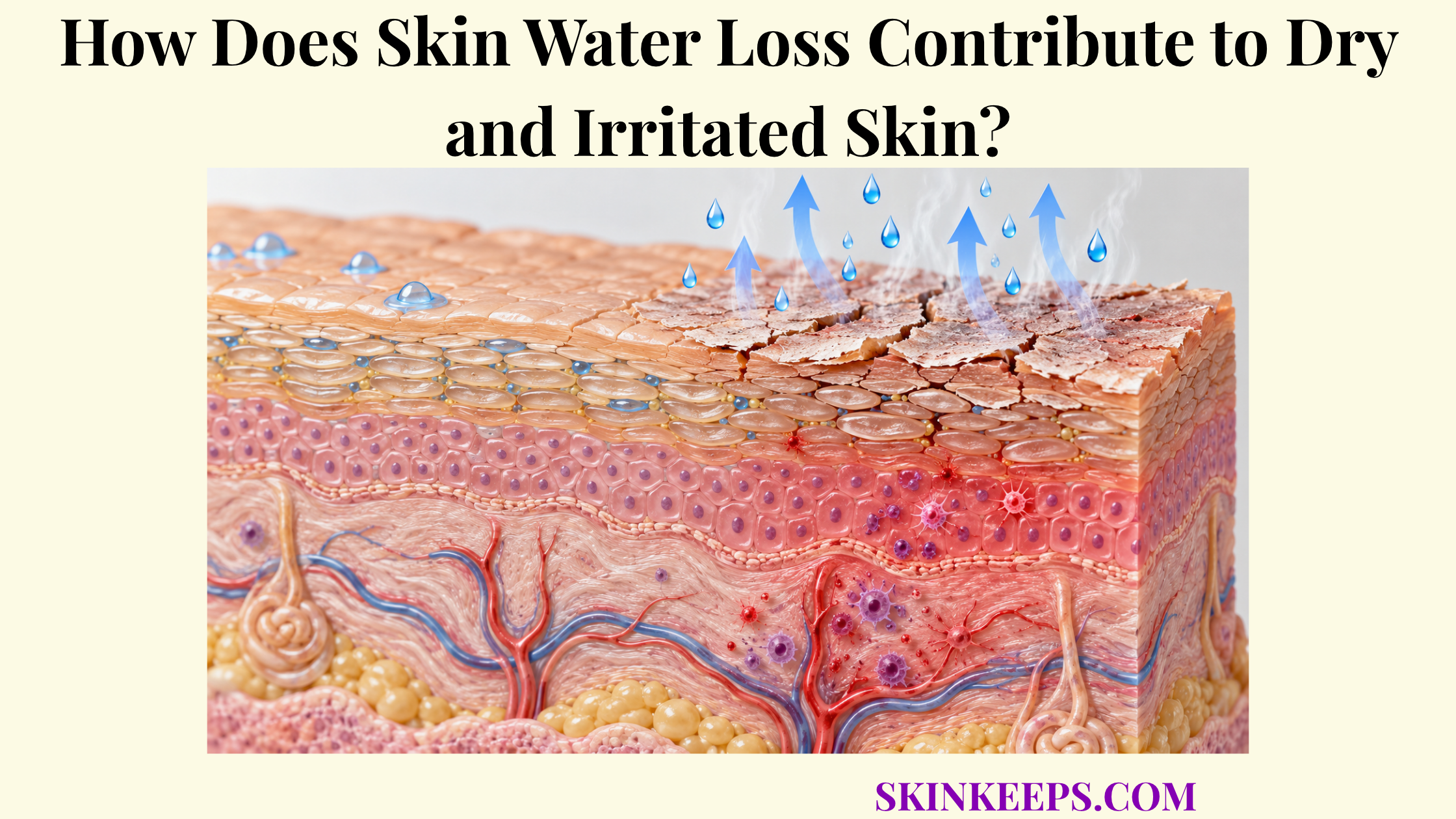
Resident microorganisms interact with the stratum corneum, sebum, sweat, surface acidity, host lipids, and antimicrobial molecules, making the microbial component inseparable from broader skin barrier protection. Barrier defense allows controlled surface colonization while restricting harmful overgrowth and deeper invasion; it does not attempt to remove all microorganisms.
How Does the Skin Microbiome Limit Pathogen Colonization?
The skin microbiome limits pathogen colonization through ecological competition, direct microbial antagonism, and host-defense stimulation that make it harder for newly arriving organisms to establish or expand. Together, these effects are described as colonization resistance.
How Do Skin Microbiome Residents Compete for Nutrients and Attachment Sites?
Resident microorganisms create colonization resistance by occupying physical niches and consuming locally available nutrients, reducing resources and attachment opportunities for competing microbes. This ecological layer works alongside other skin defenses against microorganisms rather than replacing the physical or immune barrier.
How Can Skin Microbiome Residents Directly Restrict Competing Organisms?
Selected resident strains can directly suppress competitors by producing bacteriocin-like molecules, antimicrobial peptides, proteases, quorum-signaling antagonists, phenol-soluble modulins, or other inhibitory metabolites. These activities can be strongly strain-specific: selected S. epidermidis and other coagulase-negative staphylococcal strains have demonstrated mechanisms capable of antagonizing S. aureus, but another strain of the same species may not produce the same effect. [S3]
Why Does Colonization Resistance Not Mean Complete Pathogen Elimination?
Colonization resistance lowers the ecological opportunity for potential pathogens but does not guarantee their absence, because establishment also depends on exposure, microbial strain, host barrier integrity, immune state, and the local environment. Colonization means an organism is present; infection implies clinically relevant tissue invasion, damage, or host response. The terms are not interchangeable.
| Microbiome mechanism | Pressure on competing microbes | Barrier effect |
|---|---|---|
| Niche occupancy | Fewer available attachment sites | Reduces colonization opportunity |
| Nutrient competition | Limits accessible substrates | Restricts expansion of some competitors |
| Bacteriocin / AMP production | Directly inhibits susceptible strains | Adds microbial-layer antimicrobial defense |
| Quorum / virulence interference | Alters competitor behavior | Can reduce colonization fitness in selected interactions |
| Microbial fatty acids / metabolites | Changes local chemical conditions | Reinforces selective surface ecology |
| Host AMP stimulation | Increases keratinocyte antimicrobial activity | Links microbiome signaling to innate defense |
| Stable site-adapted community | Occupies established ecological niches | Raises the ecological barrier to incoming organisms |
These effects are organism-, strain-, body-site-, and host-dependent; they are not universal properties of all resident microbes.
How Does the Skin Microbiome Support the Physical Barrier?
The skin microbiome can support the physical barrier through reciprocal interactions in which microbial metabolites influence keratinocyte differentiation and lipid biology while an intact stratum corneum creates the environmental conditions that sustain site-adapted microbial communities.
How Does the Physical Barrier Shape the Skin Microbiome?
The stratum corneum barrier shapes the microbiome by controlling hydration, lipid availability, pH, salt, oxygen access, and physical niches, thereby selecting which microorganisms can persist at each anatomical site. This direction of influence is as important as microbial signaling back to the host.
How Can Skin Microbiome Metabolites Signal to Keratinocytes?
Experimental evidence shows that selected microbial metabolites can activate keratinocyte signaling pathways such as the aryl hydrocarbon receptor, or AHR, a host transcriptional sensor that responds to environmental and microbial metabolites and can influence epidermal differentiation, barrier integrity, and repair. Germ-free mouse studies, defined microbial consortia, and reconstructed human epidermis provide strong mechanistic evidence, but they should not be converted into a universal human clinical claim. [S4, S5]
Can Skin Microbiome Activity Influence Barrier Lipids?
Selected microbial activities can influence host lipid biology. Experimental studies show that sphingomyelinase produced by some Staphylococcus epidermidis strains can increase host ceramide generation and reduce water loss in damaged mouse skin. This illustrates one microbe–host mechanism rather than proving that all S. epidermidis strains build the human lipid barrier; keratinocyte lipid metabolism remains the primary host system that forms normal stratum-corneum lipids. [S6]
How Do the Skin Microbiome and Acid Mantle Interact?
The microbiome and skin acid mantle interact bidirectionally because microbial metabolism can transform sebum triglycerides and generate fatty acids or other metabolites that influence surface chemistry, while skin pH helps select which microbial communities can persist. Neither the microbiome nor surface acidity should be presented as completely upstream of the other.
How Does the Skin Microbiome Support Immune Defense?
The skin microbiome supports immune defense by continuously providing molecular signals that influence keratinocyte surveillance, antimicrobial-peptide production, local lymphocyte function, and immune tolerance toward resident organisms.
How Do Resident Microbes Communicate With Keratinocytes?
Keratinocytes detect microbial structural molecules and metabolites through pattern-recognition and metabolic-sensing systems and can alter antimicrobial peptides, cytokines, chemokines, and barrier-related gene expression in response. This keratinocyte immune surveillance does not mean every microbial signal produces inflammation; healthy sensing can modify local immune tone without infection-level tissue injury.
How Does the Skin Microbiome Influence Immune Surveillance?
Resident microbiota can tune local immune surveillance by shaping antimicrobial molecules and the activity of tissue-resident immune populations. The key concept is calibration rather than constant activation: host cells remain capable of responding to invasion while normal residents are often tolerated. This crosstalk forms one component of broader skin immune defense. [S7]
How Does the Skin Microbiome Support Immune Tolerance?
Healthy skin must tolerate many resident microbial antigens, and regulatory T-cell pathways help restrain inappropriate inflammation while preserving the ability to respond to genuine tissue invasion. Early-life microbial exposure appears especially important for development of some commensal-specific tolerance pathways, which is why skin immune tolerance should be understood as regulated immune education rather than generalized immune suppression. [S7, S8]
Why Is Balanced Immune Signaling Important for Skin Microbiome Defense?
Balanced signaling is necessary because too little antimicrobial defense can permit opportunistic expansion, while excessive or persistent immune activation can damage the barrier and alter the microbial habitat itself. Stronger immune activation is therefore not automatically stronger microbiome defense.
How Does the Skin Microbiome Maintain Microbial Balance?
The skin microbiome maintains ecological stability through site-adapted microbial communities whose composition is continuously selected by moisture, sebum, pH, oxygen, temperature, salt, and host biology. “Balance” therefore means an ecological state compatible with barrier function and controlled host–microbial interaction, not a fixed species ratio.
Why Do Different Skin Sites Have Different Microbiomes?
Different anatomical sites support different microbiomes because gland density, moisture, lipid availability, temperature, oxygen exposure, and surface chemistry create distinct ecological niches. Healthy composition must be interpreted relative to the site rather than against one universal profile. [S1, S2]
How Does Sebum Shape Skin Microbiome Composition?
Sebum selects for lipid-adapted microorganisms by supplying triglycerides and other lipid substrates, making sebaceous and follicular sites favorable to organisms such as Cutibacterium and lipid-dependent Malassezia species. These organisms should not be labeled universally beneficial or pathogenic because behavior depends on strain, location, host state, and community context.
How Does Moisture Shape Skin Microbiome Composition?
Moist skin sites support microbial communities adapted to higher water availability, warmth, salt, and occlusion, commonly including greater representation of Staphylococcus and Corynebacterium species. Exact patterns still vary among body sites and individuals.
How Do pH and Oxygen Shape Skin Microbiome Composition?
Skin pH creates selective acid stress at the exposed surface, while oxygen gradients distinguish the relatively oxygenated surface from increasingly low-oxygen follicular and sebaceous microenvironments. The entire skin surface should therefore not be called anaerobic. Likewise, microbial diversity is a site-dependent ecological property rather than a universal health score; lower bacterial diversity at some healthy sebaceous sites can be normal.
| Skin microenvironment | Dominant ecological features | Common community pattern | Interpretive boundary |
|---|---|---|---|
| Sebaceous | High lipids; follicular low-oxygen niches | Cutibacterium-rich bacterial communities; Malassezia common | Lower diversity can be normal |
| Moist | Higher humidity, warmth, salt / occlusion | Staphylococcus and Corynebacterium frequently represented | Composition varies by exact site |
| Dry | Lower moisture and broader environmental exposure | Often more compositionally diverse bacterial communities | Diversity alone does not define health |
| Follicular | Lipid-rich, deeper and relatively oxygen-poor | Specialized lipophilic organisms | Distinct from the exposed skin surface |
| Gland-associated | Sweat / sebum chemistry | Site-adapted microbial communities | Secretions influence but do not solely determine composition |
Healthy microbial composition should be interpreted relative to anatomical site rather than against one universal species profile.
What Disrupts the Skin Microbiome Barrier?
The skin microbiome barrier can be disturbed when physical damage, inflammation, repeated harsh cleansing, antimicrobial exposure, altered moisture or sebum, pH change, or environmental stress reshapes the niches that normally support resident communities.
How Can Barrier Damage Alter the Skin Microbiome?
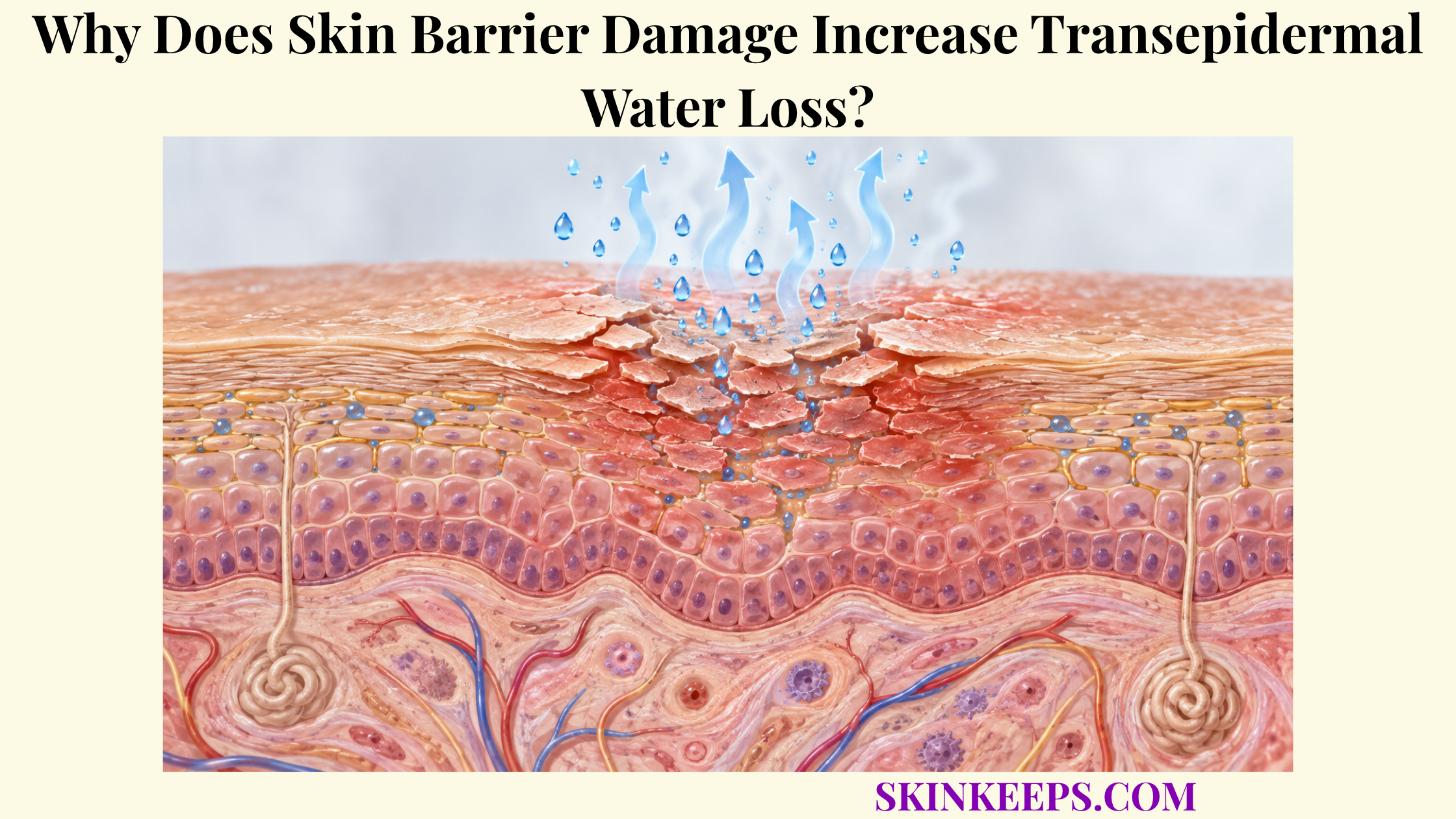
Barrier damage alters microbial habitat by changing hydration, nutrient leakage, inflammatory signals, surface chemistry, and access to deeper tissue, potentially favoring organisms that were previously constrained. Barrier damage can therefore precede a microbial community shift; microbial change should not automatically be treated as the original cause.
How Can Repeated Harsh Cleansing Affect the Skin Microbiome?
Repeated harsh cleansing can alter microbial habitats indirectly by changing surface lipids, hydration, pH, and barrier integrity, although the magnitude and persistence of microbiome change depend on cleanser chemistry, frequency, body site, and individual skin. Normal cleansing is not inherently pathological, and washing should not be described as simply “destroying the microbiome.”
How Can Antimicrobial Exposure Alter Microbial Communities?
Topical or systemic antimicrobial exposure can impose selective pressure by reducing susceptible populations and potentially changing competitive relationships among surviving organisms. This ecological principle does not provide a basis for starting, stopping, or choosing antimicrobial treatment.
How Do Environment and Host Biology Alter the Skin Microbiome?
Climate, temperature, humidity, age, hormonal state, immune function, occupation, lifestyle, and environmental contact can alter the conditions that select cutaneous microbial communities. These factors may change composition without, by themselves, establishing disease.
What Happens When the Skin Microbiome Loses Balance?
When the skin microbiome loses ecological stability, colonization resistance and host–microbe signaling can change, but the resulting community shift should be interpreted as part of a broader barrier and immune context rather than as automatic proof of disease.
Dysbiosis describes a change in microbial community structure or function relative to the expected state of a particular host or anatomical site. It does not mean simply “loss of beneficial bacteria,” and it does not establish cause by itself.
How Can Reduced Microbial Competition Create Opportunities for Potential Pathogens?
Loss of resident competitors can free ecological niches, nutrients, or attachment sites that allow opportunistic organisms to expand more easily under favorable conditions. Expansion still depends on the organism, strain, host, body site, barrier state, and immune state.
How Can Altered Microbial Signals Affect Immune Regulation?
A changed microbial community can alter the mixture of metabolites, structural signals, and antigens reaching keratinocytes and immune cells, potentially modifying antimicrobial, inflammatory, or tolerance pathways. There is no single universal dysbiosis-to-inflammation pathway that applies to every skin disorder.
How Can Barrier Disruption and Skin Microbiome Imbalance Reinforce Each Other?
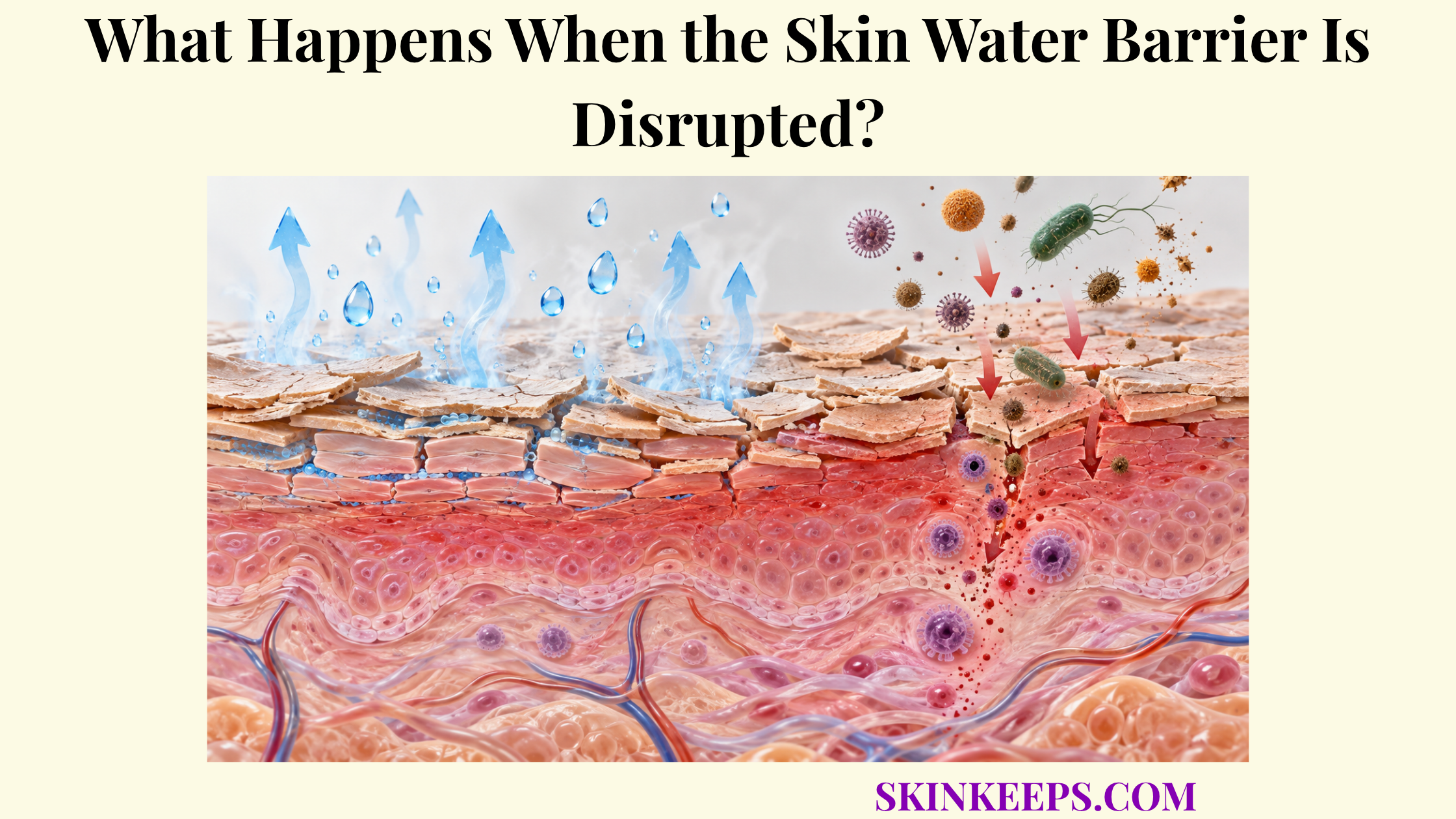
Barrier disruption can reshape microbial niches, while microbial overgrowth or altered microbial products can further influence inflammation and barrier physiology, creating a bidirectional feedback loop in susceptible conditions. This is one reason the relationship between skin barrier integrity and immunity cannot be separated cleanly from microbial ecology.
Why Does Dysbiosis Not Automatically Mean Skin Disease?
Dysbiosis does not automatically establish disease because microbial differences may be a cause, a consequence, a modifier, or merely a correlate of changes in skin physiology. A microbiome profile alone generally cannot diagnose a skin disorder.
What Are the Key Takeaways About the Skin Microbiome?
The key fact about the skin microbiome is that barrier defense depends on regulated host–microbe ecology: resident communities compete with potential pathogens and communicate with skin cells, while the host’s physical, chemical, and immune barriers continuously determine which communities can persist.
Healthy microbiome defense therefore does not mean sterility, maximum diversity, stronger immune activation, or one ideal species profile. It means context-specific colonization resistance and host–microbial coexistence that remains compatible with barrier integrity, surface chemistry, and controlled immunity.
- Healthy skin is not sterile: resident microbial communities normally occupy its surface and appendages.
- The skin microbiome is site-specific: sebaceous, moist, dry, and follicular environments select different communities.
- Colonization resistance occurs when resident microbes occupy niches, compete for nutrients, or inhibit competing organisms.
- Strain matters: microorganisms of the same species can have different effects on the host or competing microbes.
- Resident microbes interact with skin chemistry: pH, sebum, sweat, and microbial metabolites influence one another.
- The physical barrier shapes the microbiome: stratum-corneum integrity determines hydration, nutrients, and microbial access.
- Microbial metabolites can influence keratinocytes: experimental evidence includes AHR-mediated barrier signaling.
- Selected microbial lipid metabolism can influence host lipids: S. epidermidis sphingomyelinase is a mechanistic experimental example.
- The microbiome communicates with immunity: keratinocytes and immune cells respond to microbial molecules and metabolites.
- Immune tolerance matters: resident microbes must be recognized without provoking continuous destructive inflammation.
- Microbial balance is contextual: there is no single universal healthy species ratio or diversity target.
- Dysbiosis is descriptive: it does not by itself establish disease or causality.
- Barrier damage and microbial imbalance can reinforce each other: the relationship can work in both directions.
What Common Questions Do People Ask About the Skin Microbiome?
Common questions about the skin microbiome focus on whether all resident microbes are beneficial, whether one microbiome composition is healthiest, how microbes protect against pathogens, and what dysbiosis actually means.
Is the Skin Microbiome the Same in Everyone?
No. Skin microbial communities vary among people and, even within the same person, differ substantially among sebaceous, moist, dry, and follicular sites because each location creates a different ecological environment.
Are All Skin Microbiome Bacteria Beneficial?
No. Microbial effects are species-, strain-, site-, and host-dependent, and some normally tolerated organisms can behave as pathobionts when barrier, immune, or ecological conditions change.
How Does the Skin Microbiome Stop Pathogens?
Resident microbes can reduce pathogen colonization by competing for niches and nutrients, producing inhibitory substances, modifying surface chemistry, and stimulating selected host antimicrobial responses, but these mechanisms do not guarantee complete pathogen exclusion.
Does Harsh Cleansing Permanently Destroy the Skin Microbiome?
Not necessarily. Cleansing can transiently alter surface chemistry and microbial communities, while persistent effects depend on formulation, frequency, body site, barrier condition, and other environmental factors; normal cleansing should not be described as inherently microbiome-damaging.
Does Skin Microbiome Dysbiosis Mean a Person Has Skin Disease?
No. Dysbiosis describes a change in community structure or function, but that change may contribute to disease, result from disease-related barrier changes, or simply accompany them, so microbiome composition alone is not a diagnosis.
S1 — The Skin Microbiome: Current Landscape and Future Opportunities
Used for multikingdom context, site-specific ecology, host–microbe interaction, barrier reciprocity, and evidence boundaries around dysbiosis.
S2 — EAACI Task Force Report on Homeostatic Skin Microbiota
Used for anatomical-site variation and the effects of pH, humidity, sebum, temperature, host factors, and environmental conditions.
S3 — Commensal Staphylococci Influence S. aureus Skin Colonization and Disease
Used for colonization resistance, coagulase-negative staphylococci, direct antagonism, signaling interference, and strain-specific competition.
S4 — Commensal Microbiota Regulates Skin Barrier Function and Repair via AHR
Used for experimental microbiome–AHR signaling, epidermal differentiation, barrier competence, repair, and model limitations.
S5 — Commensal-Derived Tryptophan Metabolites Fortify the Skin Barrier
Used for indole/tryptophan metabolites, AHR signaling, reconstructed human epidermis, and gnotobiotic model evidence.
S6 — Commensal S. epidermidis Contributes to Skin Barrier Homeostasis by Generating Protective Ceramides
Used for sphingomyelinase, host ceramide generation, damaged-mouse-skin water-loss findings, and model-specific interpretation.
S7 — Crosstalk Between Skin Microbiota and the Immune System in Health and Disease
Used for keratinocyte sensing, antimicrobial responses, immune education, local immune regulation, and early-life tolerance.
S8 — Establishing Tolerance to Commensal Skin Bacteria: Timing Is Everything
Used for regulatory T-cell involvement and the importance of early-life exposure in commensal-specific immune tolerance.
Medical note: This page explains skin microbiome physiology and does not diagnose dysbiosis, infection, or inflammatory disease or recommend microbiome or antimicrobial products. Seek medical assessment for recurrent infections, persistent inflammation or pustules, repeated barrier breakdown, non-healing lesions, or worsening symptoms; seek prompt or urgent care for spreading redness, increasing warmth or swelling, pus, fever, rapidly progressive lesions, extensive tissue damage, breathing difficulty, or severe systemic illness.