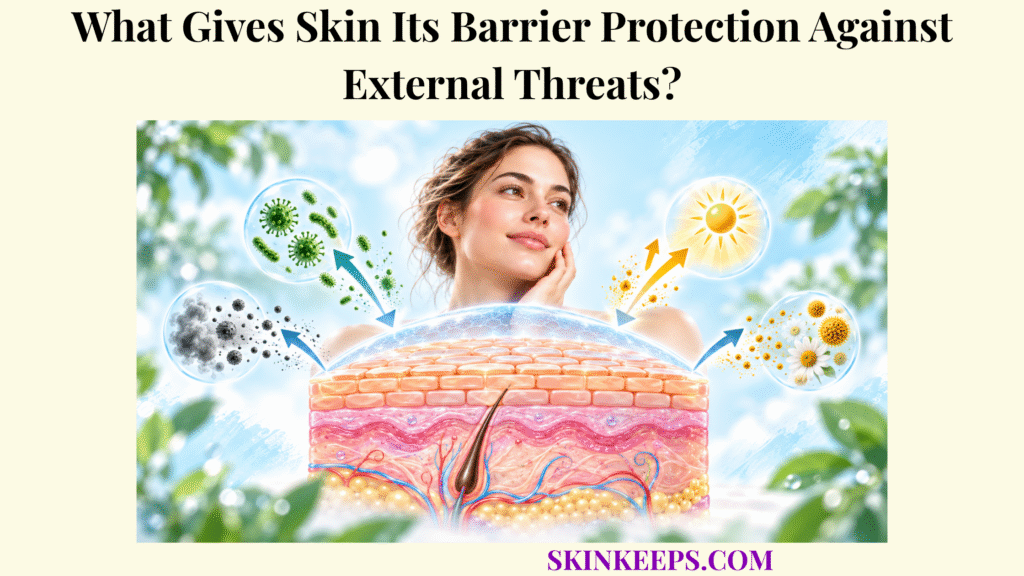
Skin gets its barrier protection against external threats from an integrated epidermal defense system built around the stratum corneum, intercellular lipids, tight junctions, surface chemistry, resident microbes, antimicrobial molecules, and cutaneous immune cells. The skin barrier is not one invisible coating; it is a coordinated set of structural, permeability, chemical, microbial, and immune defenses.
This article explains what builds the barrier, how lipids regulate penetration and water loss, how chemistry and microbiota reinforce defense, how immune cells respond to breaches, what disrupts barrier integrity, and which conservative care principles support normal function without treating nonspecific symptoms as a diagnosis.
What Structures Create the Skin Barrier Against External Threats?
The main structural skin barrier against external threats is the epidermis, especially the stratum corneum, where tough corneocytes and organized extracellular lipids create the body’s principal permeability interface while tight junctions provide additional control deeper in the epidermis. Barrier protection is one of several major skin functions, but its strongest permeability control is concentrated in the outer epidermis.
The epidermal barrier is layered rather than uniform. Its outer compartment restricts most passive molecular movement, while viable keratinocytes below it maintain junctions, produce lipids and proteins, and participate in immune signaling.
How Does the Stratum Corneum Form the Outer Physical Barrier?
The stratum corneum forms the outer skin barrier as layers of terminally differentiated corneocytes embedded within highly organized extracellular lipid lamellae that restrict water movement and penetration by external substances. The stratum corneum barrier is the principal outer permeability interface.
Corneocytes are nonliving terminally differentiated cells, but their structure and the biochemical systems surrounding them perform essential physiological functions. The layer therefore should not be dismissed as functionless “dead skin.”
How Do Corneocytes Create a Tough Protective Surface?
Corneocytes strengthen the outer barrier through densely packed keratin and a reinforced cornified envelope that provides resistance to routine mechanical stress while surrounding lipids control most molecular permeability between cells. Corneodesmosomes maintain cohesion, and their controlled breakdown contributes to normal desquamation.
How Do Tight Junctions Strengthen Deeper Epidermal Barrier Control?
Epidermal tight junctions strengthen barrier control by sealing spaces between neighboring keratinocytes in the stratum granulosum and limiting paracellular movement beneath the stratum corneum. Claudin proteins are important components of these junctional complexes.
| Barrier structure | Location | Main protective role |
|---|---|---|
| Stratum corneum | Outermost epidermis | Principal physical and permeability interface. |
| Corneocytes | Stratum corneum | Mechanically resilient keratin-rich cellular units. |
| Extracellular lipid lamellae | Between corneocytes | Restrict water movement and penetration. |
| Tight junctions | Primarily stratum granulosum | Restrict movement between deeper epidermal cells. |
How Do Skin Barrier Lipids Block Irritants, Microbes, and Water Loss?
Skin barrier lipids restrict penetration and excessive water loss by forming highly ordered extracellular lamellae between corneocytes, with ceramides, cholesterol, and free fatty acids providing the principal lipid classes required for normal permeability control. The organization of skin lipids matters as much as their presence.
How Do Ceramides, Cholesterol, and Fatty Acids Organize the Lipid Barrier?
Ceramides, cholesterol, and free fatty acids organize into tightly packed extracellular lamellae that fill the spaces between corneocytes and create the low-permeability lipid phase of the stratum corneum. No single lipid is sufficient alone; normal barrier behavior depends on cooperative composition and arrangement.
How Does the Lipid Matrix Limit Entry of Irritants and Chemicals?
The stratum-corneum lipid matrix limits chemical entry by forcing molecules to cross an unusually ordered hydrophobic extracellular pathway before reaching deeper epidermal tissue. Healthy skin is selectively permeable, not impermeable.
How Does the Same Lipid Barrier Reduce Excessive Transepidermal Water Loss?
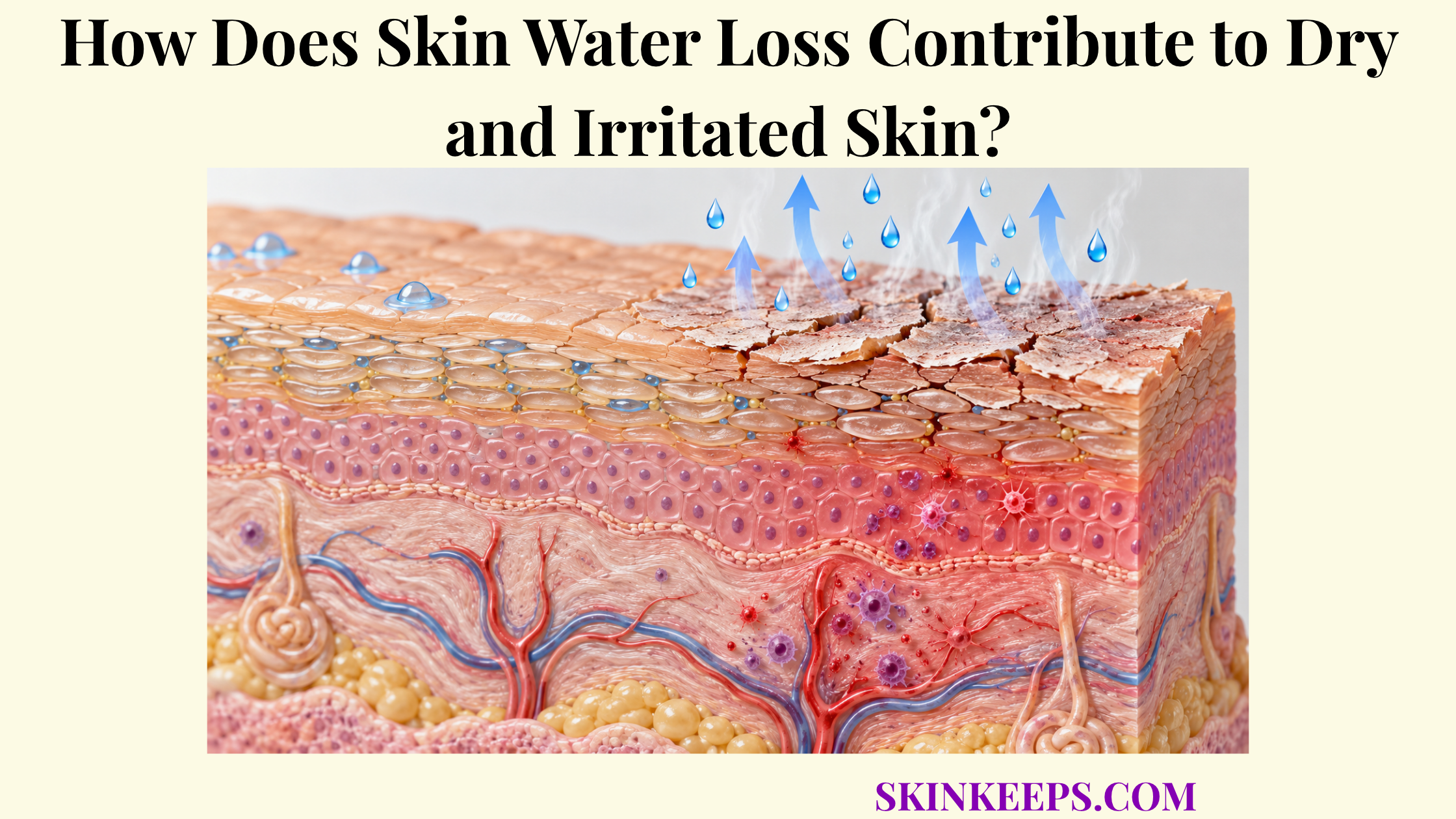
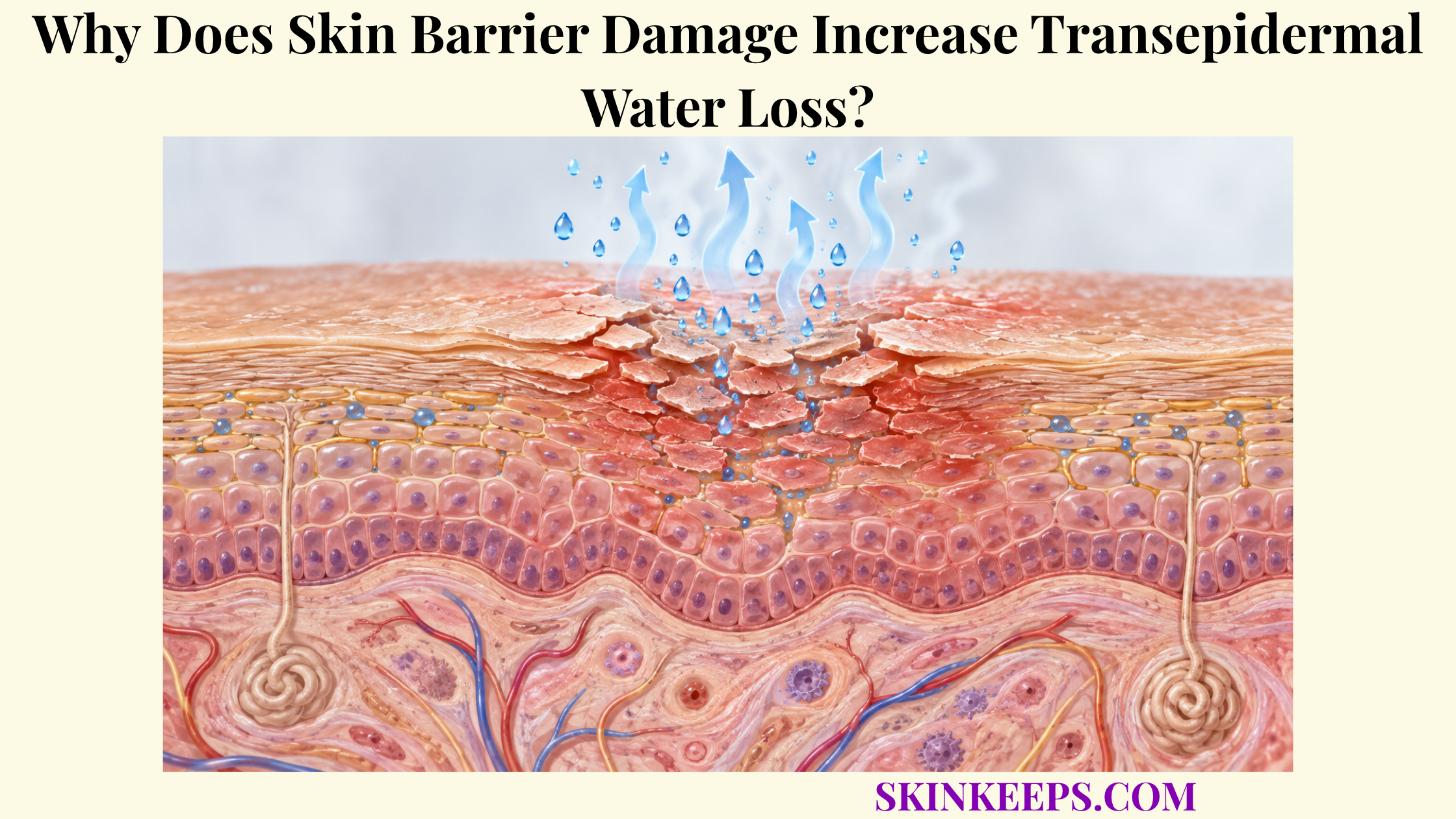
The same extracellular lipid matrix limits inside-out water movement, reducing excessive transepidermal water loss while allowing a small amount of physiological water diffusion to continue. Transepidermal water loss, or TEWL, is passive movement of water through the epidermis to the external environment.
| Lipid component | Barrier function |
|---|---|
| Ceramides | Essential structural lipids in organized lamellae. |
| Cholesterol | Supports packing, flexibility, and organization. |
| Free fatty acids | Contribute to lipid packing, surface acidity, and barrier organization. |
How Do the Skin’s Chemical and Microbial Defenses Strengthen Barrier Protection?
The skin’s chemical and microbial defenses strengthen barrier protection by creating an acidic, lipid- and salt-containing surface environment that supports antimicrobial molecules, resident microbial communities, and barrier enzymes while limiting opportunities for potential pathogens to establish themselves.
How Do Sebum and Sweat Support the Skin Surface Barrier?
Sebum and sweat support the skin surface environment by contributing lipids, salts, organic compounds, and acids that influence surface hydration, pH, microbial ecology, and antimicrobial defense. They influence the barrier surface but do not create a perfect waterproof film.
How Does the Acidic Skin Surface Help Restrict Harmful Microbes?
The mildly acidic skin surface supports barrier defense by favoring normal epidermal enzyme activity and creating chemical conditions that can limit the growth or virulence of some potential pathogens. The skin acid mantle is this mildly acidic chemical environment; it supports homeostasis without sterilizing the skin.
How Does the Skin Microbiome Compete With Potential Pathogens?
The skin microbiome can resist pathogen colonization when resident microorganisms occupy ecological niches, compete for nutrients and attachment sites, modify local conditions, and produce compounds that inhibit competing microbes. This colonization resistance is one function of the skin microbiome.
Resident organisms are not universally beneficial. Their behavior depends on species, body site, host condition, and barrier state.
How Do Antimicrobial Peptides Contribute to Surface Defense?
Antimicrobial peptides contribute to surface defense by directly inhibiting selected bacteria, fungi, and viruses while also participating in immune signaling and local inflammatory regulation. Defensins and cathelicidins are examples, but they function within a larger defense network rather than as a standalone sterilizing system.
| Defense type | Main component | Protective effect |
|---|---|---|
| Structural | Corneocytes and cornified envelope | Resilient outer tissue. |
| Permeability | Ceramide/cholesterol/FFA matrix | Restricts diffusion and water loss. |
| Chemical | Acidic surface, lipids, salts | Supports barrier processing and antimicrobial conditions. |
| Microbial | Resident microbiota | Colonization resistance. |
| Molecular innate | Antimicrobial peptides | Inhibits selected microorganisms. |
| Cellular immune | Keratinocytes and immune cells | Detects danger and coordinates defense. |
How Does Cutaneous Immune Defense Support the Skin Barrier?
Cutaneous immune defense supports the skin barrier by detecting microbial products, cellular damage, and foreign material that reach or disturb epidermal tissue and then coordinating antimicrobial and inflammatory responses to contain the threat. This skin immune defense acts as an active second line.
How Do Keratinocytes Recognize Injury and Microbial Threats?
Keratinocytes act as immune sentinels as well as structural barrier cells because they express pattern-recognition systems that detect microbial and damage-associated signals and trigger cytokine, chemokine, and antimicrobial responses. Viable keratinocytes below the stratum corneum remain biologically active.
How Do Langerhans Cells and Other Immune Cells Detect Foreign Material?
Langerhans cells and other cutaneous immune cells sample local signals, recognize potentially dangerous material, and help connect innate detection within skin to broader adaptive immune responses. Dendritic cells, macrophages, mast cells, and T cells contribute distinct functions.
How Does Inflammation Help Contain Infection and Tissue Damage?
Controlled inflammation helps contain skin threats by increasing local immune signaling, recruiting defensive cells, and initiating processes that remove damaged material and prepare tissue for repair. Persistent or excessive inflammation can instead damage tissue and disturb barrier function.
Barrier breach or tissue damage
↓
Keratinocyte / immune-cell danger detection
↓
Cytokine + chemokine + antimicrobial signaling
↓
Immune-cell recruitment / local containment
↓
Resolution and repair when the threat is controlled
What Weakens Skin Barrier Protection and Allows External Threats In?
Skin barrier protection weakens when physical, chemical, environmental, or inflammatory stress disturbs corneocytes, extracellular lipids, surface chemistry, or epidermal signaling enough to increase permeability and water loss. Skin barrier disruption describes altered barrier performance, not a diagnosis that can be confirmed from symptoms alone.
How Can Harsh Cleansers, Friction, and Repeated Washing Damage the Barrier?
Harsh cleansers, repeated washing, excessive exfoliation, and friction can stress the barrier by extracting lipids, altering proteins, increasing irritation, or mechanically disturbing the outer epidermis. Cleansing itself is not inherently harmful; formulation, frequency, water temperature, duration, friction, and susceptibility all matter.
How Do Dry Environments and Low Humidity Increase Barrier Stress?
Dry environmental conditions increase barrier stress by increasing the gradient that drives water away from the skin surface, which can contribute to dryness, roughness, and cracking when the barrier cannot compensate adequately. Humidity is one factor, not the sole determinant of barrier health.
What Happens When Barrier Damage Increases Permeability and Water Loss?
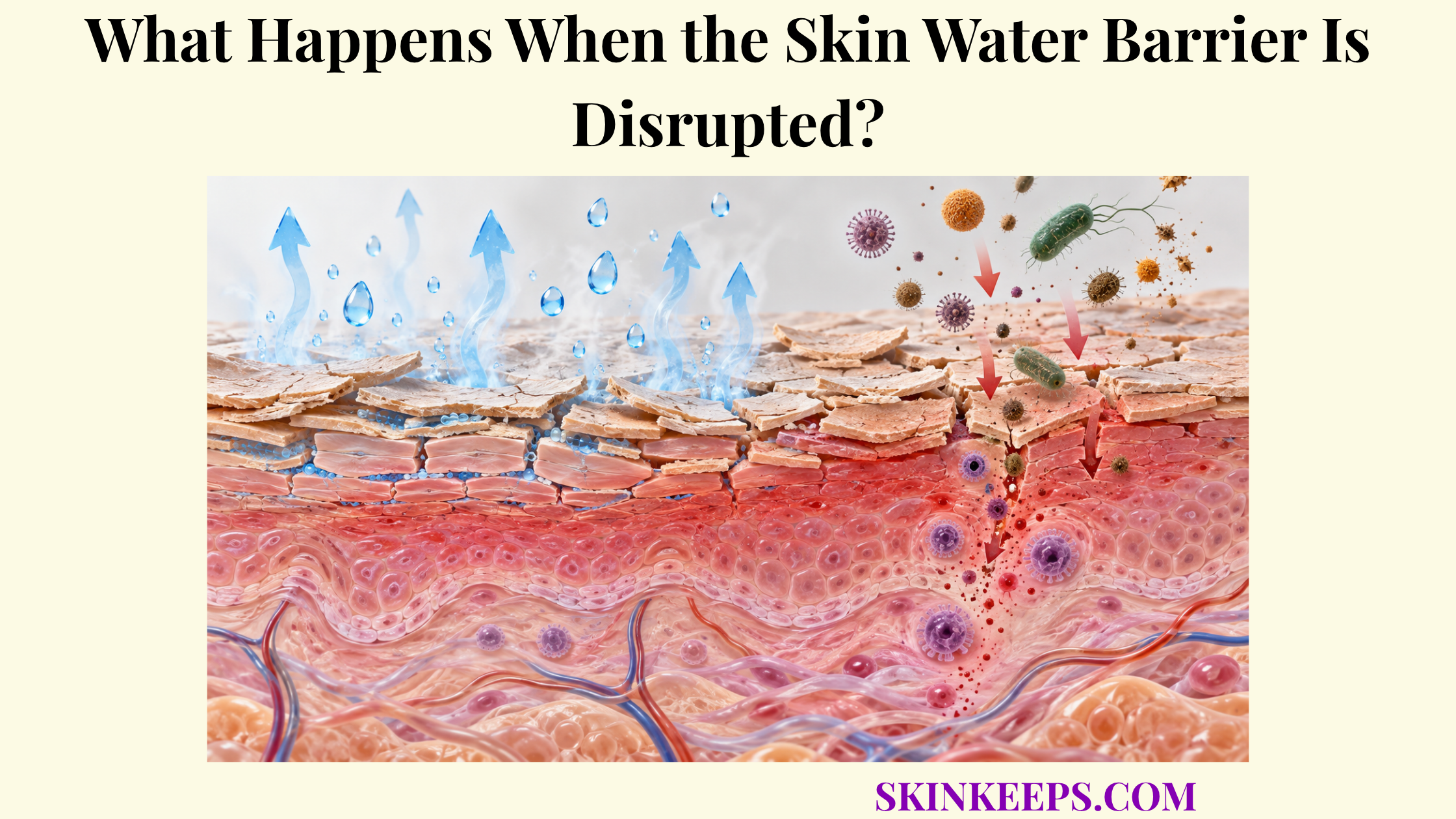
Barrier disruption can increase permeability in both directions, allowing greater water escape while making epidermal tissue more accessible to selected irritants and external substances. Increased permeability does not mean that anything can freely enter the skin.
Why Can a Weakened Barrier Increase Irritation, Inflammation, and Infection Risk?
A weakened barrier can increase susceptibility to irritation and inflammation because environmental substances and microbial signals gain easier access to living epidermal tissue, while cracks or severe disruption can reduce normal resistance to microbial invasion. It can increase infection susceptibility without automatically causing infection.
Possible Barrier Stressors
- Frequent harsh cleansing or true soap use
- Repeated hot-water exposure
- Excessive exfoliation
- Recurrent friction
- Dry or low-humidity environments
- Repeated irritant exposure
- Existing inflammatory skin disease
Possible Signs of Barrier Stress
- Dryness or roughness
- Flaking or scaling
- Tight or uncomfortable skin
- Burning or stinging
- Cracking
- Persistent redness or irritation
These signs are not specific enough to diagnose “skin barrier damage.” Similar symptoms can occur with eczema, contact dermatitis, rosacea, infection, and other skin conditions.
How Can Skin Barrier Function Be Supported and Restored?
Skin barrier function can be supported by reducing avoidable irritant and mechanical stress, cleansing gently, restoring water with appropriate moisturization, reducing excessive evaporation, and addressing underlying skin disease when routine care does not resolve persistent symptoms.
How Does Gentle Cleansing Reduce Unnecessary Barrier Disruption?
Gentle cleansing reduces unnecessary barrier stress by removing dirt, sweat, and excess surface material without maximizing lipid extraction, friction, or exposure to harsh alkaline or irritating formulations. Gentle cleanser categories, warm rather than very hot water, and minimal rubbing are reasonable when skin is dry or irritated.
How Do Moisturizers Support Water Retention and Barrier Function?
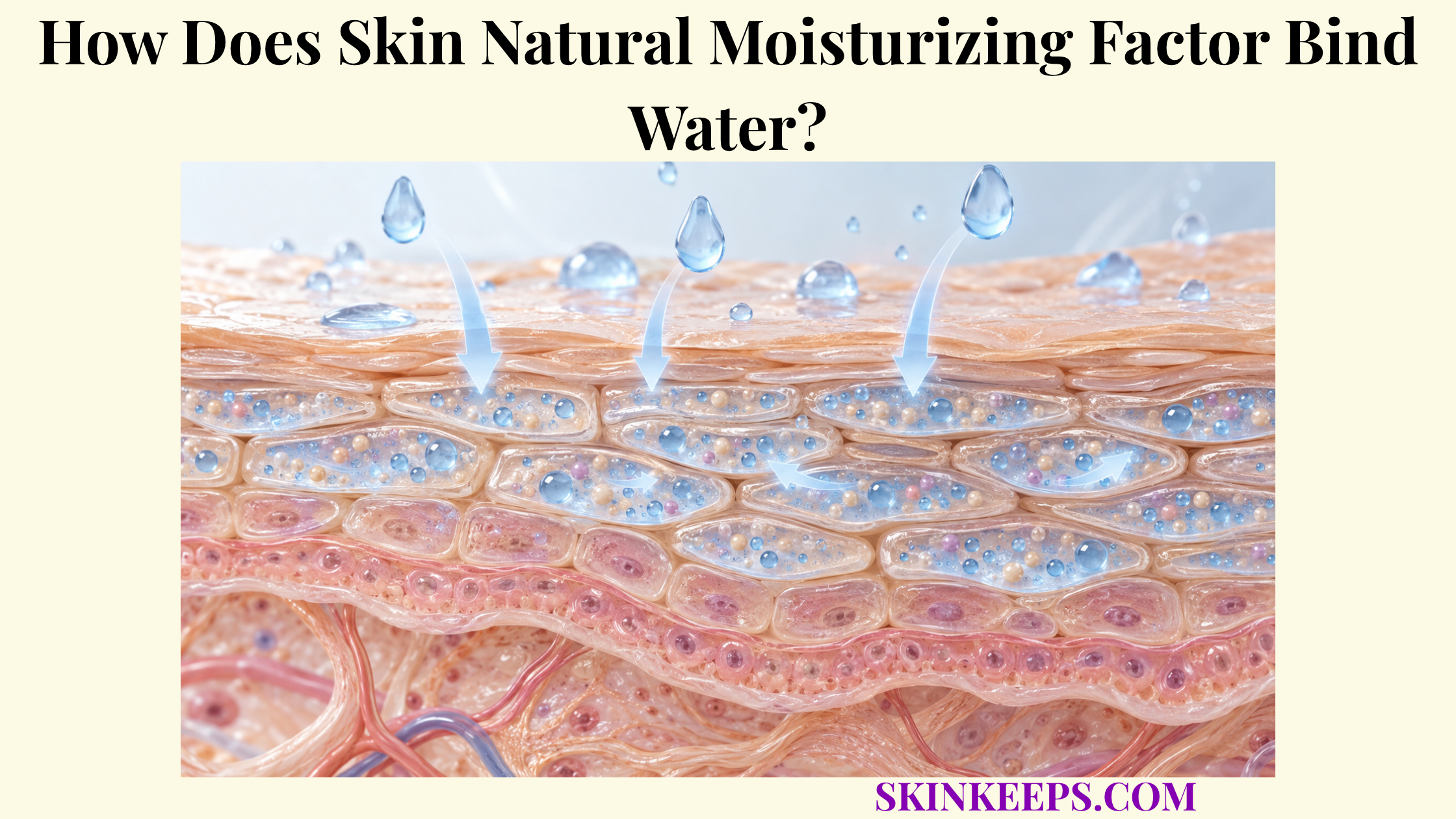
Moisturizers support barrier function by supplying or attracting water, smoothing spaces between shedding corneocytes, and reducing evaporation through humectant, emollient, and occlusive effects. A humectant attracts water, an emollient smooths the surface, and an occlusive reduces evaporative water loss.
Why Should Repeated Irritant Exposure Be Minimized?
Repeated irritant exposure should be minimized because ongoing chemical or mechanical stress can repeatedly disturb recovering barrier structures and prolong burning, dryness, scaling, or inflammation. Potential stressors include irritating fragrance, strong detergents, aggressive exfoliation, harsh acids during active irritation, and repeated friction.
When Can Persistent Barrier Problems Require Medical Evaluation?
Persistent barrier symptoms require medical evaluation when gentle care does not improve the problem or when pain, bleeding cracks, spreading rash, swelling, pus, infection signs, or significant recurrent inflammation suggests a condition beyond ordinary dryness or transient irritation.
Increasing pain, pus, spreading redness, bleeding fissures, or open or non-healing areas deserve prompt assessment. Facial or lip swelling with breathing difficulty or other signs of a severe systemic allergic reaction requires urgent medical care.
| Pattern | Conservative support | Intended outcome |
|---|---|---|
| Cleansing-related dryness | Reduce unnecessary washing intensity and use gentler cleansing. | Reduce lipid/protein stress. |
| Tight, rough, dry skin | Apply an appropriate moisturizer while skin retains some water. | Improve hydration and reduce evaporation. |
| Product stinging | Simplify the routine and remove likely irritants. | Reduce repeated barrier stress. |
| Low-humidity dryness | Moisturize consistently and reduce excessive drying where practical. | Reduce water loss. |
| Persistent redness, pain, cracking, or rash | Seek dermatology evaluation. | Identify an underlying condition rather than assuming simple barrier damage. |
What Are the Key Takeaways About the Skin’s Protective Barrier?
The key fact about the skin’s protective barrier is that external defense depends on multiple systems working together: resilient corneocytes provide structure, extracellular lipids control permeability, surface chemistry and microbiota resist microbial colonization, and immune cells respond when threats reach living tissue.
- Physical barrier: The stratum corneum forms the principal outer structural interface.
- Cellular structure: Keratin-rich corneocytes provide a resilient framework.
- Lipid barrier: Ceramides, cholesterol, and free fatty acids restrict uncontrolled penetration and water loss.
- Deeper defense: Tight junctions restrict movement between granular-layer keratinocytes.
- Chemical defense: Mild surface acidity and secretions support barrier conditions.
- Microbial defense: Resident microbiota can provide colonization resistance.
- Immune defense: Keratinocytes and immune cells detect danger and coordinate defense.
- Water control: Barrier integrity limits excessive TEWL.
- Barrier disruption: Chemical, mechanical, environmental, or inflammatory stress can increase permeability.
- Barrier support: Gentle cleansing, moisturization, lower irritant exposure, and medical evaluation when symptoms persist are safer than aggressive repair routines.
What Common Questions Do People Ask About Skin Barrier Protection?
Common questions about skin barrier protection usually focus on where the barrier is located, how to recognize disruption, whether ceramides or the microbiome matter, and how long normal barrier recovery may take.
Where Is the Skin Barrier Located?
The main permeability barrier is in the outer epidermis, especially the stratum corneum, although tight junctions and deeper immune mechanisms provide additional protection.
Is the Skin Barrier Made Only of Ceramides?
No. Ceramides are major stratum-corneum lipids, but effective barrier function also depends on cholesterol, free fatty acids, corneocytes, structural proteins, tight junctions, surface chemistry, microbiota, and immune activity.
Does Dry or Stinging Skin Prove That the Skin Barrier Is Damaged?
No. Dryness, stinging, redness, or flaking can occur with barrier disruption, but these symptoms are not specific enough to diagnose barrier damage.
Does the Skin Microbiome Form Part of the Skin Barrier?
Yes. Resident microorganisms can compete with potential pathogens, modify surface chemistry, and interact with local immune systems, although individual microbes behave differently depending on context.
Can Skin Barrier Function Recover After Irritation?
Mild disturbance often improves after the irritant is removed and continued stress is reduced, but recovery time varies with severity, body site, age, environment, and underlying skin conditions.
Progress in Lipid Research / PubMed — Using molecular simulation to understand the skin barrier: stratum corneum, corneocyte/lipid organization, and permeability.
Allergy, Asthma & Immunology Research / PubMed — Skin Lipid Barrier: Structure, Function and Metabolism: lipid composition, ceramide diversity, lamellae, and barrier metabolism.
Tissue Barriers / PubMed — Epidermal tight junctions in health and disease: stratum corneum and tight junctions as complementary epidermal barriers.
PubMed — The emerging role of peptides and lipids as antimicrobial epidermal barriers and modulators of local inflammation: antimicrobial peptides, lipids, and innate defense.
PMC — Microbe Interactions within the Skin Microbiome: microbial competition, bacteriocins, and colonization resistance.
PubMed — Keratinocytes: Dynamic Gatekeepers and Immune Regulators of the Skin: keratinocyte sensing, pattern-recognition receptors, cytokines, chemokines, and antimicrobial peptides.
PMC — The Clinical Relevance of Maintaining the Functional Integrity of the Stratum Corneum: barrier stressors and supportive care principles.
American Academy of Dermatology — Dermatologists’ top tips for relieving dry skin: gentle cleansing, fragrance-free care, moisturization, and evaluation boundaries.
Medical note: This article explains normal barrier biology and conservative skin-care principles for education. Burning, redness, flaking, dryness, or stinging do not by themselves diagnose “skin barrier damage.” Persistent or worsening symptoms, severe pain, spreading redness, pus, bleeding cracks, non-healing areas, significant swelling, or breathing difficulty with facial or lip swelling require appropriate medical evaluation.