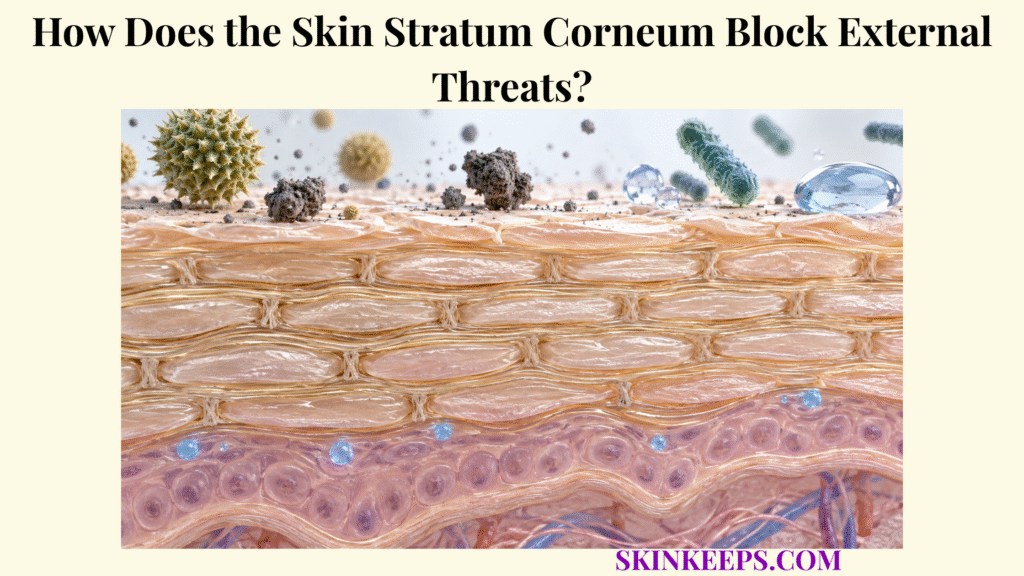
The stratum corneum blocks external threats by forming the skin’s outer permeability barrier, where compact corneocytes reinforced by keratin and cornified envelopes are surrounded by highly organized lipids that slow penetration and reduce water loss.
This page explains what builds that outer barrier, how its cells and lipids work together, why external defense and water retention are linked functions of the same architecture, and what changes when stratum-corneum integrity is disrupted.
What Makes the Stratum Corneum the Skin’s First Protective Barrier?
The stratum corneum is the skin’s first protective barrier because it is the outermost epidermal layer and forms the main permeability boundary separating living tissue from the external environment.
It is the outer structural component of broader skin barrier protection and sits at the surface of the wider skin epidermal barrier. Unlike the living layers beneath it, the stratum corneum is built from terminally differentiated corneocytes embedded in extracellular lipids, creating a compact interface that many outside substances must cross before reaching viable epidermis.
Corneocytes provide the cellular framework, keratin and cornified envelopes reinforce each cell, and the spaces between cells are filled by ordered lipid lamellae. This layered architecture is highly specialized rather than a passive collection of “dead cells.”
How Do Corneocytes and Lipids Build the Stratum Corneum Barrier?
Corneocytes and lipids build the stratum corneum barrier through a complementary structure in which tough, flattened corneocytes provide the cellular framework and intercellular lipids create the low-permeability seal between them.
How Do Corneocytes Form the Protective “Bricks”?
Corneocytes form the protective “bricks” of the stratum corneum because they are flattened, keratin-rich terminal cells reinforced by cornified envelopes that provide mechanical structure and resist external stress.
They arise through terminal differentiation of keratinocytes, so their barrier role is the endpoint of the broader skin keratinocytes barrier program. Dense keratin filaments strengthen the cell interior, while the cross-linked cornified envelope creates a tough protein shell beneath the former plasma membrane.
How Do Ceramides, Cholesterol, and Fatty Acids Form the Lipid “Mortar”?
Ceramides, cholesterol, and free fatty acids form the lipid “mortar” by filling the spaces between corneocytes in highly organized lamellar layers that reduce movement of water and many external substances.
This extracellular phase is a central part of the skin lipids chemical barrier. Its organization depends on multiple lipid classes rather than ceramides alone, and the more focused skin intercellular lipids topic explains that matrix in greater depth.
How Does the Stratum Corneum Restrict External Threats From Entering?
The stratum corneum restricts external threats from entering by forcing substances and microbes to cross a compact, low-permeability barrier of tightly organized corneocytes and lipids before they can reach living skin tissue.
Potential irritants, allergens, environmental chemicals, and microorganisms encounter a tortuous route around structurally resistant cells and through a lipid matrix designed to limit passive diffusion. This does not make the surface completely impermeable: penetration still depends on the agent, concentration or dose, exposure duration, contact conditions, and the condition of the barrier.
Microbial penetration is also limited by the physical continuity and cohesion of the stratum corneum. That structural defense works alongside other skin defenses, so the stratum corneum should be described as an important physical barrier rather than the only antimicrobial system.
How Does the Stratum Corneum Control Water Loss While Blocking Threats?
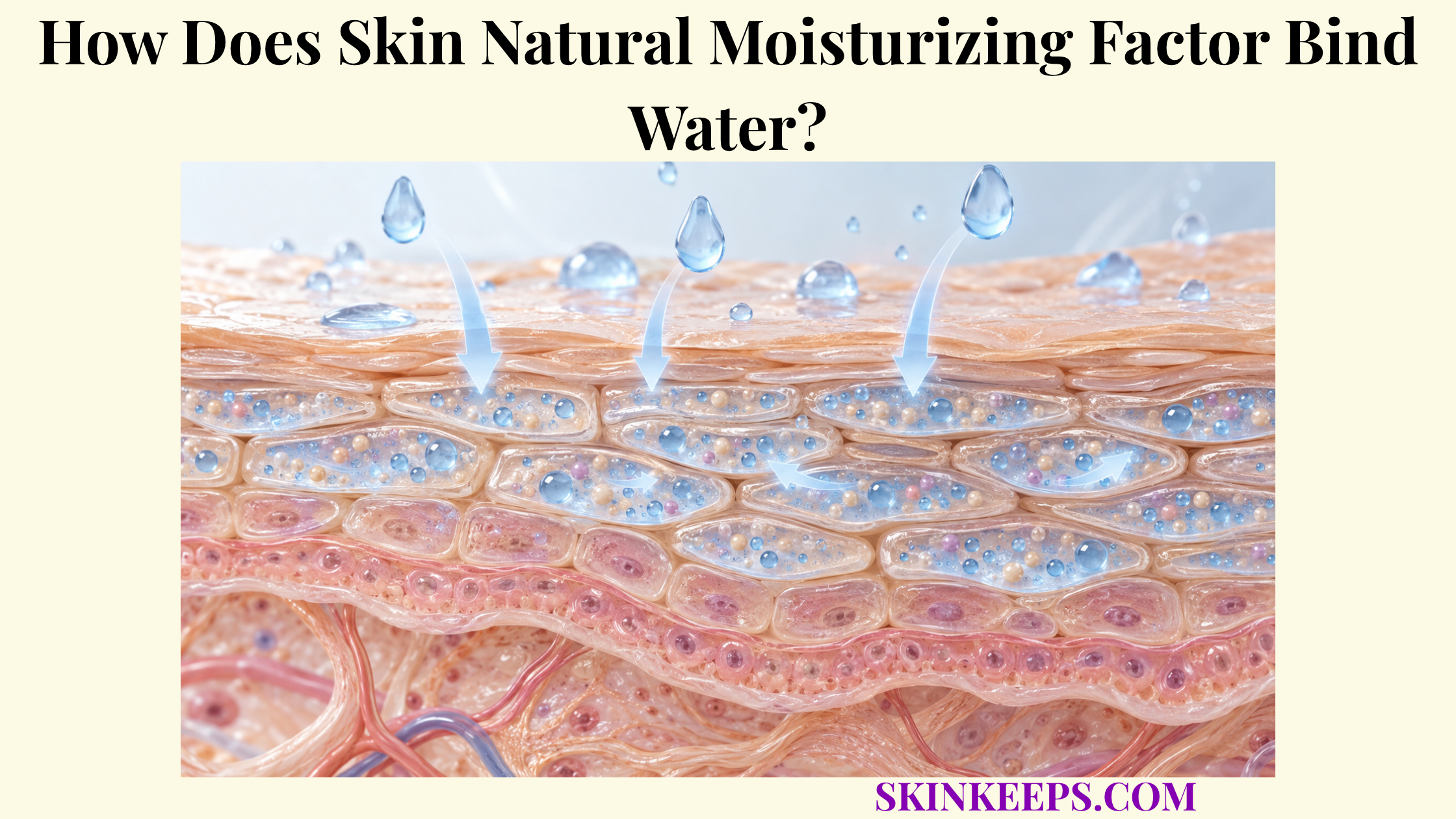
The stratum corneum controls water loss while blocking threats because the same low-permeability lipid-and-corneocyte barrier that resists outside entry also slows the escape of water from the body.
This is why the skin water barrier cannot be separated conceptually from external-threat resistance. Ordered extracellular lipids limit passive water diffusion through intercellular spaces while corneocyte architecture maintains a stable surface pathway.
Transepidermal water loss is therefore a functional readout of inside-out permeability rather than a completely separate barrier system. When the stratum corneum is intact, it restricts excessive water loss while maintaining the same low-permeability surface that limits many outside substances.
| Barrier component | What it blocks or controls | Protective result |
|---|---|---|
| Corneocytes | Mechanical and structural exposure | Creates a strong cellular wall at the surface |
| Keratin-rich corneocyte interior | Physical stress and deformation | Strengthens the barrier cells |
| Cornified envelopes | Cellular fragility | Reinforces each corneocyte |
| Intercellular lipids | Penetration of many external substances | Creates low permeability between cells |
| Ceramides, cholesterol, and fatty acids | Water diffusion and external entry | Help organize and seal intercellular spaces |
| Intact corneocyte cohesion | Surface weakness and barrier gaps | Maintains continuity of the outer barrier |
| Overall SC architecture | TEWL and threat penetration | Conserves water while limiting exposure |
The stratum corneum’s threat-blocking function and water-conservation function depend on the same permeability-barrier architecture.
What Happens When the Stratum Corneum Barrier Becomes Damaged?
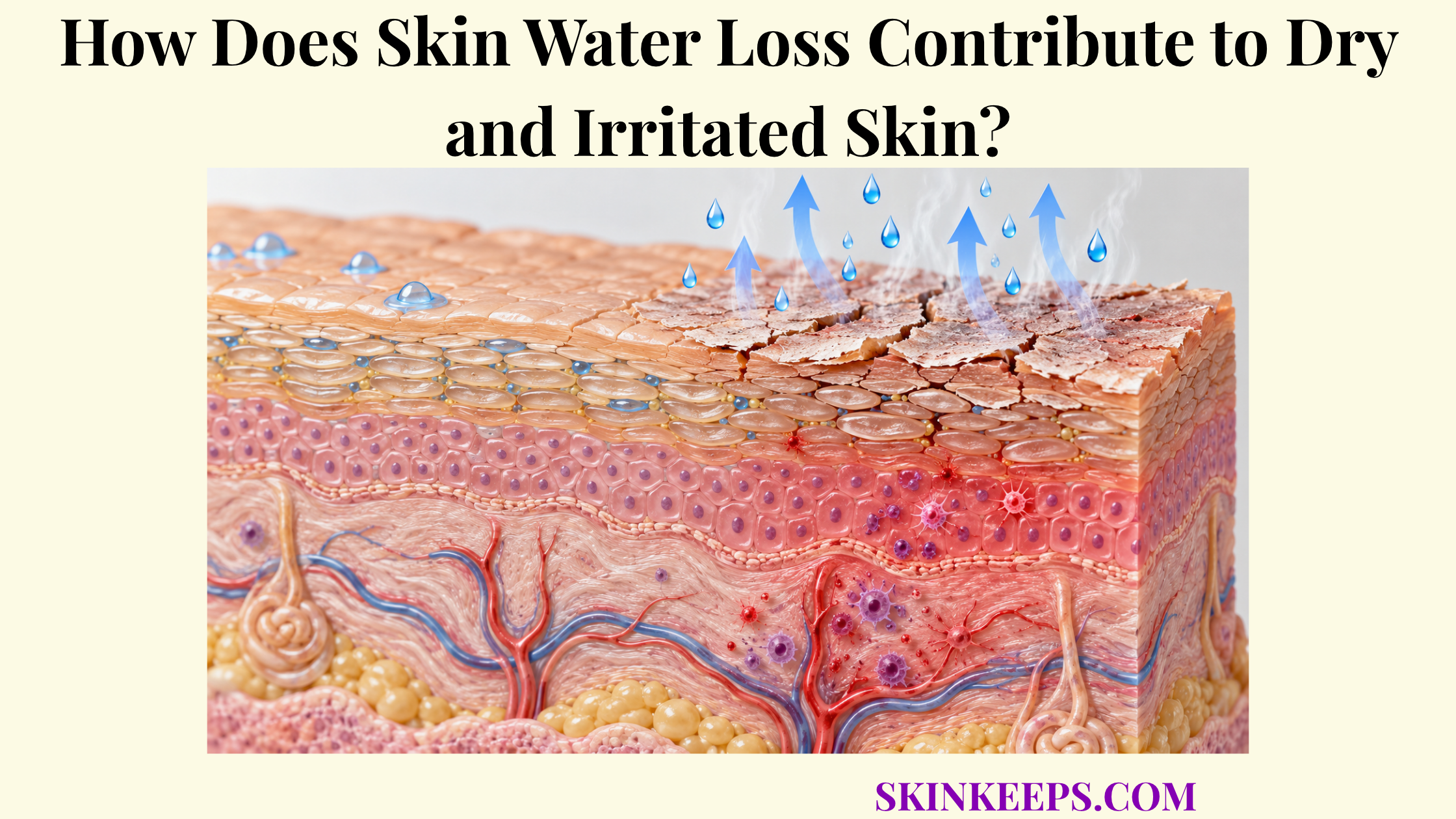
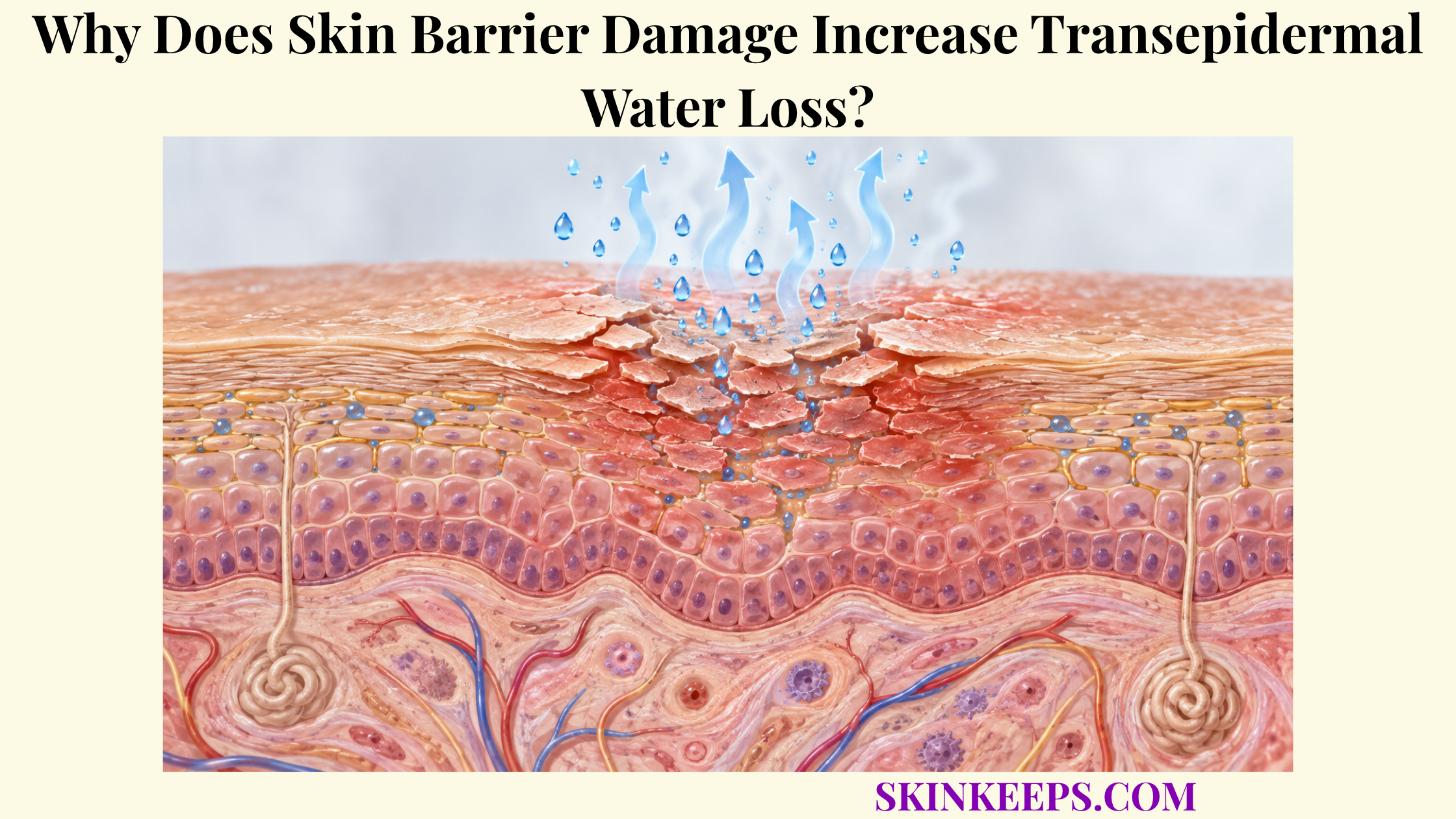
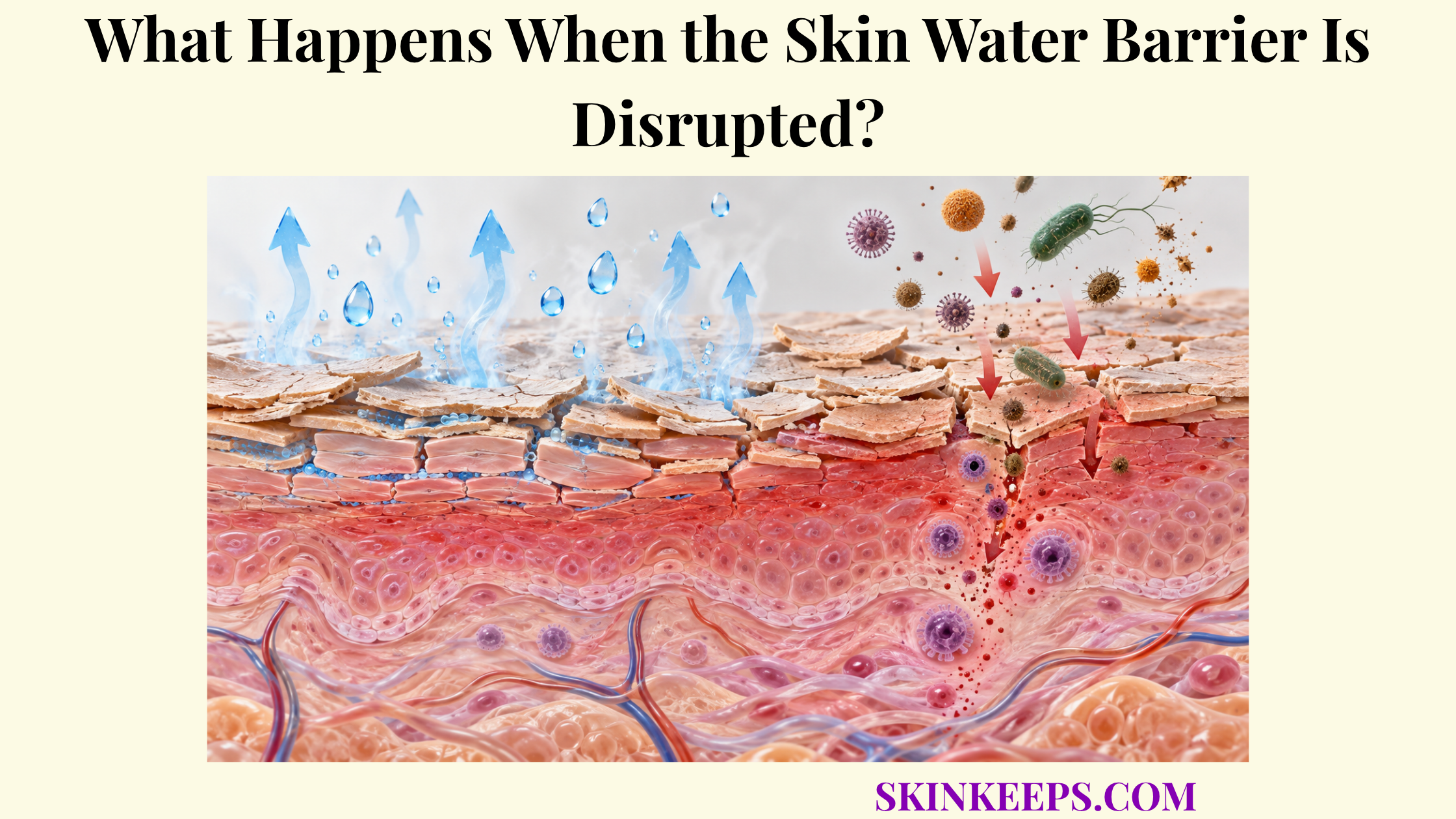
When the stratum corneum barrier becomes damaged, lipid organization and corneocyte cohesion become less effective, permeability rises, water loss increases, and underlying living tissue becomes more exposed to irritants and microbes.
Disturbed lipid arrangement creates easier diffusion pathways between corneocytes, while weakened cohesion can introduce surface gaps, fissuring, or less orderly shedding. This structural failure is the mechanism behind the broader concept of skin barrier disruption; it is not, by itself, a diagnosis of eczema, dermatitis, or infection.
As permeability rises, skin transepidermal water loss can increase and the viable epidermis may interact more readily with external substances. Dryness, irritation, scaling, stinging, or sensitivity may occur, but those symptoms do not identify the exact structural defect on their own.
What Are the Key Takeaways About Stratum Corneum Protection?
The key fact about stratum corneum protection is that the barrier works as one integrated system in which corneocytes provide structure, keratin and cornified envelopes strengthen those cells, intercellular lipids seal the spaces between them, and the intact arrangement limits both external penetration and excessive water loss.
- Corneocytes: provide the structural barrier.
- Keratin: strengthens the inside of those cells.
- Cornified envelopes: reinforce corneocyte structure.
- Intercellular lipids: create much of the low-permeability route between corneocytes.
- Ceramides, cholesterol, and free fatty acids: work together in organized lamellae rather than as isolated ingredients.
- External defense: the intact stratum corneum limits and slows penetration by many external threats.
- Water retention: the same architecture reduces excessive passive water loss.
- Cohesion: corneocyte attachment preserves continuity while controlled shedding removes superficial cells.
- Barrier damage: lipid disorder or loss of cohesion can increase permeability and tissue exposure.
What Common Questions Do People Ask About the Stratum Corneum Barrier?
Common questions about the stratum corneum barrier focus on whether it is the main outer barrier, what its “bricks” and “mortar” are, how it limits microbes, and why barrier damage increases water loss.
Is the Stratum Corneum the Skin’s Main Protective Barrier?
Yes. The stratum corneum is the main outer permeability barrier that separates living epidermal tissue from the external environment and limits movement of water and many outside substances.
What Are the “Bricks” and “Mortar” of the Stratum Corneum?
The “bricks” are corneocytes, while the “mortar” is the intercellular lipid matrix composed mainly of ceramides, cholesterol, and free fatty acids.
How Does the Stratum Corneum Protect Against Microbes?
It helps protect against microbes by maintaining an intact physical barrier that limits microbial penetration into living tissue, although it works alongside other skin defenses rather than acting alone.
Why Does Barrier Damage Cause Dryness and Irritation?
Barrier damage allows more water to escape and reduces protection against external irritants, making the skin drier, more sensitive, and more exposed to environmental substances.
Does the Same Barrier That Blocks Threats Also Prevent Water Loss?
Yes. The same low-permeability structure that resists outside entry also reduces transepidermal water loss, so external defense and water retention are linked functions of one barrier.
An Update of the Defensive Barrier Function of Skin: supports the stratum corneum as the principal outer permeability barrier, corneocyte and lipid architecture, cornified envelopes, and barrier disruption/recovery concepts.
Mammalian Epidermis: A Compendium of Lipid Functionality: supports corneocyte structure, lipid classes, lamellar organization, corneocyte lipid-envelope biology, and permeability function.
Cell Adhesion in Epidermal Development and Barrier Formation: supports epidermal cohesion and adhesion systems that preserve barrier continuity.
The Importance of Acidification in Atopic Eczema: used selectively for corneodesmosome degradation, desquamation control, and how altered stratum-corneum integrity can impair barrier function.
Claimed Effects, Outcome Variables and Methods of Measurement for Maintenance of Skin Function: used selectively for corneocyte adhesion, desquamation, surface integrity, and functional barrier outcomes.
This page is educational and does not diagnose a skin condition or prescribe treatment. Seek medical evaluation for persistent cracking, recurrent breakdown, significant pain, pus, spreading redness, fever, or rapidly worsening skin damage.