
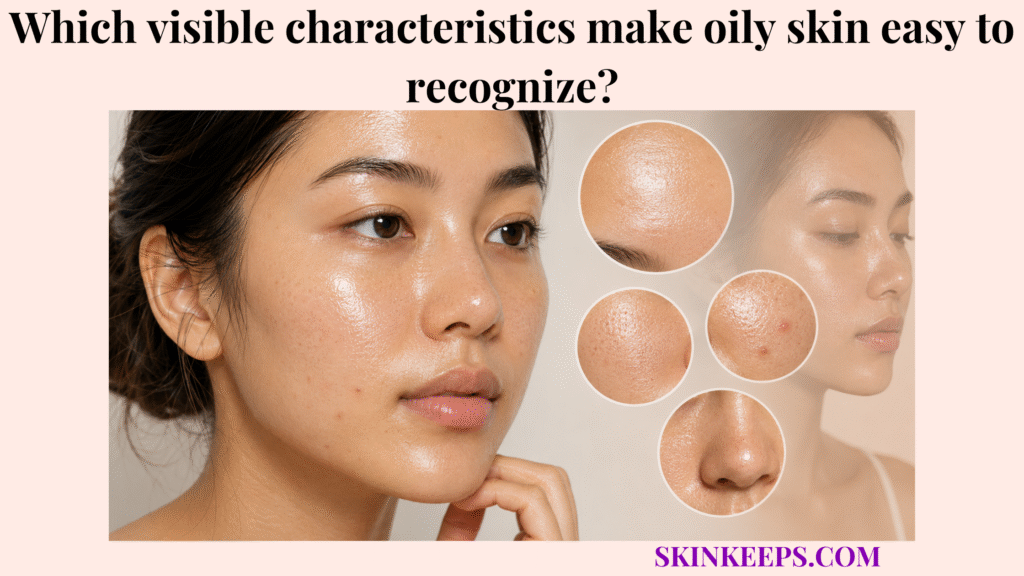
Oily skin is easy to recognize when persistent shine, greasy surface feel, larger-looking pores, and recurring congestion appear together across the face. This combination matters because one sign alone can be misleading, while repeated shine, pore visibility, and follicular buildup create a stronger visual pattern.
This guideline explains how to recognize oily skin by observing shine behavior, pore prominence, skin texture, blackheads, and the difference between true sebum and look-alike states such as sweat, product glow, or dehydration. It also shows how blotting paper and same-time mirror checks can confirm whether the visible shine comes from sebaceous activity.
What visible surface shine most clearly identifies oily skin?
The visible surface shine that most clearly identifies oily skin is persistent, greasy-looking shine that returns after cleansing and continues building across oil-prone facial zones. This persistent shine comes from sebaceous activity rather than a temporary layer of water or skincare. The repeated return of shine makes oily skin easier to recognize than a single glossy moment. The guide on oily skin facial shine explains why persistent surface reflection is one of the clearest visible signs of excess sebum.
Oily or seborrheic skin is associated with sebum production above 1.5 mg/10 cm² every 3 hours. This higher sebum output explains why shine can reappear after the skin has been cleansed. The recurring shine is more diagnostically useful than shine seen only after moisturizer or sunscreen. [PMC]
How persistent shine reveals excess sebum on oily skin
Persistent shine reveals excess sebum on oily skin because sebaceous glands continue depositing lipids onto the skin surface after cleansing. This continued lipid deposition creates a reflective layer across the stratum corneum. The reflective layer becomes easier to see on the forehead, nose, and chin as the day progresses.
Why oily skin shine looks different from temporary post-product glow
Oily skin shine looks different from temporary post-product glow because sebum gradually emerges from follicles while cosmetic glow sits on top of the surface. Product glow begins immediately after application and sits superficially on the skin. Sebum shine builds later from follicular output and usually feels more slippery or greasy.
Why do enlarged pores become one of the most visible characteristics of oily skin?
Enlarged-looking pores become one of the most visible characteristics of oily skin because higher sebum output is associated with more prominent follicular openings. This pore prominence appears when follicular openings look darker, wider, or more textured than the surrounding surface. The visible difference helps distinguish oily skin from skin that is only temporarily shiny. The post on oily skin enlarged pores explains why high sebum output often makes pore openings appear more noticeable.
Facial-pore literature has described visible skin pores as roughly 250–500 μm in size. This visible range matters because pores at that scale can be seen without specialized imaging. When sebum output and follicular filling increase, those visible openings can become more noticeable. [Dove Medical Press]
How excess sebum makes pores look more prominent in oily skin
Excess sebum makes pores look more prominent in oily skin by filling follicles with oil and shed cells that increase visible congestion. This follicular filling occurs without permanently stretching the pore structure itself. The clogged material can make openings look darker or more obvious to the naked eye. Increased sebum output is associated with larger facial pore size in dermatological assessments. [PubMed]
Why enlarged pores are usually easiest to see in the T-zone of oily skin
Enlarged pores are usually easiest to see in the T-zone of oily skin because the forehead, nose, and chin are more sebaceous and more prone to visible oil buildup. This T-zone anatomy naturally supports greater sebaceous activity than the surrounding cheeks. The forehead is part of a high-sebaceous-density facial region that can reach 400–900 glands/cm² in anatomical references. This high gland density helps explain why the T-zone often shows shine and pore visibility before the cheeks. [PMC]
| Feature | Less Oily Appearance | Oily Skin Appearance | Visual Meaning |
|---|---|---|---|
| Pore visibility | Less noticeable openings | More visible follicular openings | Higher sebum output or congestion |
| T-zone appearance | More even surface | More shine and pore texture | Stronger sebaceous activity |
| Surface clarity | Smoother-looking surface | More open or congested-looking surface | Greater follicular filling |
| Blackhead tendency | Few dark plugs | Recurrent dark follicular plugs | Persistent open-comedone formation |
How does oily skin develop a thicker or coarser visible texture?
Oily skin develops a thicker or coarser visible texture when excess sebum mixes with shed cells and creates a heavier, more congested surface appearance. This uneven surface collection changes how light reflects from the skin. The changed reflection can make the complexion look heavier, duller, or less refined. The article on oily skin dull complexion explains why excess sebum can make oily skin look heavy or muted instead of fresh.
A congested texture often appears around the same areas that show shine and visible pores. This spatial overlap happens because oil-prone follicles collect more surface material than drier zones. The repeated material collection reinforces the visual impression of an oily skin phenotype.
How oil and dead-cell buildup make oily skin look less refined
Oil and dead-cell buildup make oily skin look less refined by creating uneven surface material that interrupts smooth light reflection. This surface buildup limits the natural clarity of the stratum corneum. The disrupted reflection leaves the skin looking textured rather than perfectly smooth.
Why oily skin texture often looks heavier than balanced skin texture
Oily skin texture often looks heavier than balanced skin texture because the surface carries more visible oil and follicular material. This visible oil adds a dense layer that balanced skin lacks. While oily skin may still look smooth in some individuals, the extra lipid weight typically reduces overall surface refinement.
Which visible congestion patterns confirm an oily skin profile?
The visible congestion patterns that confirm an oily skin profile include recurring blackheads, closed bumps, clogged pores, and breakouts concentrated in oil-prone zones. This repeated congestion matters because sebum contributes to follicular blockage. The follicular blockage becomes easier to see when it forms dark plugs, raised bumps, or inflamed lesions.
Acne-prone congestion involves more than oil alone, representing a complex biological interaction. Acne pathophysiology includes excess sebum, hyperkeratinization, C. acnes, and inflammation. This combined biological process explains why oily skin often shows both visible plugs and inflamed breakouts. [PMC]
The guide on oily skin blackheads and breakouts explains how oil-related follicular congestion becomes visible as blackheads, whiteheads, or acne lesions.
How blackheads visually confirm recurring oil congestion
Blackheads visually confirm recurring oil congestion because they appear as dark open comedones where sebum and keratinized cells collect inside follicles. These open comedones consist of oxidized follicular material. The dark appearance results from oxidation rather than trapped dirt, making blackhead recognition a key step in identifying an oily phenotype.
How frequent clogged pores make oily skin easier to recognize
Frequent clogged pores make oily skin easier to recognize because repeated follicular blockage creates a stable pattern rather than a one-time breakout. This chronicity serves as a reliable diagnostic clue for excess oil. Repeated clogging distinguishes a true oily skin type from someone experiencing an isolated pimple.
Why breakout-prone areas often reinforce the appearance of oily skin
Breakout-prone areas reinforce the appearance of oily skin when lesions repeatedly appear in the same sebum-rich facial zones. This repeated topographical pattern highlights where the sebaceous glands are most active. Tracking these specific zones confirms the underlying cause of the congestion.
| Visible Sign | What It Looks Like | What It Usually Suggests |
|---|---|---|
| Surface shine | Reflective, greasy-looking film | Excess sebum on the surface |
| Enlarged-looking pores | Noticeable follicular openings | Higher oil flow or congestion |
| Coarser texture | Heavier, less refined surface | Oil and shed-cell buildup |
| Blackheads | Dark pore plugs | Persistent open-comedone formation |
| Recurrent breakouts | Repeated comedones or inflamed lesions | Ongoing follicular congestion |
What visual mistakes cause oily skin to be misdiagnosed?
Visual mistakes cause oily skin to be misdiagnosed when sweat, reflective skincare, or tight dehydrated shine is mistaken for true sebaceous oil production. This shiny surface misinterpretation may come from sweat, moisturizer, sunscreen, highlighter, or tight dehydrated skin. The source of the shine matters because only sebum-based shine confirms actual sebaceous activity.
True oily skin usually feels greasy or slippery rather than simply damp or tight. This greasy tactile feel helps separate oil from sweat and dehydration. The tactile difference makes touch-based observation useful when visual shine alone is unclear. The article on oily skin greasy feeling explains why true oiliness usually feels slippery or greasy rather than simply wet.
How sweat can be mistaken for the visible shine of oily skin
Sweat can be mistaken for the visible shine of oily skin because both create reflection, but sweat is watery and usually linked to heat, exercise, or stress. This temporary moisture differs fundamentally from lipid-based surface oil. Checking the tactile feel and timing provides the necessary diagnostic distinction.
How dewy skincare products can mimic oily skin shine
Dewy skincare products can mimic oily skin shine because they leave a reflective film that may resemble sebum before the skin’s natural oil pattern is visible. This product film often comes from moisturizers, sunscreens, or glow primers. Checking bare skin before applying any products prevents this common misdiagnosis.
Why dehydrated skin can look shiny without being truly oily
Dehydrated skin can look shiny without being truly oily because tight, water-depleted skin may reflect light while still lacking a greasy surface feel. This tight shine behaves differently from thick, oil-based shine. Dehydrated skin may also feel rough or flaky, adding another clue to correct the misdiagnosis.
| Look-Alike State | What It Looks Like | Key Difference From Oily Skin |
|---|---|---|
| Product glow | Smooth cosmetic sheen | Appears after skincare or makeup application |
| Sweat | Wet, fresh moisture | Triggered by heat, exercise, or stress |
| Dehydrated shine | Shiny but tight-looking surface | Often feels tight, rough, or flaky |
| Oily skin | Persistent greasy shine | Reappears from sebaceous output and feels slick |
Which simple observation tools confirm the visible characteristics of oily skin?
Simple observation tools confirm the visible characteristics of oily skin by separating true sebum from sweat, product shine, and temporary surface reflection. This lipid-based shine transfers to blotting paper as an oily mark. The oily mark supports the diagnosis more strongly than mirror shine alone. The guide on oily skin blotting papers explains how to use oil-absorbing sheets without confusing sweat or product residue with sebum.
Sebumeter devices can measure skin surface oiliness at the μg/cm² level, but direct mass interpretation requires calibration. This measurement limitation means consumer blotting paper should be used as a practical clue rather than an absolute diagnostic cutoff. The best home assessment combines blotting paper with repeated same-time observation. [PubMed]
How blotting paper confirms persistent oily skin shine
Blotting paper confirms persistent oily skin shine when it absorbs visible oil from the face and leaves a translucent lipid mark. These oil stains look translucent or greasy when held to the light. Because product residue can affect the result, testing on clean, bare skin provides the most accurate reading.
How close-up mirror checks confirm enlarged pores and congestion
Close-up mirror checks confirm enlarged pores and congestion when repeated observation shows visible follicular canal openings, dark plugs, or small closed bumps. These specific features—pore openings, blackheads, and closed bumps—provide a clear visual map of sebaceous activity. Focusing purely on visual recognition prevents confusion with other skin textures.
How repeated same-time daily observation improves oily skin recognition
Repeated same-time daily observation improves oily skin recognition by showing whether shine and congestion return in the same zones after cleansing. This timing matters because it reveals the skin’s natural replenishment cycle. Checking bare skin after cleansing and again later at the same time each day offers the most reliable observational data.
What daily checklist best confirms the visible characteristics of oily skin?
The daily checklist that best confirms the visible characteristics of oily skin tracks shine recurrence, pore visibility, greasy feel, and recurring congestion over several days.
Daily Visual Confirmation Checklist
FAQs
What does oily skin usually look like?
Oily skin usually looks shiny, greasy, and more reflective than balanced skin. The shine often appears most clearly on the forehead, nose, and chin and may return after cleansing.
How can I tell if my skin is oily or just sweaty?
Oily skin usually feels greasy or slippery, while sweat feels wet and watery. Sweat is often linked to heat, exercise, or stress, while oily shine tends to return from sebaceous output.
Are enlarged pores a sign of oily skin?
Enlarged-looking pores can be a sign of oily skin when they appear with shine, greasiness, and recurring congestion. Pore visibility can also be influenced by age, elasticity, sex, and follicular structure.
Do blackheads confirm oily skin?
Blackheads support an oily-skin pattern when they recur with shine and visible pores. A single blackhead does not confirm oily skin, but repeated open comedones in oil-prone zones strengthen the diagnosis.
Can dehydrated skin look oily?
Yes, dehydrated skin can look shiny without being truly oily. Dehydrated shine often feels tight, rough, or uncomfortable, while oily shine usually feels slick or greasy.
Does product glow mean I have oily skin?
Product glow does not automatically mean oily skin. Moisturizer, sunscreen, primer, or makeup can create surface reflection that looks shiny before the skin’s natural oil pattern appears.
What is the easiest way to confirm oily skin at home?
The easiest home confirmation is to observe bare skin after cleansing and use blotting paper later in the day. If shine returns repeatedly and transfers as oil, the pattern supports oily skin.
Can oily skin look dull instead of glowing?
Yes, oily skin can look dull when excess sebum mixes with shed cells and creates a heavier surface texture. This dullness can appear with shine, visible pores, and congestion.
Conclusion
Oily skin is easiest to recognize when persistent shine, greasy feel, visible pores, and recurring congestion appear as a repeated pattern. Oily skin should be diagnosed by repeated visible signs, not by one moment of shine. Persistent greasiness, T-zone shine, larger-looking pores, and blackheads create the strongest recognition pattern.
The clearest sign of oily skin is shine that keeps returning from sebum, not shine that comes from sweat, dehydration, or product glow. This article belongs inside the broader guide to different skin types, where oily skin is separated from dry, sensitive, combination, and normal skin by its sebum-driven pattern.