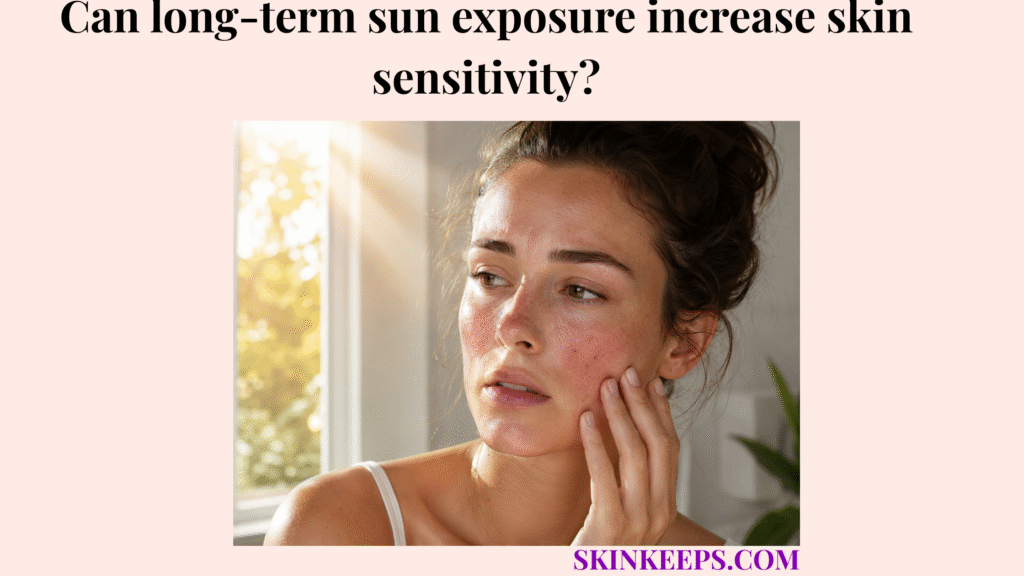
Yes, long-term sun exposure can increase skin sensitivity by repeatedly stressing the skin barrier, increasing dryness, triggering inflammation, worsening flushing or irritation, and making the skin less tolerant of products or environmental triggers.
Sensitive skin may become more likely to sting, burn, itch, feel tight, look rough, flush, develop darker irritation, peel, or react after sun exposure. This article explains why long-term sun exposure can increase sensitivity, how UV exposure affects barrier comfort, how long-term sun sensitivity differs from short-term sunburn, how sun affects dryness, sensory symptoms, texture, skin tone, and product tolerance, how sun-related sensitivity differs from product irritation, how trigger stacking works, how to reduce sun-related reactions, and when professional evaluation is safer.
Why Can Long-Term Sun Exposure Make Skin More Sensitive?
Long-term sun exposure can make skin more sensitive because repeated UV exposure may increase barrier discomfort, dryness, inflammation, uneven tone, texture changes, and product intolerance over time. Sun-related reactivity should be interpreted inside the broader pattern of sensitive skin, where barrier weakness, trigger response, and product intolerance can overlap.
Long-term sun exposure belongs to the environmental side of external triggers that worsen sensitive skin reactions, not the internal biological-cause layer. Cumulative UV exposure should be taken seriously because it affects skin comfort and wider skin health beyond sensitivity alone.
How Repeated UV Exposure Stresses Sensitive Skin
Repeated UV exposure stresses sensitive skin by adding heat, dryness, inflammation, and surface discomfort to a barrier that may already react easily. Repeated outdoor exposure can also make familiar triggers feel stronger, especially when sun heat and sweat are involved.
This does not confirm sun damage from symptoms alone. It means repeated sun exposure can be one important exposure history to track when sensitive skin becomes more reactive.
Why Sun-Stressed Skin May React More Easily to Triggers
Sun-stressed skin may react more easily to triggers because products, cleansing, sweat, wind, heat, and strong actives can feel harsher when the surface is already irritated. Repeated UV exposure may feel worse when sensitive skin has a compromised barrier that loses comfort easily.
Slower recovery can make the next trigger feel stronger. That pattern should be tracked, not used as a self-diagnosis.
| Sun-Related Change | How It May Increase Sensitivity |
|---|---|
| Repeated UV stress | Skin may become more reactive over time. |
| Barrier discomfort | Skin may feel tight, dry, or stingy. |
| Inflammation | Redness, darker irritation, heat, or tenderness may appear. |
| Moisture imbalance | Dryness, roughness, or flaking may increase. |
| Pigment changes | Uneven tone or post-irritation darkening may become more noticeable. |
| Product intolerance | Cleansers, actives, or sunscreen may sting more easily. |
| Slower recovery | Skin may take longer to calm after irritation. |
How Does UV Exposure Affect the Sensitive-Skin Barrier?
UV exposure can affect the sensitive-skin barrier by adding heat, dryness, inflammation, and surface stress that may lower comfort and product tolerance. Sun-stressed skin may feel tight, raw, stingy, itchy, burny, or less comfortable after products, cleansing, sweat, wind, or heat.
This section is about barrier comfort, not full barrier science. The key pattern is whether sun-exposed areas become less tolerant than covered areas.
| UV-Related Stress | Possible Sensitive-Skin Reaction |
|---|---|
| Sun heat | Burning, warmth, flushing. |
| Surface dryness | Tightness, roughness, flaking. |
| Inflammation | Tenderness, redness, darker irritation. |
| Barrier stress | Stinging from products or water. |
| Sweat with sun | Itching, prickling, bumps. |
| Sun plus wind | Rawness, chapping, tightness. |
| Sun plus strong actives | Peeling, burning, sensitivity flare. |
Is Long-Term Sun Exposure Different From a Short-Term Sunburn?
Long-term sun exposure is different from a short-term sunburn because sunburn is an acute overexposure reaction, while long-term sun-related sensitivity builds through repeated exposure. Both deserve caution, but this page focuses on cumulative sensitivity patterns.
Short-term sunburn is usually linked to one overexposure event. Long-term sun-related sensitivity is more about recurring dryness, roughness, flushing, product sensitivity, uneven tone, and reactivity after repeated sunny periods.
| Feature | Short-Term Sunburn | Long-Term Sun-Related Sensitivity |
|---|---|---|
| Timing | Appears after acute overexposure. | Builds through repeated exposure. |
| Main signs | Redness or darker irritation, heat, pain, peeling. | Dryness, roughness, flushing, product sensitivity, uneven tone. |
| Sensation | Burning, tenderness, heat. | Stinging, tightness, burning, itch, reactivity. |
| Duration | Usually linked to one exposure. | May become recurring or persistent. |
| Main concern | Acute skin injury. | Cumulative skin stress and sensitivity pattern. |
Can Long-Term Sun Exposure Make Sensitive Skin Drier or Tighter?
Long-term sun exposure can make sensitive skin feel drier, tighter, rougher, or less comfortable, especially after repeated outdoor exposure. Heat, sweat, wind, low humidity, harsh cleansing, and strong actives can overlap with sun and intensify the reaction.
This is sun-specific dryness, not a full dry-skin page. The useful clue is whether exposed areas feel dry, tight, flaky, or product-sensitive after sunny periods.
Sun-Related Dryness Clues
- Skin feels tight after outdoor exposure.
- Roughness increases after sunny periods.
- Moisturizer stings after sun exposure.
- Flaking appears on exposed areas.
- Skin feels dry even when the routine has not changed.
- Heat and sun make the skin feel raw or uncomfortable.
Can Sun Exposure Worsen Burning, Stinging, or Itching in Sensitive Skin?
Sun exposure can worsen burning, stinging, or itching in sensitive skin when UV stress, heat, sweat, wind, fragrance, makeup, sunscreen, exfoliants, retinoids, or over-cleansing overlap. These sensory symptoms are clues, not diagnoses.
Barrier condition and trigger stacking matter because sun exposure rarely acts in isolation. The same symptom may come from sun heat, dryness, sweat, a product, or several triggers together.
| Sensation | What It May Suggest |
|---|---|
| Burning | Strong sun-related irritation or heat response. |
| Stinging | Barrier stress after exposure. |
| Itching | Dryness, sweat, irritation, or inflammation. |
| Tightness | Moisture loss and barrier discomfort. |
| Heat | UV and temperature-related reactivity. |
| Tenderness | Overexposure or inflamed skin. |
| Raw feeling | Sun plus wind, sweat, or friction stress. |
Can Long-Term Sun Exposure Affect Sensitive Skin Texture?
Long-term sun exposure can affect sensitive skin texture by contributing to roughness, uneven surface feel, dryness, dullness, flaking, or peeling on exposed areas. Texture changes are sun-related clues, not diagnoses.
Comparing exposed areas with covered areas can help identify a pattern. Strong products can worsen peeling or burning if the surface is already sun-stressed.
Texture Pattern Clues
- Exposed areas feel rougher than covered areas.
- Skin looks dull after repeated outdoor exposure.
- Flaking appears after sunny periods.
- Texture feels uneven with tightness.
- Skin becomes more reactive to exfoliants.
- Strong products worsen peeling or burning.
How Can Long-Term Sun Exposure Affect Different Skin Tones?
Long-term sun exposure can affect all skin tones, but visible signs of sensitivity may appear differently across lighter, medium, and deeper skin tones. Redness may be more visible in lighter skin, while red-brown irritation, darker irritation, grayish dryness, roughness, uneven tone, or hyperpigmentation may be more noticeable in medium and deeper skin tones.
Deeper skin can still burn and still needs sun protection. Any skin tone can feel stinging, burning, tightness, heat, itching, or tenderness after sun exposure.
| Skin Tone Context | Sun-Related Sensitivity May Appear As |
|---|---|
| Lighter skin | Redness, burning, peeling, visible irritation. |
| Medium skin | Red-brown irritation, uneven tone, dryness. |
| Deeper skin | Darker patches, grayish dryness, roughness, hyperpigmentation. |
| Any skin tone | Stinging, burning, tightness, heat, itching, tenderness. |
Can Sun Exposure Make Skincare Products Feel More Irritating?
Sun exposure can make skincare products feel more irritating when sensitive skin is already dry, inflamed, hot, peeling, or barrier-stressed. Cleansers, exfoliants, retinoids, vitamin C formulas, acne treatments, sunscreen, makeup, and fragrance-heavy products may feel harsher after exposure.
Sunscreen is only one example, not the main topic. Product tolerance needs caution because skincare ingredients can commonly irritate sensitive skin when the surface is already sun-stressed.
| Product Pattern | What It May Suggest |
|---|---|
| Cleanser stings after sun exposure | Barrier may be stressed. |
| Moisturizer burns on exposed areas | Skin may be irritated or dry. |
| Exfoliants cause more peeling | Surface may be over-stressed. |
| Retinoids feel harsher | Skin may need slower use or pause during irritation. |
| Sunscreen stings after sun exposure | Barrier may already be inflamed. |
| Makeup feels itchy or heavy | Heat, sweat, and formula tolerance may overlap. |
How Is Sun-Related Sensitivity Different From Product Irritation?
Sun-related sensitivity is different from product irritation because sun sensitivity follows exposure history, while product irritation follows a formula or application pattern. Location, timing, recurrence, and whether exposed areas react first help separate the two.
Both can overlap when sun-stressed skin makes products sting afterward. A repeated formula reaction still matters even if sun exposure lowered tolerance first.
| Feature | Sun-Related Sensitivity | Product Irritation |
|---|---|---|
| Main clue | Worsens after repeated sun or outdoor exposure. | Starts after a specific product. |
| Location | Exposed areas often react first. | Usually where product was applied. |
| Timing | May build after repeated sunny days. | Often appears soon after application. |
| Pattern | Worse with sun, heat, sweat, wind, or UV exposure. | Repeats with the same formula. |
| First step | Reduce exposure and protect the barrier. | Stop the suspected product. |
Simple rule: Sun-related sensitivity follows exposure history, while product irritation follows application pattern.
What Is Sun Trigger-Stacking in Sensitive Skin?
Sun trigger-stacking happens when sun exposure combines with other triggers and creates a stronger sensitive-skin reaction than sun exposure alone. The reaction may come from combined exposure rather than one cause.
Sun exposure can overlap with climate patterns because weather changes can trigger sensitive skin reactions through heat, humidity, wind, and temperature shifts. Sun reactions can also stack with outdoor exposure because wind can irritate sensitive skin when dryness and barrier stress combine.
| Trigger Combination | Possible Reaction |
|---|---|
| Sun + heat | Burning, flushing, warmth. |
| Sun + sweat | Itching, prickling, bumps. |
| Sun + wind | Rawness, tightness, chapping. |
| Sun + pollution | Dullness, irritation, roughness. |
| Sun + exfoliants | Peeling, stinging, burning. |
| Sun + retinoids | Increased irritation risk. |
| Sun + fragrance | Itching or rash-like discomfort. |
| Sun + harsh cleanser | Tightness, moisturizer stinging. |
How Can Sensitive Skin Reduce Sun-Related Reactions?
Sensitive skin can reduce sun-related reactions by limiting unnecessary direct exposure, using shade and protective clothing, choosing tolerable sunscreen, and keeping care gentle after sun exposure. This is prevention direction, not a sunscreen product-buying guide.
Gentle cleansing after sweat and sunscreen, moisturizer if dry or tight, and a simple routine after heavy exposure can reduce avoidable irritation. The goal is to protect the barrier without scrubbing or over-correcting sun-stressed skin.
Sun-Protection Direction
- Limit unnecessary direct sun exposure.
- Use shade when possible.
- Wear protective clothing, hats, and sunglasses.
- Use sunscreen that the skin tolerates.
- Avoid applying strong actives before high sun exposure if the skin is reactive.
- Avoid scrubbing sun-stressed skin.
- Cleanse gently after sweat and sunscreen.
- Moisturize if skin feels tight, dry, or irritated.
- Keep the routine simple after heavy sun exposure.
- Track whether reactions worsen after sunny days.
What Mistakes Make Sun-Related Sensitive Skin Worse?
Sun-related sensitive skin can worsen when repeated sun irritation is ignored, strong actives are used after sun exposure, or the skin is scrubbed while already stressed. These responses can add friction or chemical irritation when the barrier needs less stress.
Forgetting exposed areas can also keep reactions recurring. Lips, eyelids, neck, ears, and hands may react strongly after repeated sun exposure.
| Mistake | Why It Backfires |
|---|---|
| Ignoring repeated sun irritation | Allows cumulative stress to continue. |
| Using strong exfoliants after sun exposure | Can worsen peeling and burning. |
| Scrubbing to remove sunscreen | Adds friction and barrier damage. |
| Skipping moisturizer after sun-stressed dryness | Leaves barrier comfort unsupported. |
| Using irritating sunscreen repeatedly | May worsen product-related sensitivity. |
| Treating every sun reaction as normal redness | May miss inflammation or damage. |
| Forgetting exposed areas | Lips, eyelids, neck, ears, and hands may react strongly. |
| Blaming products only | Sun exposure may be the hidden trigger. |
How Should Someone Track Sun-Related Sensitive Skin Reactions?
Someone should track sun-related sensitive skin reactions by recording sun exposure, heat, sweat, wind, pollution, sunscreen, products, affected areas, symptoms, recurrence after sunny days, product stinging, duration, and visible changes. Tracking is pattern recognition, not diagnosis.
Photos can help if visible changes appear. The strongest record connects exposure history, exposed areas, product tolerance, and whether symptoms return after repeated sunny days.
Sun Sensitivity Tracking Checklist
When Should Sun-Related Skin Sensitivity Be Professionally Evaluated?
Sun-related skin sensitivity should be professionally evaluated when symptoms are severe, persistent, worsening, painful, blistering, oozing, crusted, bleeding, changing, unusual, eye-area related, infected-looking, or recurring. These signs should not be treated as ordinary sensitive-skin fluctuation.
Professional review becomes important when sensitive skin needs a dermatologist instead of repeated sun or product guessing. Evaluation helps separate ordinary sun-related irritation from sun allergy, dermatitis, rosacea, infection, pigment concerns, or other medical issues.
Professional Evaluation Warning Signs
What Should You Remember About Long-Term Sun Exposure and Sensitive Skin?
Long-term sun exposure can increase skin sensitivity and reactivity by adding cumulative UV stress to the skin barrier. Repeated UV exposure may stress the barrier, increase dryness, worsen inflammation, affect tone and texture, and reduce product tolerance.
Final Takeaways
- Long-term sun exposure can increase skin sensitivity and reactivity.
- Repeated UV exposure may stress the barrier, increase dryness, worsen inflammation, affect tone and texture, and reduce product tolerance.
- Sensitive skin may burn, sting, itch, tighten, flush, peel, roughen, or react more easily after sun exposure.
- Sun exposure often stacks with heat, sweat, wind, pollution, exfoliants, retinoids, fragrance, or harsh cleansing.
- Sun protection, gentle cleansing, barrier support, and trigger tracking are safer than harsh correction.
- Severe, persistent, painful, blistering, oozing, bleeding, recurring, or unusual sun-related changes should be professionally evaluated.
Frequently Asked Questions
Can Sun Exposure Make Sensitive Skin Worse?
Sun exposure can make sensitive skin worse when UV stress, heat, dryness, sweat, or inflammation makes the skin more reactive. Repeated exposure may lower comfort and product tolerance, but sun sensitivity alone does not diagnose a condition.
Is Long-Term Sun Sensitivity the Same as Sunburn?
Long-term sun sensitivity is not the same as sunburn because sunburn is an acute overexposure reaction, while long-term sensitivity builds through repeated exposure. Both deserve caution, especially if burning, blistering, pain, peeling, or persistent symptoms appear.
Can Sun Exposure Make Moisturizer or Sunscreen Sting?
Sun exposure can make moisturizer or sunscreen sting when sensitive skin is already hot, dry, inflamed, or barrier-stressed. Product irritation can still overlap if the same formula stings repeatedly even without sun exposure.
Can Sun Exposure Cause Darker Irritation on Deeper Skin Tones?
Sun exposure can contribute to darker irritation or uneven tone in deeper skin tones, especially when inflammation and repeated exposure overlap. Any skin tone can still feel burning, stinging, tightness, heat, itching, or tenderness.
Should Sensitive Skin Use Strong Exfoliants After Sun Exposure?
Sensitive skin should not use strong exfoliants on sun-stressed skin because they can worsen peeling, burning, stinging, and barrier discomfort. Keep the response practical and avoid aggressive correction while the skin feels reactive.
When Should Sun-Related Skin Sensitivity Be Checked?
Sun-related skin sensitivity should be checked when symptoms are severe, persistent, worsening, painful, blistering, oozing, crusted, bleeding, changing, unusual, eye-area related, infected-looking, or recurring. Evaluation helps separate ordinary sun-related irritation from another concern.
Conclusion
Long-term sun exposure can increase skin sensitivity by repeatedly stressing the barrier, increasing dryness, triggering inflammation, affecting tone and texture, and reducing product tolerance. Sensitive skin may burn, sting, itch, tighten, flush, peel, roughen, darken after irritation, or react more easily when sun exposure stacks with heat, sweat, wind, pollution, actives, fragrance, or harsh cleansing.
Sun-related sensitivity is a clue, not a diagnosis. If reactions are severe, persistent, worsening, painful, blistering, oozing, crusted, bleeding, changing, unusual, eye-area related, infected-looking, or recurring, professional evaluation is safer than repeated sun or product guessing.