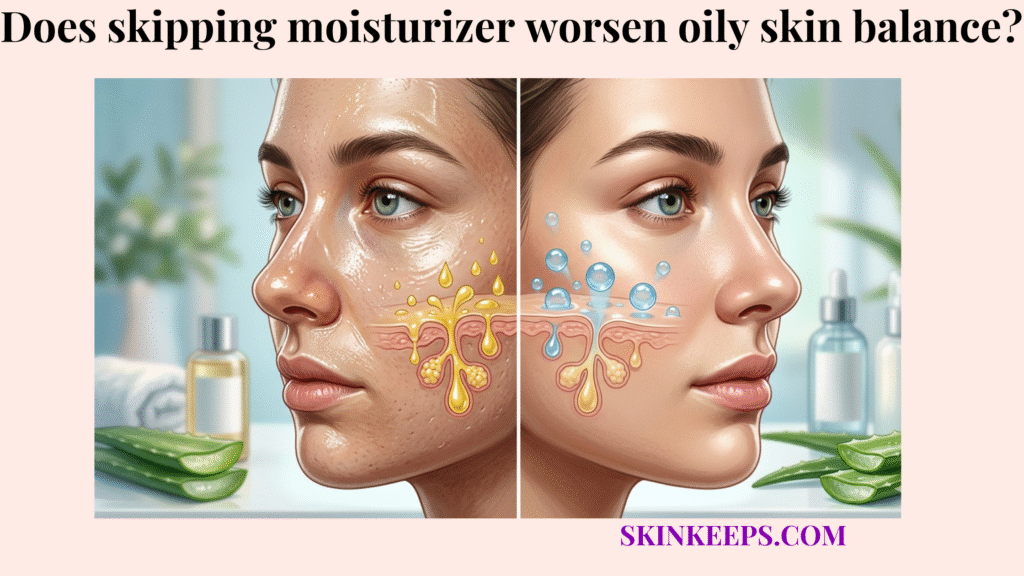
Yes, skipping moisturizer can worsen oily skin balance when the skin becomes under-hydrated, tight, or barrier-stressed after cleansing. This explains why oily skin can look shiny but still feel uncomfortable, rough, or reactive.
This guideline explains why oil and hydration are different, how TEWL contributes to tightness after washing, why a shiny face can still be dehydrated, and which lightweight moisturizer textures suit oily skin. It also gives a daily protocol for hydrating without leaving a heavy surface film.
Why are oil and hydration different in oily skin?
Oil and hydration are different in oily skin because sebum is a lipid material on the surface, while hydration refers to water comfort inside the stratum corneum. This distinction matters because sebum can make the face look shiny without supplying the water needed for flexible, comfortable surface cells. When users confuse oil with hydration, they often skip the exact step that would reduce tightness.
This oil-water mismatch is one of the most common oily skin skincare mistakes because the skin looks moisturized from shine alone. Shine only proves that surface lipid is present. It does not prove that the stratum corneum has enough water comfort. Understanding oily skin requires treating oil and water as completely separate biological factors.
How sebum supports surface lubrication but does not replace water
Sebum supports surface lubrication by forming a lipid film over the skin, but it does not replace water inside the stratum corneum. This lipid film can reduce friction and contribute to shine. It cannot perform the water-dependent comfort role that keeps surface cells flexible and less tight.
Why oily skin can still feel tight, rough, or dehydrated
Oily skin can still feel tight, rough, or dehydrated because visible oil does not guarantee adequate stratum corneum water comfort. This tightness often becomes more noticeable after cleansing, exfoliating, or using drying acne treatments. The face may look greasy while the surface barrier feels uncomfortable.
Why skipping moisturizer often confuses oil control with hydration control
Skipping moisturizer often confuses oil control with hydration control by treating shine as proof that the skin has enough water. This false assumption leads users to leave their skin under-hydrated after washing. Supplying water without heavy lipids is the correct way to handle this imbalance.
| Component | What It Is | What It Does | When It Is Lacking |
|---|---|---|---|
| Sebum | Oil/lipid material | Lubricates and contributes to surface shine | Skin may feel less protected or less comfortable |
| Hydration | Water comfort in the stratum corneum | Supports flexibility and comfort | Skin feels tight, rough, flaky, or reactive |
| Moisturizer | Product that supports water balance and barrier comfort | Helps reduce dryness after cleansing | Skin may feel tight after washing |
| Heavy occlusive | Richer product texture that seals strongly | Useful for very dry zones | May feel too heavy on oily areas |
How does skipping moisturizer increase dehydration risk in oily skin?
Skipping moisturizer can increase dehydration risk in oily skin by leaving the stratum corneum with less support after cleansing, exfoliation, or drying acne treatments. AAD recommends applying moisturizer after cleansing for oily skin to keep the skin hydrated. This makes moisturizer a barrier-comfort step, not a grease-adding mistake. [AAD]
Moisturizers matter mechanistically because they can increase stratum corneum water content and reduce TEWL. This does not mean every skipped application causes severe dehydration. It means moisturizer is a rational support step when oily skin feels tight, dry, or irritated after cleansing. [PMC]
How cleansing can temporarily reduce surface lipids
Cleansing can temporarily reduce surface lipids by using surfactants to remove sebum, sweat, sunscreen, and daily buildup from the skin surface. This cleansing effect is useful when it is gentle and limited. When cleansing becomes too frequent or too harsh, the user may need more hydration support because over-washing oily skin often leaves the face tight before shine returns.
How TEWL makes oily skin feel tight after washing
TEWL can make oily skin feel tight after washing because water loss across the stratum corneum becomes more noticeable when the barrier lacks hydration support. This tightness does not mean the skin is clean in a healthy way. It means the surface may need a lightweight moisturizer to restore comfort.
Why a shiny face can still be dehydrated underneath
A shiny face can still be dehydrated underneath because sebaceous glands can release surface oil while the stratum corneum lacks enough water comfort. This creates the common oily-but-dehydrated pattern. The face looks reflective, but the skin feels tight, rough, or sting-prone.
Why can dehydrated oily skin look greasy but feel flaky?
Dehydrated oily skin can look greasy but feel flaky because surface sebum and uneven under-hydrated shedding can happen at the same time. The oil sits on top, while the under-hydrated stratum corneum feels rough or tight. This mismatch makes people chase flakes with stronger cleansing even though the real issue is comfort and hydration support.
Flaky oily skin should not automatically be treated with stronger exfoliation. Flaking can signal barrier stress, especially when it appears with stinging, tightness, or redness. The better response is usually gentler cleansing and lightweight moisture before adding stronger actives.
Why surface oil can coexist with internal tightness
Surface oil can coexist with internal tightness because sebum comes from follicles while tightness reflects discomfort in the surface barrier. The sebaceous gland continues functioning regardless of the stratum corneum’s current water level. This physiological separation secures the oily-but-tight paradox securely.
How dehydration can make texture look rougher or duller
Dehydration can make texture look rougher or duller because low water comfort reduces the smooth, flexible look of the stratum corneum. These under-hydrated cells curl and rest unevenly. The uneven surface scatters light poorly, creating a dull appearance despite the oily shine.
Why flaky oily skin should not be treated with more stripping
Flaky oily skin should not be treated with more stripping because flakes often reflect barrier stress rather than excess dirt or oil. Avoiding oily skin harsh products is a better response than trying to scrub the flakes away. Providing lightweight moisture efficiently resolves the symptom.
| Sign | What It Suggests |
|---|---|
| Greasy shine | Surface sebum is still present |
| Tightness after cleansing | Barrier or hydration stress |
| Flaking with shine | Oiliness and dehydration may be coexisting |
| Stinging after products | Barrier may be irritated or less tolerant |
| Rough texture | Stratum corneum water comfort may be low |
Which moisturizers hydrate oily skin without adding heaviness?
Moisturizers that hydrate oily skin without adding heaviness rely on humectants, lightweight textures, and non-comedogenic formulation choices. Clinical literature describes hyaluronic acid and glycerin as well-known substances able to improve skin hydration. These ingredients suit oily skin because they support water comfort without requiring a heavy cream texture. [PMC]
Oil-free and non-comedogenic labels matter because oily and acne-prone skin users need hydration without avoidable pore-clogging risk. AAD recommends oily-skin products labeled “oil free” and “noncomedogenic,” including moisturizers and makeup. This makes formula selection more important than skipping moisturizer entirely. [AAD]
How glycerin and hyaluronic acid support water balance
Glycerin and hyaluronic acid support water balance by acting as humectants that help improve hydration in the stratum corneum. This water-binding support can reduce the tight feel that often follows cleansing. Users applying oily skin active ingredients often require this humectant support to maintain barrier comfort.
Why gel, lotion-gel, and lightweight fluid textures often suit oily skin
Gel moisturizer, lotion-gel, and fluid moisturizer textures often suit oily skin because they support hydration with less surface heaviness than rich creams. This texture choice matters when natural sebum already adds shine. The full texture comparison belongs in oily skin product formulations because formula weight often decides whether moisturizer feels helpful or greasy.
Why non-comedogenic labeling matters for oily, breakout-prone skin
Non-comedogenic labeling matters for oily, breakout-prone skin because it indicates the product is designed not to block pores. AAD explains that products labeled oil-free and noncomedogenic, including moisturizers, are designed not to clog pores or cause acne. Avoiding occlusive comedogenic products is critical to maintaining clear follicles. [AAD]
| Ingredient or Texture | Main Role | Best Fit |
|---|---|---|
| Glycerin | Humectant hydration | Daily lightweight support |
| Hyaluronic acid | Water-binding support | Dehydrated oily skin |
| Aloe-based gels | Lightweight comfort | Oily skin that dislikes heavy creams |
| Oil-free gel moisturizer | Hydration without heavy residue | Oily or shiny skin |
| Non-comedogenic lightweight lotion | Barrier support | Oily but tight skin |
| Fragrance-free fluid moisturizer | Lower irritation risk | Reactive oily skin |
How should oily skin be moisturized without creating a greasy finish?
Oily skin should be moisturized without creating a greasy finish by applying a lightweight moisturizer, non-comedogenic formula after cleansing and adjusting texture to skin feel. AAD recommends applying moisturizer after cleansing for oily skin to keep the skin hydrated. This supports a routine where richness is adjusted, but hydration is not removed. [AAD]
The best amount depends on product texture and face size. A thin layer of gel or fluid moisturizer is usually a better starting point than a thick cream for oily users. If the face feels greasy, reduce product weight rather than skipping hydration entirely.
When to apply moisturizer after cleansing
Moisturizer should be applied after cleansing when the skin is clean and still comfortable enough to accept hydration support. Slightly damp skin can make humectant-based formulas feel smoother and more effective. This timing helps reduce the tight feeling that often appears after washing.
How much moisturizer oily skin usually needs
Oily skin usually needs a thin, even layer of moisturizer rather than a heavy amount of product. This smaller amount supports comfort without adding too much surface film. If dryness remains, the better change is usually a more compatible formula, not a total return to moisturizer skipping.
How to adjust moisturizer texture by season and skin feel
Moisturizer texture should be adjusted by season and skin feel because humidity, dry air, cleansing habits, and acne treatments change hydration needs. Maintaining the wider daily routine with oily skin care tips helps adapt these textures successfully. A dynamic approach guarantees long-term compliance and comfort.
Daily Moisturizing Routine for Oily Skin
FAQs
Does skipping moisturizer worsen oily skin balance?
Yes, skipping moisturizer can worsen oily skin balance when the skin becomes under-hydrated, tight, or barrier-stressed after cleansing. AAD recommends moisturizer after cleansing for oily skin. [AAD]
Should oily skin use moisturizer?
Yes, oily skin should use moisturizer when it needs hydration support. AAD says oily skin should apply moisturizer after cleansing to keep skin hydrated. [AAD]
Can oily skin be dehydrated?
Yes, oily skin can be dehydrated because sebum and hydration are different. The skin can produce visible surface oil while the stratum corneum still feels tight, rough, or under-hydrated.
What moisturizer is best for oily skin?
The best moisturizer for oily skin is usually lightweight, oil-free, and non-comedogenic. AAD recommends choosing products labeled “oil free” and “noncomedogenic” for oily skin. [AAD]
Do glycerin and hyaluronic acid help oily skin?
Glycerin and hyaluronic acid can help oily skin by supporting hydration without needing a heavy texture. Clinical literature describes HA and glycerin as well-known substances able to improve skin hydration. [PMC]
Will moisturizer clog oily skin?
A moisturizer is less likely to clog oily or acne-prone skin if it is oil-free and non-comedogenic. NICE acne guidance advises avoiding oil-based and comedogenic skin-care products where possible. [NCBI Bookshelf]
Should oily skin moisturize after washing?
Yes, oily skin should moisturize after washing if cleansing leaves the skin tight or dry. AAD specifically recommends applying moisturizer after cleansing for oily skin. [AAD]
What should I do if moisturizer makes my oily skin greasy?
If moisturizer makes oily skin greasy, reduce the richness of the formula instead of removing hydration completely. Switch to a gel, lotion-gel, or lightweight fluid labeled oil-free and non-comedogenic.
Conclusion
Skipping moisturizer can worsen oily skin balance when it leaves the stratum corneum under-hydrated while surface sebum remains visible. Oily skin does not need heavy creams by default, but it still needs water comfort and barrier support.
The best approach is a lightweight, non-comedogenic moisturizer that reduces tightness without adding excess surface film. Healthy oily-skin balance starts by treating oil and hydration as separate needs.