
Which Skin Defense Systems Limit Solar Injury?
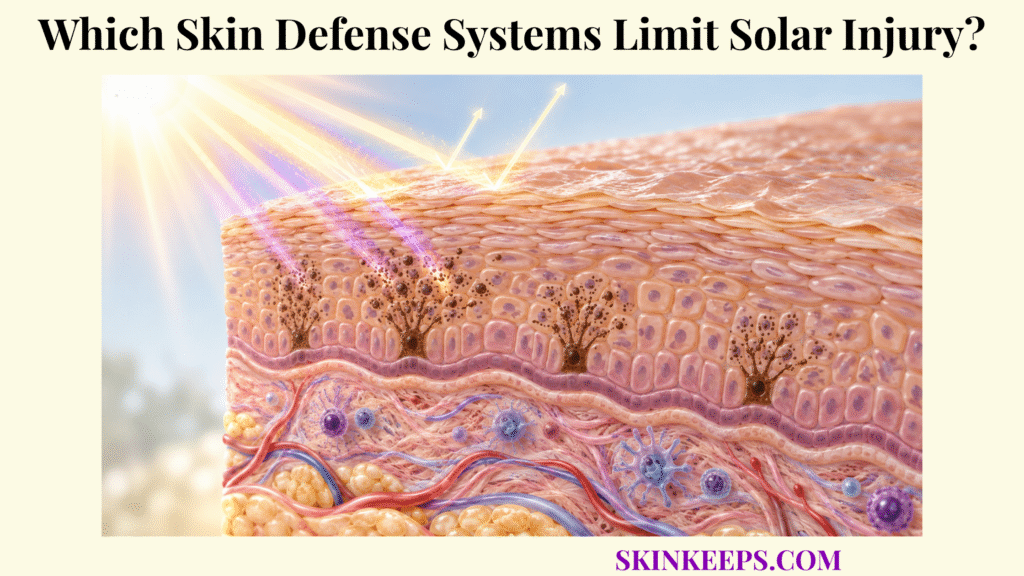
Which Skin Defense Systems Limit Solar Injury? Skin defense systems limit solar injury through multiple layers: epidermal structures reduce some incoming ultraviolet radiation, melanin absorbs additional UV, antioxidants control reactive oxygen species, DNA-repair systems correct genomic lesions, and damaged-cell and immune responses contain injury that escapes earlier defenses. No single mechanism is sufficient. Some defenses […]
Why Do Skin Keratinocytes Respond to UV-Induced Cellular Damage?
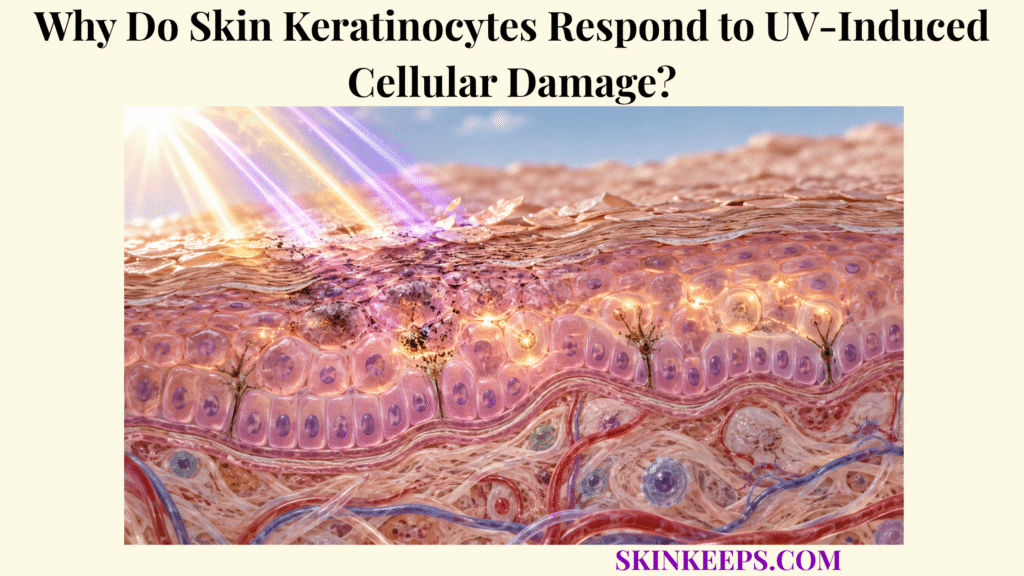
Why Do Skin Keratinocytes Respond to UV-Induced Cellular Damage? Skin keratinocytes respond to UV-induced cellular damage because ultraviolet radiation can injure their DNA, disturb redox balance, and alter cellular signaling, forcing each affected cell to coordinate repair, temporary cell-cycle control, communication with neighboring cells, survival, or apoptosis. Because keratinocytes form most of the epidermis, these […]
How Does Skin Epidermal Thickening Increase UV Protection?
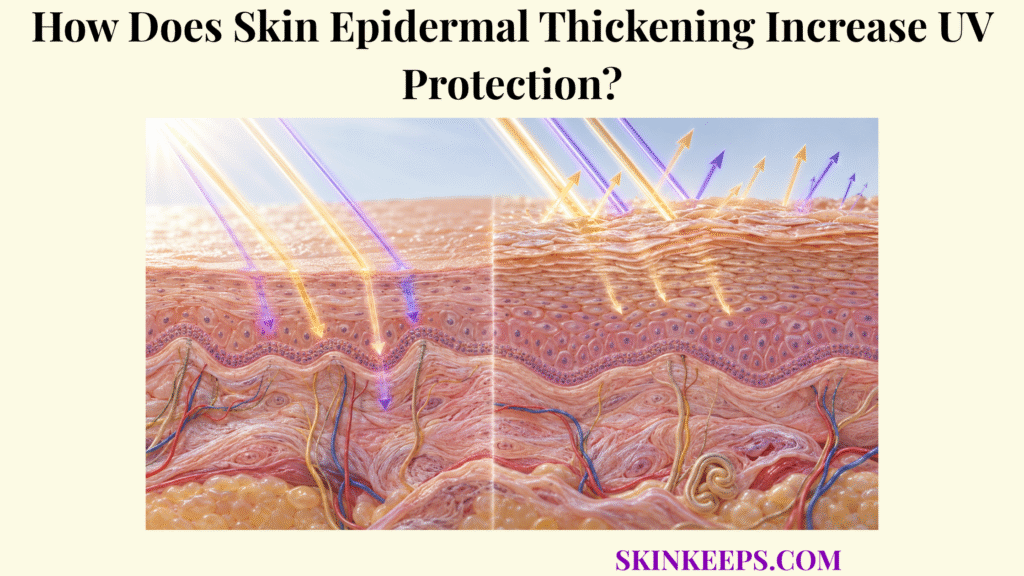
How Does Skin Epidermal Thickening Increase UV Protection? Skin epidermal thickening increases natural UV protection by placing additional viable and cornified tissue between incoming ultraviolet radiation and deeper epidermal cells, increasing the amount of radiation absorbed, scattered, or otherwise attenuated before it reaches vulnerable cellular targets. This response develops after UV-induced stress rather than before […]
When Does the Skin Epidermis Respond to UV Exposure?
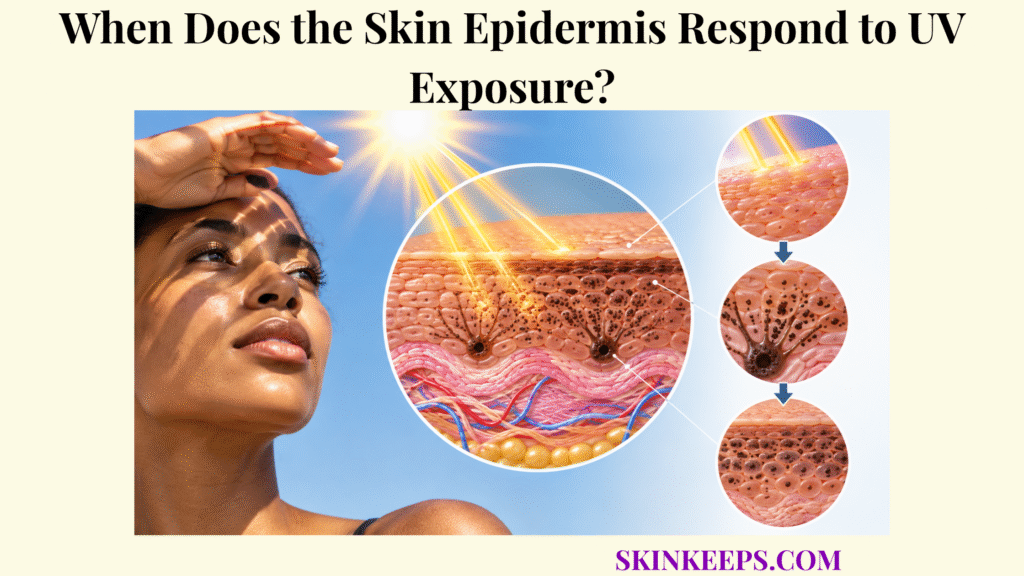
When Does the Skin Epidermis Respond to UV Exposure? The skin epidermis begins responding to UV exposure as soon as ultraviolet energy produces molecular excitation, DNA photolesions, oxidative stress, or receptor-level stress signals, long before visible tanning or redness develops. The first events occur at the level of molecules and signaling networks rather than at […]
Why Does Skin Melanin Distribution Affect Photoprotection?
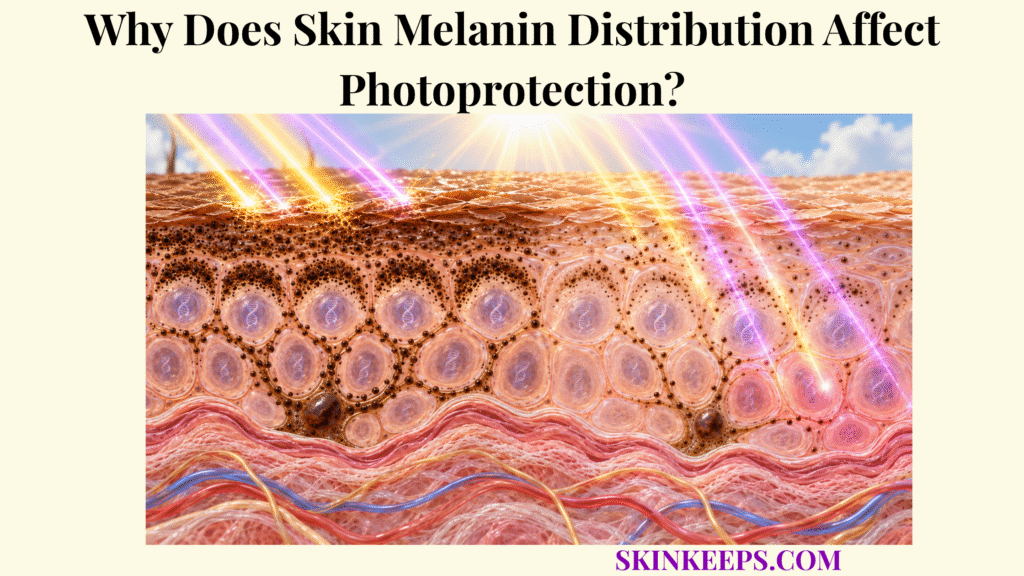
Why Does Skin Melanin Distribution Affect Photoprotection? Skin melanin distribution affects photoprotection because UV-absorbing pigment protects most efficiently when melanocyte-derived melanin is transferred broadly into epidermal keratinocytes and positioned close to vulnerable cellular targets, especially their nuclei. Melanin quantity matters, but location determines whether that pigment lies along the optical pathways where ultraviolet radiation is […]
How Does Skin Melanin Reduce UV-Induced DNA Damage?
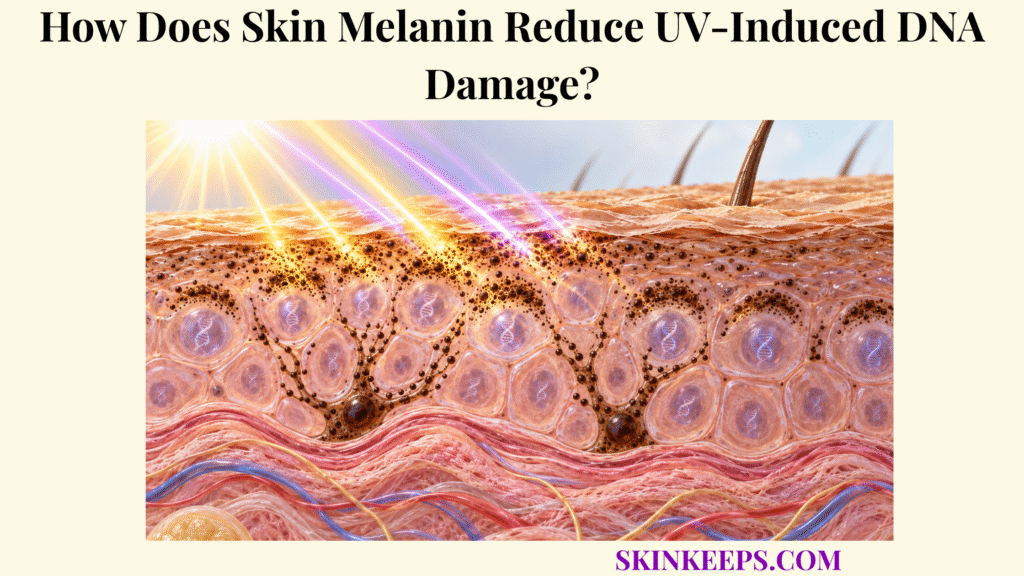
How Does Skin Melanin Reduce UV-Induced DNA Damage? Skin melanin reduces UV-induced DNA damage by absorbing part of incoming UVA and UVB, dissipating absorbed excitation, and positioning pigment-containing melanosomes around keratinocyte nuclei so less radiation reaches genomic DNA. Melanin therefore lowers the photon and oxidative burden that can generate DNA lesions, but it does not […]
What Role Does Skin Melanin Play in UV Absorption?
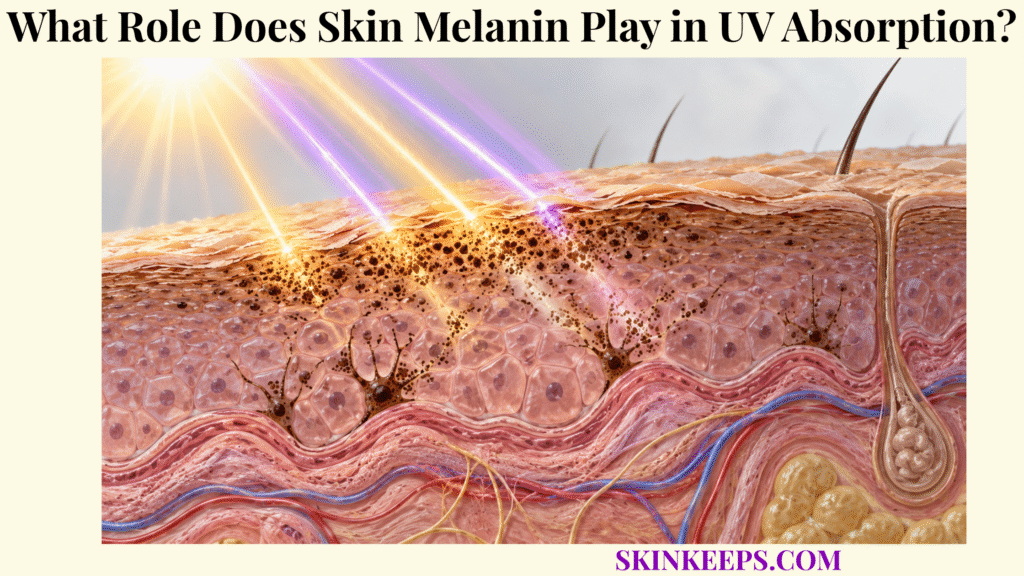
What Role Does Skin Melanin Play in UV Absorption? Skin melanin reduces ultraviolet exposure by absorbing and attenuating part of incoming UVA and UVB inside epidermal melanosomes, especially after those pigment-containing organelles are transferred from melanocytes to surrounding keratinocytes. Basal melanocytes manufacture melanin, melanosomes package it, and keratinocyte distribution places pigment where it can intercept […]
Why Do Skin Keratin and Connective Tissue Resist Friction and Pressure?
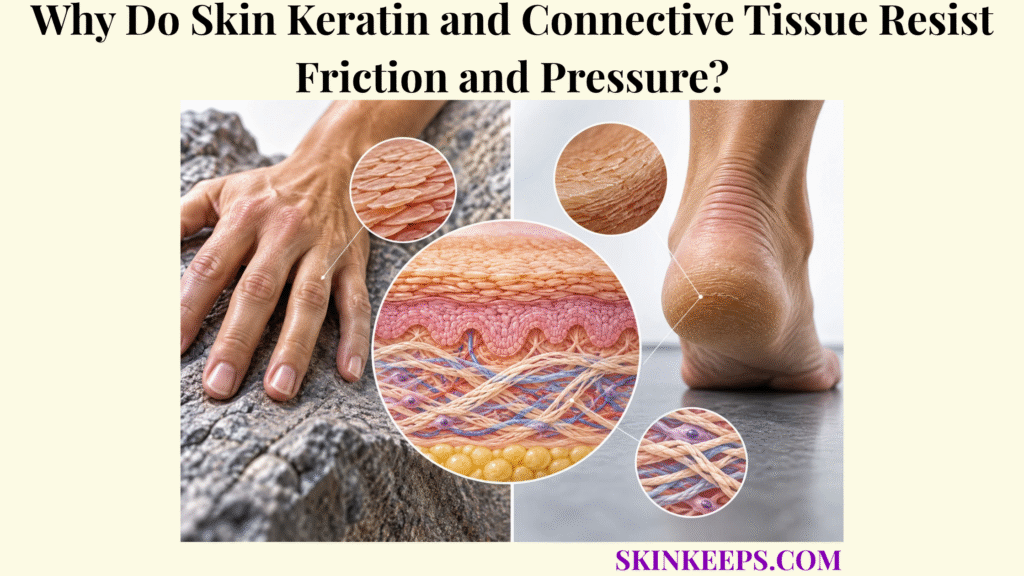
Why Do Skin Keratin and Connective Tissue Resist Friction and Pressure? Skin keratin and connective tissue resist mechanical injury through different but connected layers: keratin filament networks and epidermal adhesion resist surface deformation and shear, while collagen-rich dermal connective tissue bears deeper tensile loads and elastic fibers support reversible deformation. Mechanical protection therefore changes with […]
How Do Skin Lipids Reduce Chemical Penetration?
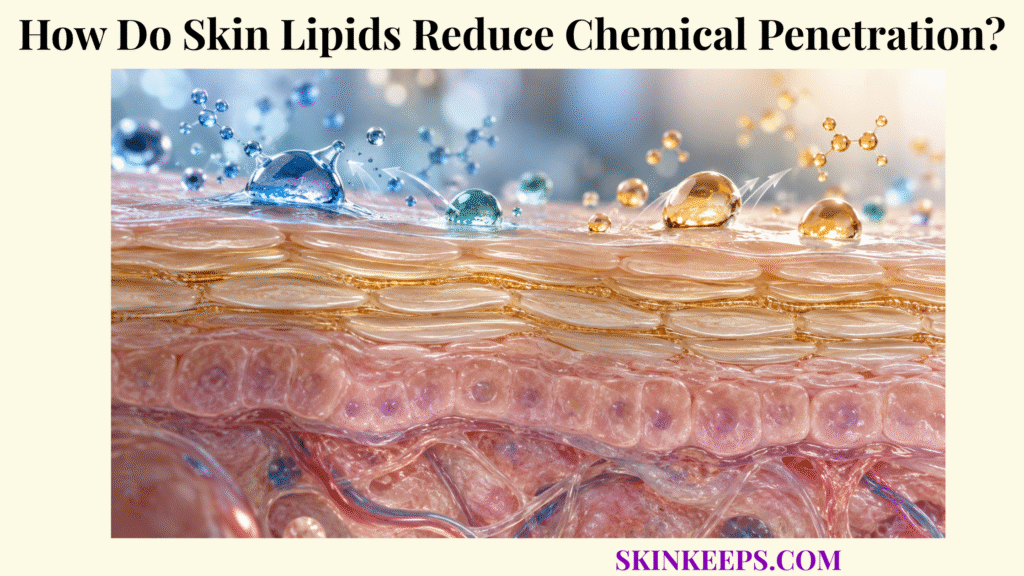
How Do Skin Lipids Reduce Chemical Penetration? Skin lipids reduce chemical penetration by forming the organized extracellular matrix of the stratum corneum, where ceramides, cholesterol, and free fatty acids create a low-permeability pathway that slows the partitioning and diffusion of many external molecules toward living skin. This barrier works selectively rather than absolutely: penetration varies […]
Where Does Skin Resist Chemical and Mechanical Injury?
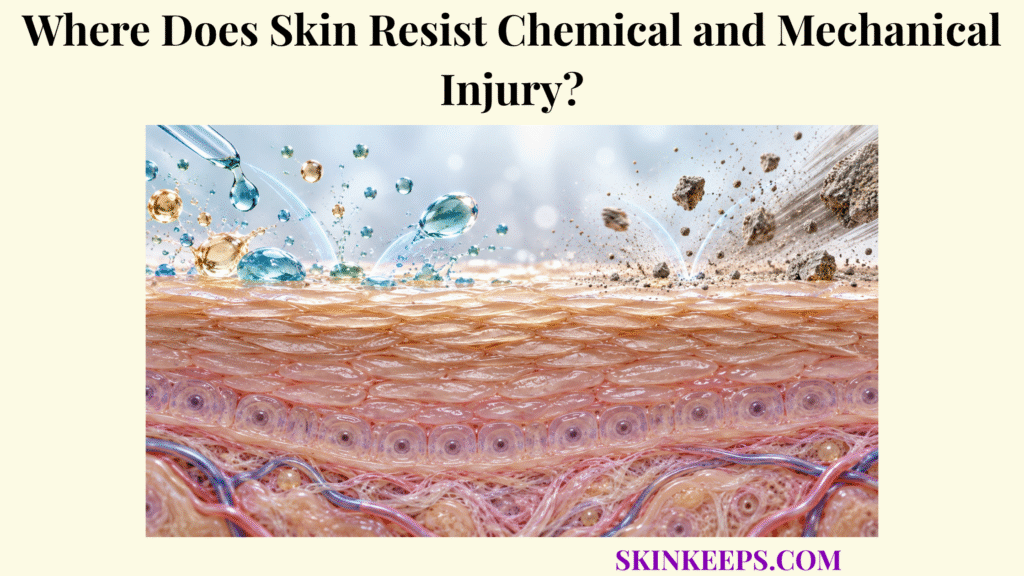
Where Does Skin Resist Chemical and Mechanical Injury? Skin resists chemical and mechanical injury at multiple structural levels: the stratum corneum provides the main barrier to chemical penetration and superficial exposure, while cohesive epidermal cells and the collagen-rich dermis provide progressively deeper resistance to friction, shear, stretch, and deformation. Chemical permeability, surface mechanics, dermal strength, […]