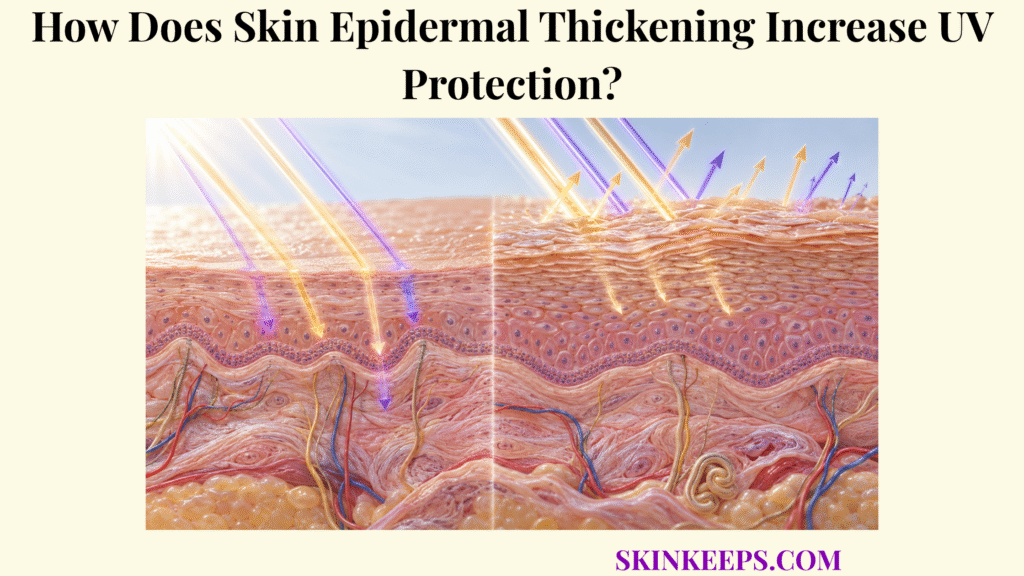
Skin epidermal thickening increases natural UV protection by placing additional viable and cornified tissue between incoming ultraviolet radiation and deeper epidermal cells, increasing the amount of radiation absorbed, scattered, or otherwise attenuated before it reaches vulnerable cellular targets.
This response develops after UV-induced stress rather than before it: keratinocyte proliferation, hyperplasia, and sometimes hyperkeratosis can reduce later UV transmission, but the exposure that triggers those changes can already cause DNA photolesions and oxidative injury. Thickness therefore provides partial structural attenuation, not complete UV protection.
When Does Skin Epidermal Thickening Begin After UV Exposure?
Skin epidermal thickening begins as a delayed response after initial UV-induced stress, checkpoint activity, repair, and cell-loss signals are followed by increased keratinocyte proliferation and accumulation of viable and cornified epidermal tissue.
Why Is Skin Epidermal Thickening Not an Immediate UV Response?
Epidermal thickening requires new cell production and differentiation, so it develops after the immediate molecular events of UV absorption, DNA damage, oxidative stress, and early signaling. The broader skin epidermal UV response begins much earlier than this structural adaptation.
How Does UV Exposure Stimulate Keratinocyte Proliferation?
After early damage-control responses, UV-associated growth-factor and receptor signaling can increase basal keratinocyte proliferation, adding cells as damaged tissue is replaced and adaptive hyperplasia develops. Experimental work supports EGFR and MAPK-related signaling, but human thickening is regulated by multiple pathways rather than one universal switch.
When Can Skin Epidermal Thickening Become Measurable?
Experimental systems detect proliferative and thickness changes over subsequent days, while repeated human exposures can maintain structural changes over longer exposure periods. Model findings around 48–72 hours illustrate delayed biology but should not be used as a universal human timetable.
Do UVA and UVB Produce the Same Skin Epidermal Thickening?
No. UVB produces strong epidermal proliferative responses in many experimental and human protocols, while UVA can produce different combinations of pigmentation, cornified-layer thickening, or less pronounced viable epidermal hyperplasia. The response is wavelength- and protocol-dependent.
How Does Skin Epidermal Thickening Reduce UV Penetration?
Skin epidermal thickening reduces UV penetration by increasing the amount and depth of tissue that incoming radiation must traverse, creating additional opportunities for absorption and scattering before photons reach deeper living cells.
How Does a Longer Epidermal Path Reduce UV Transmission?
As the epidermis becomes thicker, incident radiation passes through more cellular and extracellular material, increasing cumulative optical attenuation before reaching basal epidermal cells or deeper tissue. More thickness raises attenuation potential, but it does not create a simple linear thickness-to-protection equation.
How Does Skin Epidermal Thickening Increase UV Absorption?
Additional epidermal tissue increases the amount of UV-interacting material along the optical path, including proteins, endogenous chromophores, and pigment-bearing cells that absorb portions of incident radiation. These structures do not absorb UV as selectively as melanin, so tissue absorption and pigment absorption should remain conceptually separate.
How Does Skin Epidermal Thickening Increase UV Scattering?
Additional cellular layers and tissue interfaces can redirect portions of incident radiation, increasing the complexity of the optical route and contributing to overall attenuation. Scattering works with absorption, tissue geometry, hydration, and pigmentation rather than acting as the sole protective mechanism.
Does Skin Epidermal Thickening Attenuate UVA and UVB Equally?
No. Because UVA and UVB have different wavelength-dependent absorption and penetration profiles, added epidermal thickness can modify both but does not provide identical protection against each band; UVA generally penetrates farther, while UVB is absorbed more strongly in superficial skin.
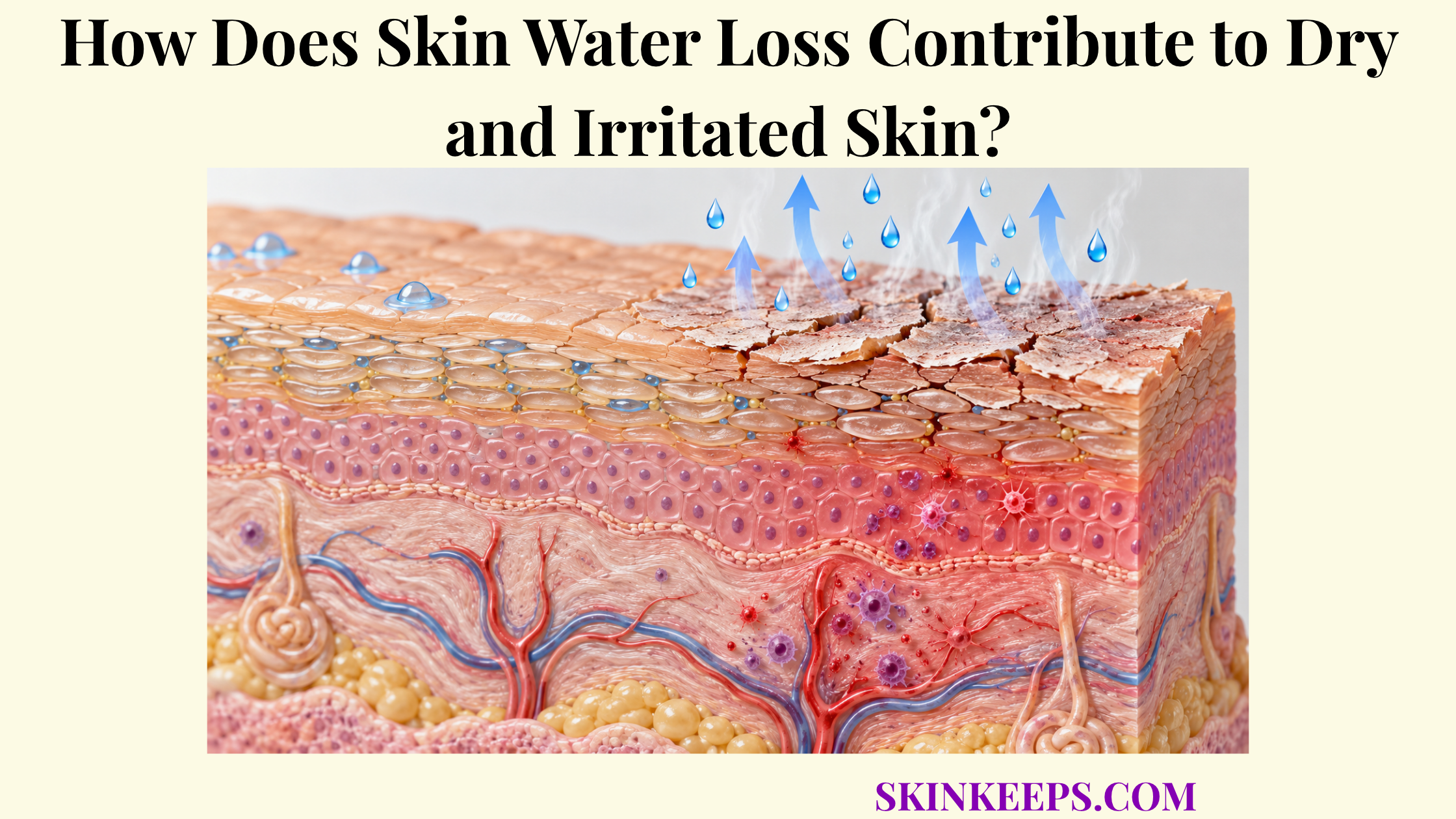
Figure 1. Repeated UV can lead from early damage control to later keratinocyte proliferation, hyperplasia or hyperkeratosis, and greater attenuation of a subsequent exposure. The sequence is adaptive, not preventive for the initiating dose.
How Does Skin Epidermal Thickening Strengthen the Stratum Corneum?
Skin epidermal thickening can increase stratum-corneum thickness when increased keratinocyte production ultimately supplies additional terminally differentiated corneocytes, adding superficial tissue that contributes to UV attenuation.
How Does Increased Keratinocyte Production Add Corneocyte Layers?
Basal keratinocytes generated during adaptive proliferation move through epidermal differentiation and can increase the supply of terminally differentiated corneocytes reaching the stratum corneum barrier.
How Does a Thicker Stratum Corneum Attenuate UV?
A thicker cornified layer increases the amount of superficial keratinized tissue through which ultraviolet radiation passes, adding absorption and scattering before UV reaches viable epidermal cells. The magnitude varies with wavelength, body site, baseline pigmentation, and tissue composition.
Does UV-Induced Stratum Corneum Thickening Mean the Barrier Is Healthier?
No. Greater cornified thickness can increase optical attenuation while UV simultaneously alters lipids, proteins, differentiation, and cellular integrity, so increased thickness should not be equated with globally improved permeability-barrier health.
Is Stratum Corneum Thickness the Main UV-Protective Factor in Everyone?
No. Human studies differ in the relative protection attributed to the stratum corneum, viable epidermis, and pigmentation. The safest evidence-controlled conclusion is that their contributions vary with wavelength, body site, baseline pigmentation, and the endpoint being measured.
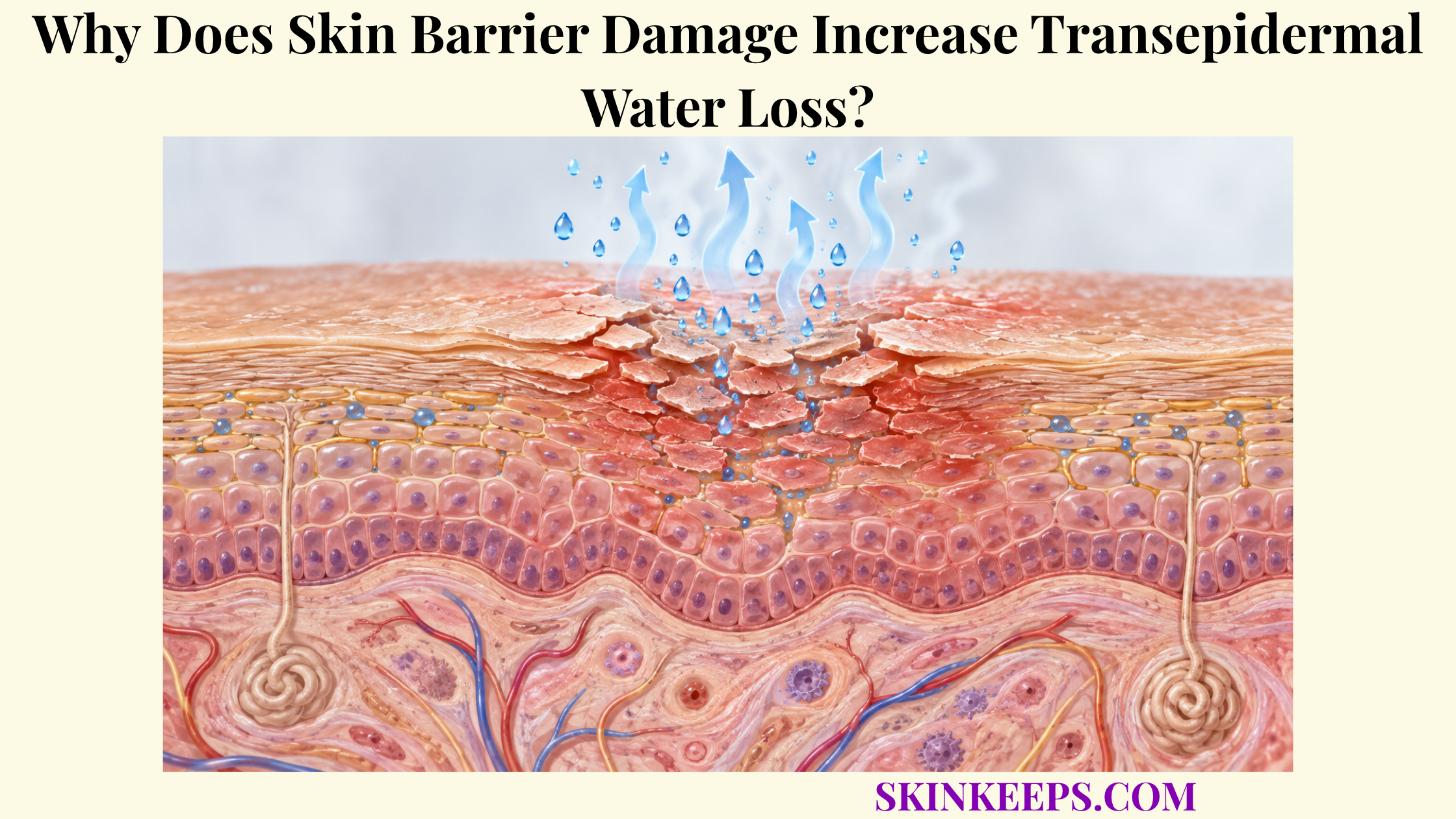
Figure 2. Adaptive thickening can add both cornified and viable epidermal path length, leaving the basal epidermis physically farther from the surface while still permitting residual UVA and UVB transmission.
How Does Skin Epidermal Thickening Work With Melanin?
Skin epidermal thickening works with melanin through complementary mechanisms: thicker tissue increases the physical optical path through the epidermis, while melanin absorbs and attenuates ultraviolet energy within pigment-containing keratinocytes.
How Is Skin Epidermal Thickening Different From Melanin Protection?
Epidermal thickening primarily changes tissue geometry and optical path length, whereas skin melanin UV absorption provides a specialized pigment mechanism that intercepts a broad range of ultraviolet wavelengths.
How Can Melanin and Epidermal Thickness Reduce UV Together?
A thicker epidermis places more tissue between the surface and deeper cells, while melanin distributed through that tissue intercepts additional photons. Structural and pigment-based attenuation can therefore operate simultaneously without becoming the same biological process.
Does More Skin Epidermal Thickening Compensate for Low Melanin?
Not completely. Experimental models demonstrate pigment-independent protection from greater epidermal thickness, but human photoprotection can remain strongly dependent on pigmentation, wavelength, and other biological factors. Model evidence should therefore support mechanism rather than population-level ranking.
Why Does Melanin Distribution Matter Alongside Skin Epidermal Thickening?
Pigment must be distributed within UV-exposed keratinocytes and positioned near vulnerable structures, so skin melanin distribution and photoprotection work alongside tissue thickness to influence how much radiation reaches cellular DNA.
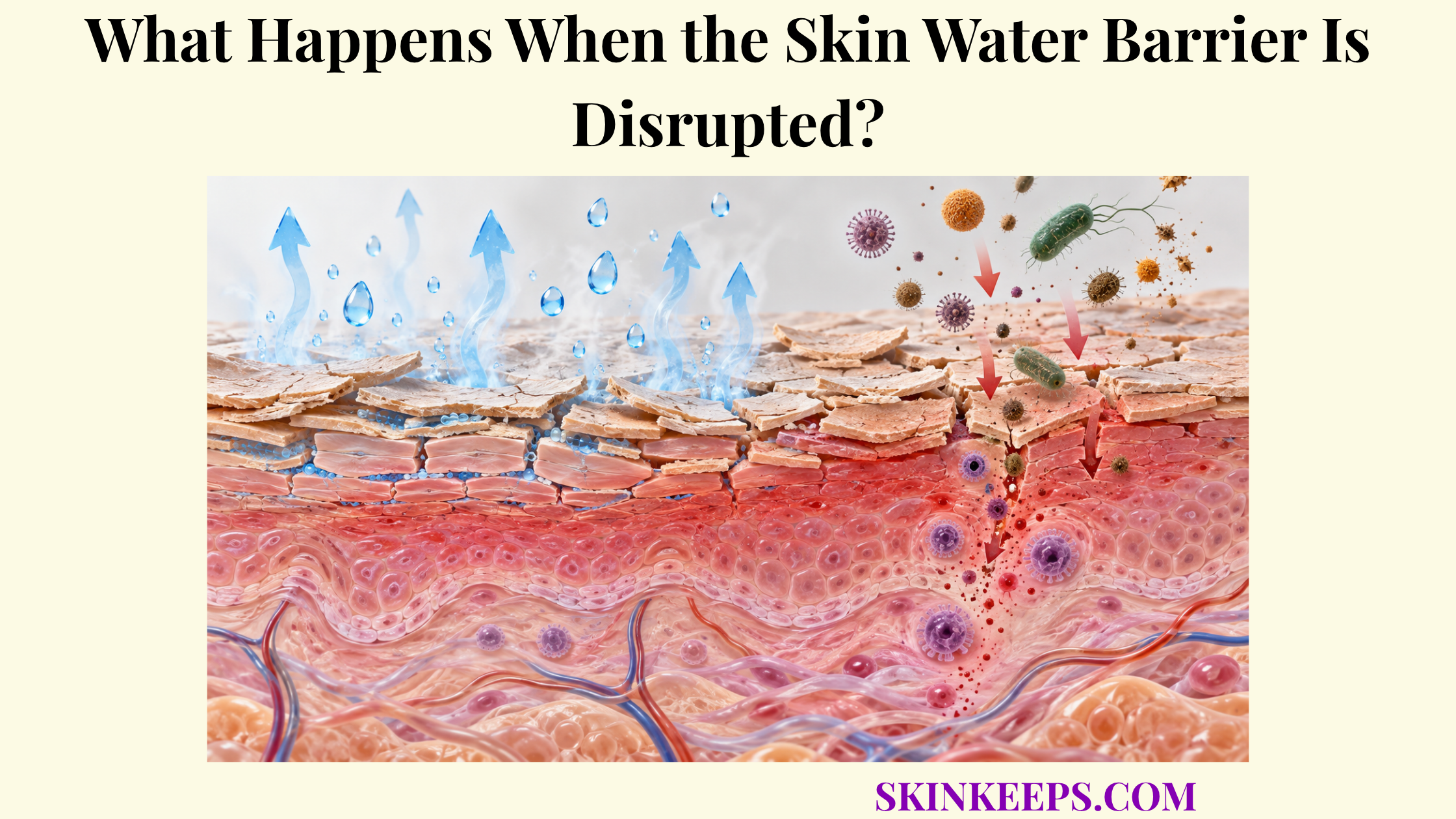
Figure 3. Epidermal thickness extends the physical optical path, while melanin absorbs UV within cells. Their effects can complement each other without implying that one universally dominates the other.
| Protective response | Primary mechanism | UV-protective effect | Limitation |
|---|---|---|---|
| Epidermal hyperplasia | Adds viable cell layers | Increases optical path and attenuation | Does not block all UVA/UVB |
| Stratum-corneum thickening | Adds superficial cornified tissue | Increases surface attenuation | Does not equal healthier barrier overall |
| Melanin production | Increases pigment amount | Absorbs more UV | Pigmentation remains finite |
| Melanin distribution | Positions pigment across and within keratinocytes | Improves cellular and nuclear shielding | Depends on amount and pigment type |
| Antioxidant defense | Limits reactive oxygen species | Reduces oxidative injury | Does not repair CPDs |
| DNA repair | Removes or corrects lesions | Limits persistence of UV-induced damage | Repair can be incomplete |
| Apoptosis | Removes severely damaged cells | Prevents some damaged cells from persisting | Does not restore lost cells |
Epidermal thickening is one component of layered photoprotection; structural attenuation, pigment protection, redox control, molecular repair, and cell removal solve different UV-related problems.
How Does Skin Epidermal Thickening Adapt to Repeated UV Exposure?
Skin epidermal thickening can persist or increase during repeated UV exposure as keratinocyte proliferation and cornification continue, but the magnitude of this adaptation varies with wavelength, dose pattern, anatomical site, pigmentation, age, and individual biology.
How Does Repeated UV Maintain Keratinocyte Proliferation?
Repeated UV can repeatedly activate damage, growth, and regenerative signaling, maintaining elevated keratinocyte turnover and allowing adaptive epidermal thickness to accumulate during an exposure series. Chronic hyperproliferation should not be interpreted as an inherently healthy state.
Does Repeated UV Increase Both Pigmentation and Thickness?
Often yes, but their relative contributions differ by wavelength and exposure protocol. Human repeated-exposure studies show that UVA-associated increases in photoprotection can be strongly pigmentation-linked, while some UVB-associated protection includes a substantial non-pigment structural component.
Does Skin Epidermal Thickening Continue Indefinitely?
No. Epidermal adaptation is biologically regulated and exposure-dependent rather than an unlimited progressive increase in healthy tissue thickness. No universal percentage increase, exposure count, or fully adapted time point can be assigned.
Does Repeated Adaptation Make Future UV Exposure Safe?
No. Greater thickness may reduce transmission of part of a later exposure, but each repeated exposure can simultaneously create new DNA photolesions, oxidative stress, inflammation, and cumulative tissue injury. This is why skin UV defense must be understood as finite rather than a reason to deliberately condition skin with UV.
What Limits Skin Epidermal Thickening as UV Protection?
Skin epidermal thickening is limited because extra tissue attenuates only part of incoming radiation; sufficient UVA and UVB can still penetrate the epidermis and produce oxidative stress, DNA photolesions, inflammation, and deeper solar injury.
Why Can UVA Still Penetrate a Thickened Skin Epidermis?
UVA’s longer wavelengths penetrate more deeply than UVB on average, so increased epidermal thickness reduces some transmission without preventing UVA from reaching living epidermal cells and the dermis. Residual oxidative stress still depends on skin antioxidant systems and other redox defenses.
Why Can UVB Still Damage a Thickened Skin Epidermis?
UVB that remains after superficial attenuation can still reach viable epidermal DNA and generate photolesions including cyclobutane pyrimidine dimers; these residual lesions still require skin DNA repair.
Can Higher UV Exposure Overcome Skin Epidermal Thickening?
Yes. Structural photoprotection has finite capacity, and sufficiently large or cumulative UV exposure can overwhelm the reduction in transmission produced by increased epidermal thickness. Experimental models demonstrate this ceiling directly, but their dose values should not be converted into human safety thresholds.
Does Skin Epidermal Thickening Reverse Previous UV Damage?
No. Thickening changes the optical path for future radiation but does not remove existing CPDs, established mutations, oxidized molecules, or dermal injury produced by earlier exposures. Structural adaptation is future attenuation, not retrospective repair.
Why Is Skin Epidermal Thickening Only One Part of Solar Defense?
Residual UV injury must still be limited by melanin, antioxidants, DNA repair, cell-cycle checkpoints, apoptosis, immune responses, and broader skin defense against solar injury.
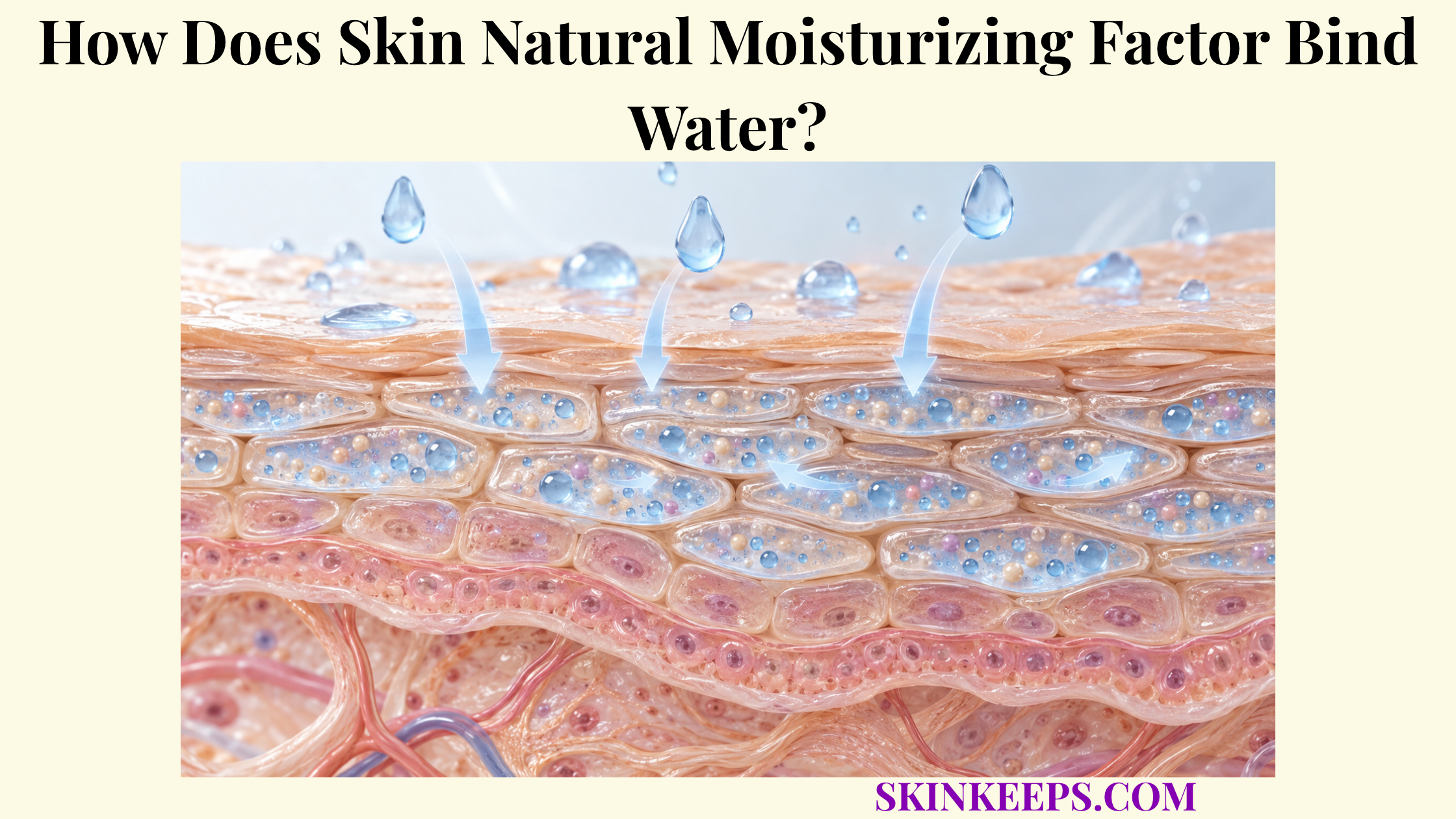
Figure 4. Thickening has a protection ceiling. Residual UVA and UVB still require pigment, antioxidant, DNA-repair, checkpoint, and cell-removal systems.
What Are the Key Takeaways About Skin Epidermal Thickening?
The key fact about skin epidermal thickening is that additional viable and cornified tissue can reduce ultraviolet transmission by increasing the optical path through the epidermis, but this delayed structural adaptation remains only one incomplete layer of photoprotection.
Hyperplasia and hyperkeratosis can increase later attenuation without making earlier UV damage disappear, and their contribution varies with wavelength, tissue site, pigmentation, and exposure history. The biological response should therefore be understood as damage-triggered adaptation rather than a safe way to build UV resistance.
- Skin epidermal thickening is delayed, not an immediate response to the first UV photon.
- Initial UV exposure causes molecular stress before structural adaptation develops.
- Keratinocyte proliferation can increase viable epidermal thickness.
- Hyperplasia and hyperkeratosis are related but different processes.
- A thicker epidermis creates a longer optical path for incoming UV.
- Additional tissue increases opportunities for absorption and scattering.
- UVB often produces stronger proliferative responses than UVA in experimental settings, but wavelength responses vary.
- Stratum-corneum thickening contributes to UV attenuation without proving the permeability barrier is healthier.
- Thickness and pigmentation are separate photoprotective variables.
- Thickness can provide some pigment-independent protection, but model findings do not define exact human protection.
- Melanin and thickness can work together to reduce deeper UV exposure.
- Repeated adaptation does not make intentional UV exposure safe.
- Thickened epidermis cannot block all UVA or UVB.
- Structural adaptation does not repair damage created by earlier exposures.
- No numerical natural SPF should be assigned to epidermal thickening.
What Common Questions Do People Ask About Skin Epidermal Thickening?
Common questions about skin epidermal thickening focus on how quickly it develops, whether the stratum corneum becomes thicker, how thickness differs from tanning, and whether adapted skin becomes resistant to ultraviolet damage.
How Quickly Does Skin Epidermal Thickening Develop After UV Exposure?
Skin epidermal thickening is a delayed response because keratinocytes must proliferate, accumulate, differentiate, and contribute to additional viable or cornified tissue. Experimental changes emerge over days and vary with wavelength, dose, body site, and model rather than following one universal timetable.
Does UV Exposure Make the Stratum Corneum Thicker?
It can. Repeated UV—particularly UVB in many studies—can increase stratum-corneum thickness, while some UVA protocols also produce cornified-layer thickening; the magnitude depends on the exposure pattern and tissue context.
Does a Thicker Skin Epidermis Block All UVA and UVB?
No. Greater epidermal thickness increases optical attenuation but does not produce complete UV blockage, and both UVA and UVB can still reach living cells and produce molecular damage.
Is Skin Epidermal Thickening the Same as Tanning?
No. Epidermal thickening is a structural increase in viable and/or cornified tissue, whereas tanning mainly reflects changes in melanin production and distribution. The responses can occur together but protect through different mechanisms.
Does Repeated UV Exposure Safely Build a More Protective Skin Epidermis?
No. Repeated UV can induce adaptive thickening, but the same exposures also create DNA damage, oxidative stress, inflammation, and cumulative photoaging and mutation pressure, so structural adaptation should not be deliberately induced as a protection strategy.
Sources & Evidence
Evidence used for this page
UV Radiation and the Skin — Delayed proliferation, epidermal hyperplasia/hyperkeratosis, and the timing distinction between early damage control and later adaptation.
Epidermal Changes in Human Skin Following Irradiation With Either UVB or UVA — Human evidence that repeated UVA and UVB can alter epidermal and stratum-corneum thickness, with stronger proliferative labeling after UVB in that protocol.
Ultraviolet Irradiation Induces Keratinocyte Proliferation and Epidermal Hyperplasia Through EGFR Activation — Experimental evidence linking EGFR signaling with later keratinocyte proliferation and hyperplasia; timing and pathway dominance are model-specific.
Pigment-Independent cAMP-Mediated Epidermal Thickening Protects Against Cutaneous UV Injury — Mechanistic model evidence that greater thickness can reduce UVA/UVB transmission independently of pigment and can be overwhelmed by higher exposure.
Photoprotection in Vitiligo and Normal Skin: Role of Stratum Corneum, Viable Epidermis and Pigmentation — Human evidence that epidermal structures and pigmentation both contribute to photoprotection; useful for the stratum-corneum boundary.
Epidermal Thickness, Skin Pigmentation and Constitutive Photosensitivity — Human evidence that pigmentation can dominate constitutive photosensitivity in some populations and that thickness should not be ranked universally above pigment.
Photoprotection Due to Pigmentation and Epidermal Thickness After Repeated UV Exposure — Human repeated-exposure evidence showing increasing photoprotection with differing pigment and non-pigment contributions after UVA versus UVB exposure.
American Academy of Dermatology: Tanning and UV Safety Guidance — Current clinical-safety boundary that tanning reflects UV damage and deliberate UV exposure should not be used to build adaptive protection.
Medical note: Educational only. Seek medical or dermatologic care for persistent/changing lesions or unusual photosensitivity; severe blistering or systemic illness after major UV exposure may need urgent care. UV-induced thickening is an adaptive injury response, not a safe reason to seek UV exposure.